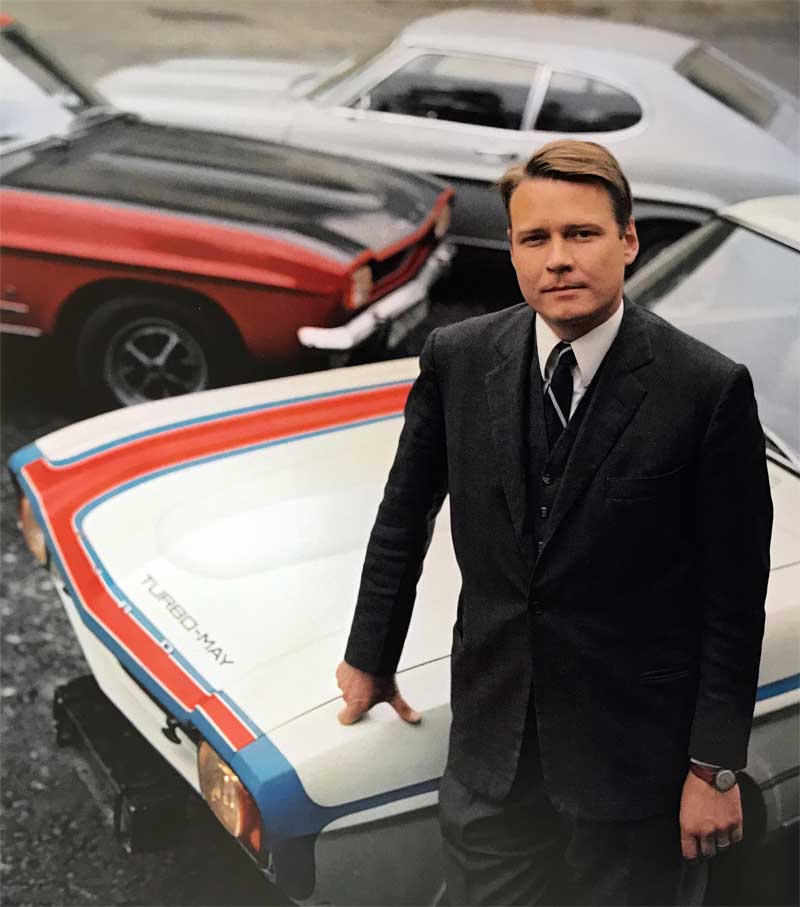
The wing, fuel injection, and turbochargers. All three of these innovations changed racing forever, and this man played a crucial role in pioneering them. He was also a talented driver who briefly competed in F1. He designed and ran the first wing on a racing car, and it worked. He worked for both Porsche and Ferrari, significantly improving the fuel injection systems of their racing engines. His tuning shop turbocharged the Ford Capri, increasing its power by 70 percent for only $800. However, his name has flown under the radar in automotive history, sometimes because he worked behind the scenes, and sometimes because others intentionally denied him the credit he deserved. His name is Michael May.
Michael was born in Germany in 1934 to a German father and a Swiss mother. According to Michael, his parents were slow and meticulous at everything except driving and thinking, a trait which he certainly shared. Michael grew up around cars and was very interested in inventing new things. His father owned several factories, which Michael often used for his own projects. Some of his early projects included building boats, heavily modifying his motorcycle’s engine, and designing and building his own rotary engine. Michael’s racing career started in 1956 with a motorcycle, which he quickly sold after realizing the dangers. He then raced a Nardi Danese to obtain an Automobile Club racing license, allowing him to enter the Nürburgring 1000KM. Michael then set out to design a revolutionary invention that would give his car a considerable performance advantage.
Pioneering The Wing
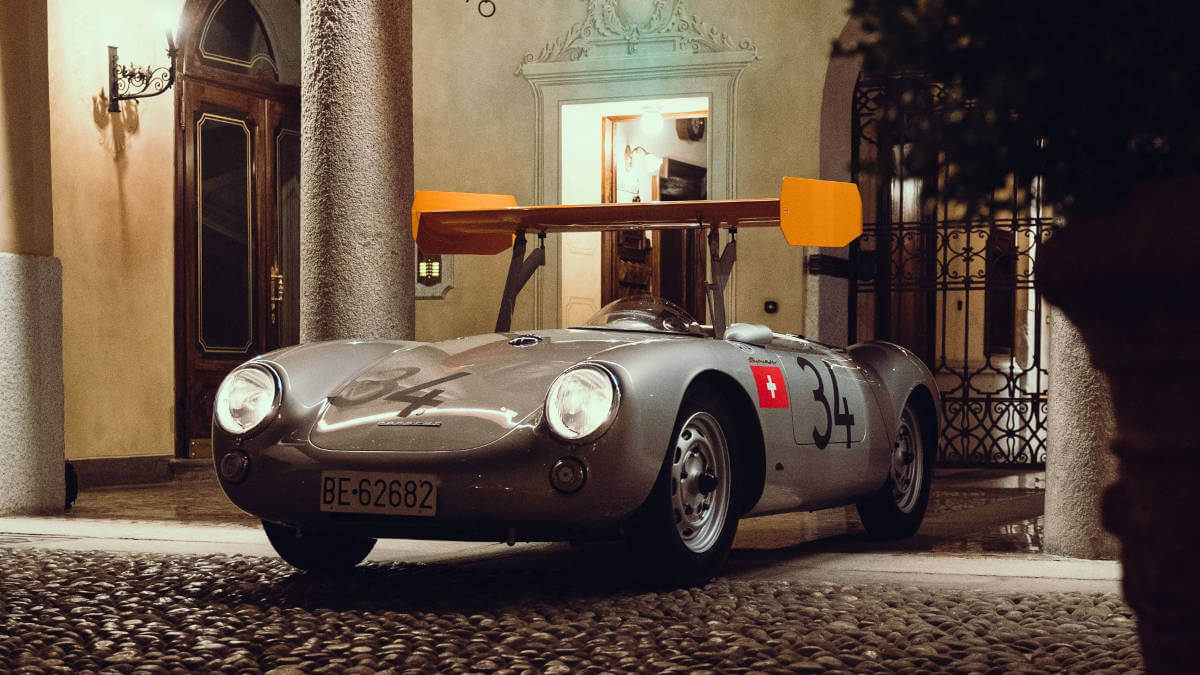
No innovation changed racing as rapidly or as drastically as the wing – it wasn’t just the wing itself, but the way it changed the way racing designers thought. The first winged car was the rocket-powered Opel RAK 2 of 1928, which hit 145 mph. But its side-mounted wings were very different from the wing that Michael designed, and they were for keeping the car stable at high speed, not for creating downforce when cornering. In the 1950s, the goal of a race car designer was to “cheat the wind” – to create a car that was slippery but did not use the air to its advantage. Jim Hall is often credited with debuting the wing on his Chaparral 2E Can-Am car in 1966. While the Chaparrals became famous for their wings, Michael designed the first wing on a racing car, and it worked – too well for his competitors to tolerate. Michael understood that having more grip would allow a car to brake later and corner at a higher speed, and a wing would significantly increase grip. So, he convinced his cousin Pierre May to buy a Porsche 550 Spyder, which they would race together at the 1956 Nürburgring 1000KM. Pierre was a businessman who was willing to finance the project, but he was not a pro driver. Michael was to do the fast driving, and Pierre would do his laps (easier said than done at the Nürburgring). Michael chose a 550 Spyder instead of a more powerful Ferrari or Maserati because his wing would be much more impressive if it turned a slower car into a frontrunner.
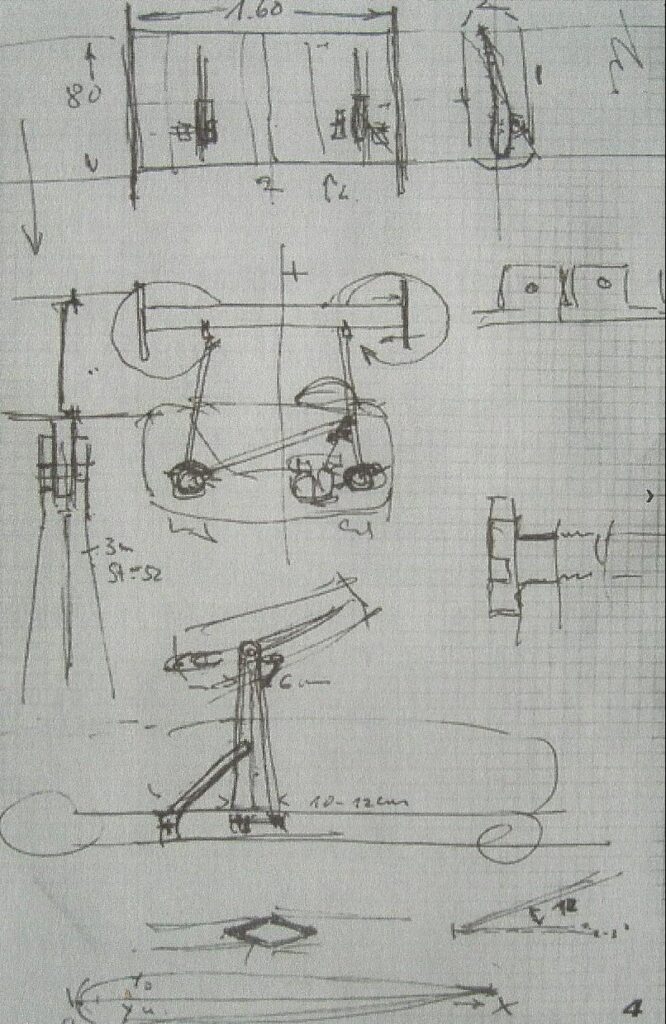
Michael’s original sketch of the wing.
Michael designed a massive, chassis-mounted wing over the cockpit of the 550, which generated enough downforce to match the car’s weight at 93 mph. But he also realized that the wing would create drag, and so he added a lever that allowed him to adjust the angle of the wing on the straights. The large winglets on the sides of the wing significantly increased its efficiency. When it arrived at the Nürburgring, the winged 550 received skeptical looks from other competitors, who dismissed the bright orange wing as a silly gimmick or didn’t understand how it worked. So everyone was surprised when the unknown 21-year-old engineer showed up in his weird-looking 550 and qualified fourth fastest overall – especially Porsche. Porsche was debuting their new 550 A at the Nürburgring 1000KM. While it looked almost exactly like the old 550, the 550 A was basically a new car underneath. The winged 550 was quicker than most of the Ferraris and Maseratis, let alone the Porsches, as the fastest works 550A qualified 20th with Stirling Moss at the wheel. May’s 550 also lacked the new racing tires that the works cars had, making his lap time even more impressive.
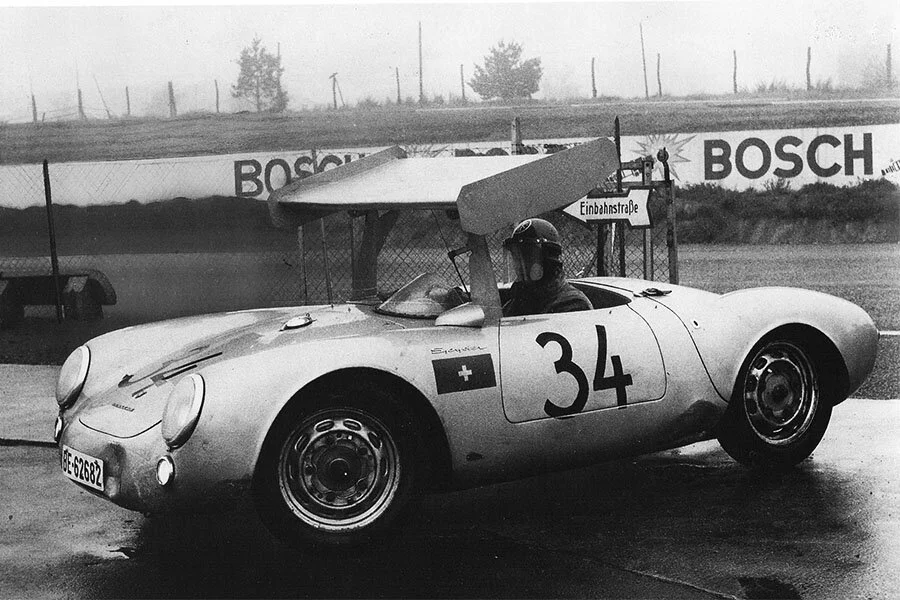
Huschke Von Hanstein, Porsche’s racing boss, rushed to protest the wing. He claimed that the wing could cause an accident, and pointed to the tragic crash at Le Mans the previous year, where the Mercedes 300 SLR’s controversial airbrake had failed. Von Hanstein’s safety concerns were valid, as shown by the wing failures that occurred when wings were widely used; however, the speed of the winged 550 was likely the real reason he protested. The officials listened, and Michael was forced to remove the wing or he could not enter the race. The rules stated that the organizers could cancel a car’s entry for any reason, but the official reason was that the wing would block the view of drivers behind the 550. The May’s started the race without the wing to get back some of their entry fee, and then retired in protest. They took the winged 550 to Monza to race in the Gran Premio Supercortemaggiore, where they were forced to remove the wing immediately. After one more race, Pierre sold the 550, and they didn’t attempt to use a wing again. While it took another decade for wings to revolutionize motorsport, Michael had already proven the concept—but no one wanted to believe it.
A Very Brief F1 Career
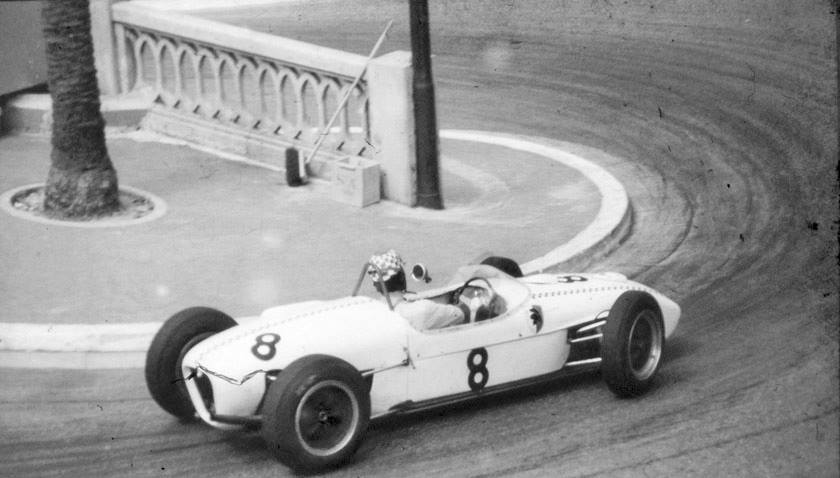
Michael rounds the Monaco hairpin in his Scuderia Colonia Lotus.
Michael wasn’t just an engineer; he was a serious driver in his own right. He won the 1959 Formula Junior championship in his old Nardi Danese while studying in college. He won at Monaco and should have won a race at the Nurburgring, if not for engine issues. He finished second, behind Wolfgang Von Trips, who pulled Michael under his victory laurel as a sign of respect. May later said of Von Trips, “He was the only gentleman, he and Fangio, the only gentlemen”. Michael entered three World Championship F1 races for Scuderia Colonia in a Lotus, although his best finish was only eighth. After a crash at the Nurburgring, he decided to quit racing professionally.
Michael studied fuel injection during his time in college and modified his mother’s Mercedes. He drove the Mercedes to Italy to show Weber and Dell’Orto, the two largest carburetor companies of the time. They were not interested, as fuel was cheap enough that efficiency was not a concern for companies or consumers. Just like the wing, it was too ahead of its time. He wrote his thesis on direct injection, which was featured in several magazines. Mercedes then offered him a job to work with fuel injection. His first project at Mercedes was to improve the 300SL engine, which was mixing fuel with oil and causing issues. The fuel would condense along the cylinder wall, which would leak into the oil, making the oil far less effective. His solution was to swap the fuel injector and spark plug, as they fit into the same-sized hole. This fix was never implemented in production, as the 300SL was nearing the end of its production run. Porsche then hired Michael after journalist Gunther Molter had mentioned Michael’s experience with direct injection. Porsche also agreed to let Michael drive their F1 car in the 1962 French Grand Prix as part of their deal. Working for Porsche in this era would have been amazing for most engineers, but the same company that had frustrated him would do it again.
Politics At Porsche
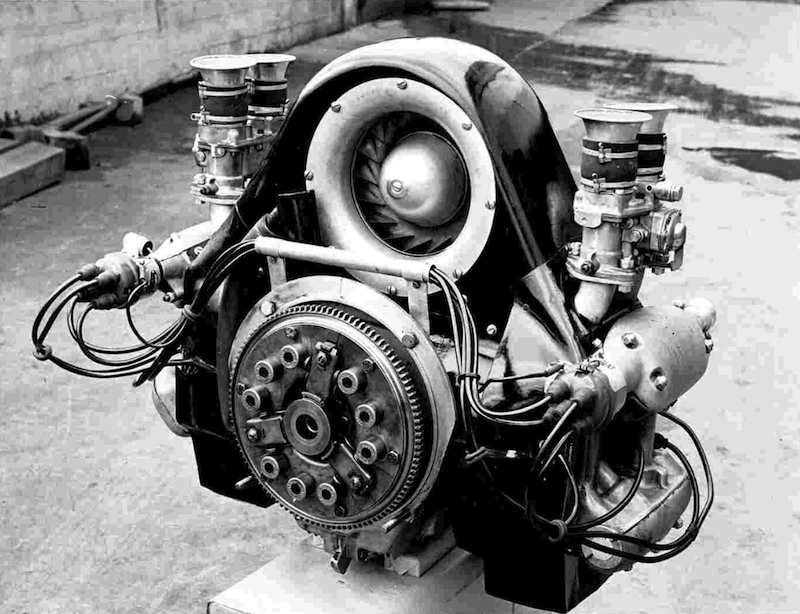
The Type 547 four-cylinder.
Porsche was in the middle of developing a new flat-eight engine for their F1 car to replace the legendary Type 547 Fuhrmann four-cam, which was showing its age. Designed by Hans Mezger, the Type 753 flat-eight made almost a hundred horsepower less than Porsche’s original target. Ferry believed that direct fuel injection would solve the Type 753’s problems, and Michael was the man for the job. Michael made an impression as soon as he arrived in Stuttgart, and not a good one on some of the Porsche staff. Driving his modified Alfa Romeo on the way to work, he blasted past Herbert Linge in his 356 while exiting the Autobahn, which Linge did not appreciate. Linge was one of the most important people at Porsche, and Michael became his enemy very quickly. His first few weeks in the office were strangely uneventful until a board member asked him how his work on the Type 753 was going. Michael explained that he never even got the blueprints, and the board member claimed the engine was not ready for Michael to work on due to cooling issues. The Type 753 was experiencing numerous problems, but the racing engineers didn’t want Michael’s assistance. So he asked to work on the Type 547 instead. The racing engineers thought the Type 547 was fully developed and that Michael would not be able to improve it. Michael found an older employee to help him, as most of the other engineers did not want to work with him. Working completely separate from the other racing engineers, Michael made several modifications to the Type 547, including reducing the oil pressure, removing the piston rings, enhancing the fuel injection system, and doubling the cooling fan’s flow rate.
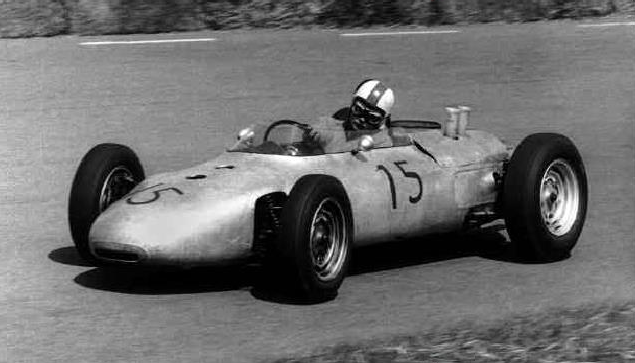
Michael’s version of the Type 547 only appeared once in competition, in an old 787 chassis with drum brakes at Zandvoort.
Michael invited the other engineers for a dyno test of his Type 547. They said the engine would not last longer than five minutes. After several minutes of warming up, Michael went for a power run, reaching 8200 rpm, and the dyno showed 188 horsepower – nearly 40 more than before. The other engineers walked out in silence, but Michael thought they would be happy to have an engine that would have solved their problem. He told Ferry to use his Type 547 instead of the Type 753, but the racing engineers claimed that it would not fit in the engine bay. Michael explained to Ferry that the chassis could easily be modified to accept the Type 547, and Ferry was furious with the racing department for misleading him. Michael’s Type 547 was more powerful and more reliable than the Type 753 in track testing. One of the agreements of Michael’s deal with Porsche was that he would drive the 804 in the F1 Grand Prix in France. He arrived at the track, but the 804 with his engine never arrived. No one on the team seemed to know where it was. This was the last straw for Michael, and he went to Eugenio Dragoni, Ferrari’s team manager, that same weekend and asked him if he wanted more power for his V6 engine. Dragoni was very interested and told him, “Come Monday, Commendatore (Enzo) waits for you”. Michael drove straight to Maranello to accept the offer. Michael’s engine, the Type 547/3B, made a single appearance in a race at the 1962 Dutch Grand Prix, installed in an outdated 787 chassis with drum brakes. With Ben Pon (who was not one of Porsche’s top drivers) at the wheel, it started at the back and spun out early. Porsche only won one F1 race, at the French Grand Prix with Dan Gurney at the wheel. His 804 had a different, much less powerful Type 547 engine. Porsche actually sent out instructions to owners of their Type 547-powered sportscars to use several of Michael’s solutions to upgrade their engines. Who knows what Porsche could have achieved in F1 if they had used Michael’s Type 547?
The Wing Returns
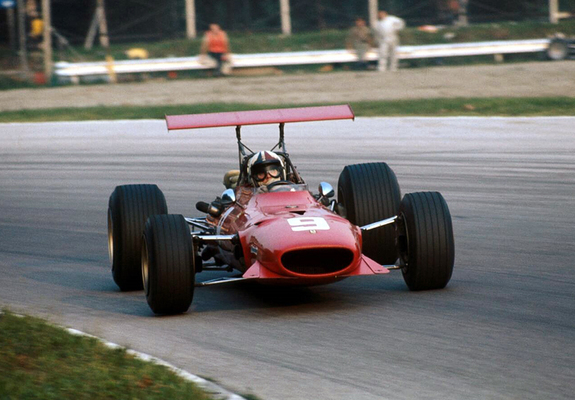
Ferrari’s F1 V6 was not as powerful as they had wanted, producing about 150 horsepower before Michael’s modifications. Michael was hired as a consultant at Ferrari at his request, after his experience with the politics at Porsche. Michael did not like making drawings or complicated measurements, so one of the chief designers at Ferrari helped put his ideas on paper. Ferrari’s engineers recast the engine block to fit the Bosch fuel injection system in a few days. Michael’s wife worked at Daimler, and she picked up the parts from Bosch and brought them to Maranello. After only a month, Michael had extracted an additional 75 horsepower from the Dino V6. But the biggest mark that Michael made on Ferrari’s history was introducing the wing to F1. He mentioned the wing to Mauro Forgheiri, which resulted in the 1968 F2 car sprouting a wing, and Chris Amon’s F1 car used a wing in the 1968 Belgian Grand Prix. He qualified on pole by an incredible four seconds over Jackie Stewart, and the wing literally took off in F1 after.
Turbo May
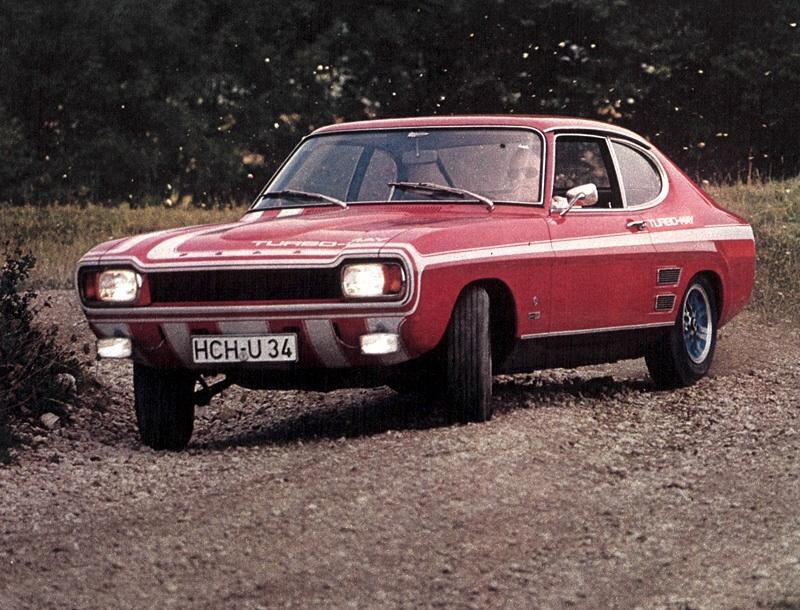
The ’70s saw the advent of another extremely important technology – the turbocharger as a performance part. While Chevrolet and Oldsmobile had briefly experimented with turbocharging in the early ’60s, the turbocharger was typically only found in truck engines. As with the other innovations, Michael was way ahead of the curve. He started working with turbos in 1968 at his workshops in Stuttgart, and BMW contracted him to help turbocharge their European Touring Car Championship-winning 2002 for the 1969 season. The 2002 turbo won the 1969 championship, marking the first time a turbocharged car had won a major road racing series. Michael also developed a turbo kit for the Ford Capri. For $800, the Turbo May kit made 70 more horsepower! And if it had been produced in larger quantities, it could have cost as little as $200. It also had minimal effect on fuel economy or tractability. Michael supplied the turbo kits to Ford dealers in Germany, and over 4,500 Capris had the kit installed. Ford disapproved of the kit, despite its engineers’ approval, so installing it voided the warranty. Michael also consulted with Toyota’s racing engineers on the development of the 7 in 1970, which was intended to compete in the Can-Am series with a turbocharged V8. While the project was scrapped after two tragic accidents, the 7 showed serious potential.
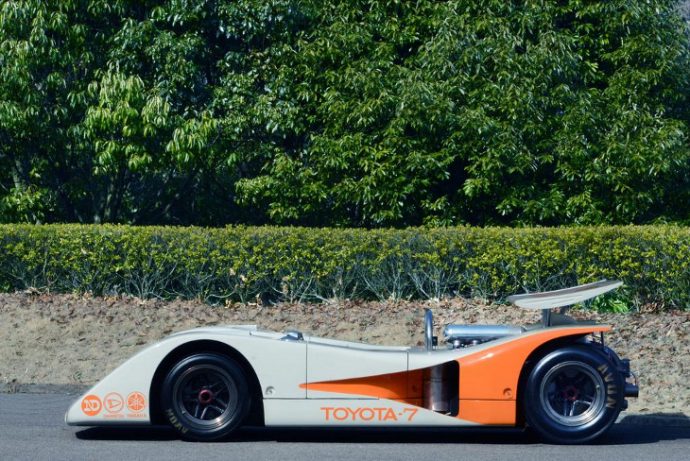
Michael’s work did not go unnoticed by Porsche, which had been beaten by the 2002 Turbo and was also planning to build a turbocharged Can-Am car.
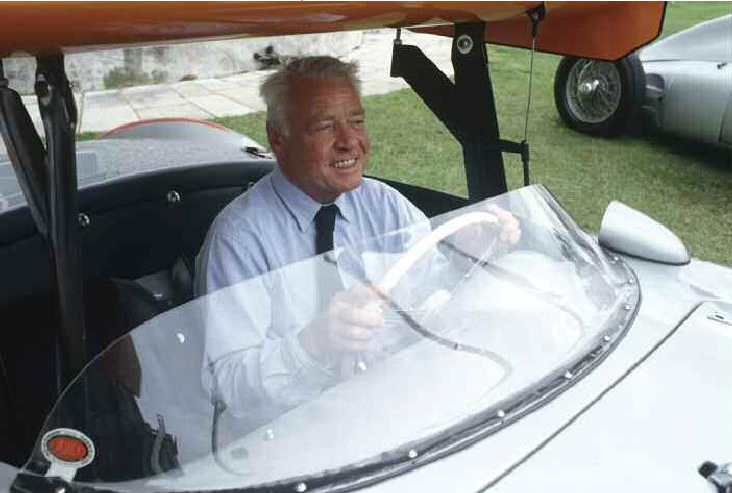
Michael with the restored winged 550 at the Goodwood Festival of Speed.
Michael worked on numerous other projects in his career, including Jaguar’s high-efficiency heads for their V12 engine in the ’80s. Michael even patented a new cancer treatment after his career in the automotive industry. The winged 550 Spyder changed hands many times until Fritz Kozka acquired it in 1998 and contacted Michael about building a new wing for it. The re-winged 550 made its debut at the Goodwood Festival of Speed in 1998. Since then, it has appeared at numerous major car events worldwide, showcasing the origin of one of racing’s most important innovations. Michael currently resides in Zurich, and he recently celebrated his 91st birthday. His name should receive the same recognition as engineers like Forgheiri, Mezger, Hall, and Chapman, but he has never received the credit he deserves. Hopefully, this article begins to change that.
Photo Credits: Porsche Archives, Kidston SA, Toyota, Turbomay.de
