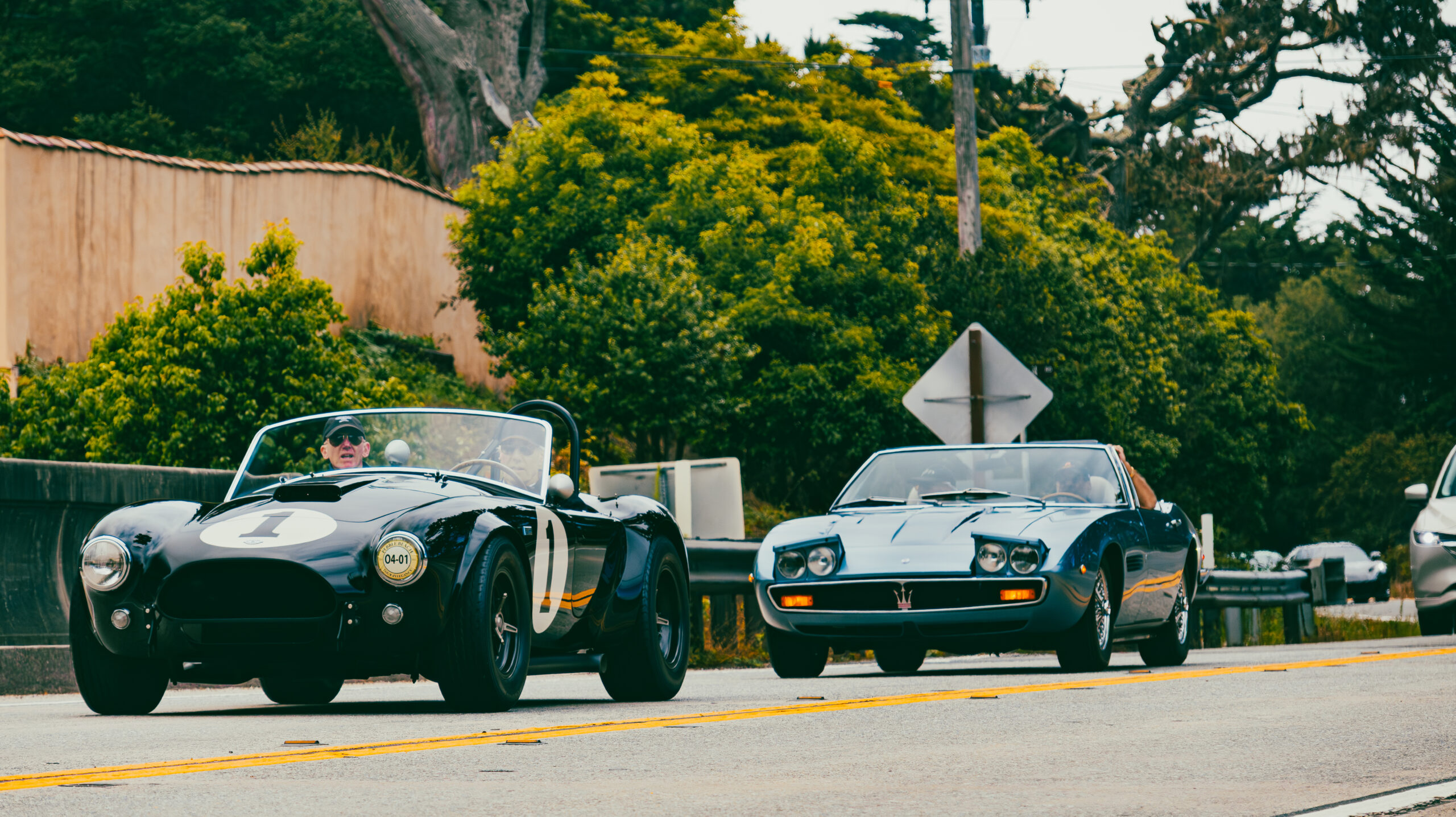
The Pebble Beach Tour ‘d Elegance is my favorite event of Monterey Car Week. It was created in 1998 to prove that the cars competing in the Pebble Beach Concours are actually roadworthy, even if they are rarely driven. The Tour entrants drive down Highway 1, one of the world’s most beautiful roads. Besides the scenery of the drive, there is another great reason to participate in the Tour. If there is a tie for an award between cars in the Concours, the car that completed the Tour wins. Another reason the Tour is so great is that it is free and open to the public. Walking around the cars as they sit at the start line is surreal — it’s hard to believe just how many special cars are in one place. Get there early (by 7 am), though, as it gets crowded quickly. The Concours has many classes, consisting of recurring themes and one-offs. This year’s special classes included the 60th anniversary of the Shelby 427 Cobra, the 75th anniversary of F1, and the designs of Virgil Exner. It was an incredible lineup, but not quite as impressive as last year’s show, which included the wedge-shaped concept cars and the FIA GT1 cars.
1956 Ferrari 410 Superamerica Series I
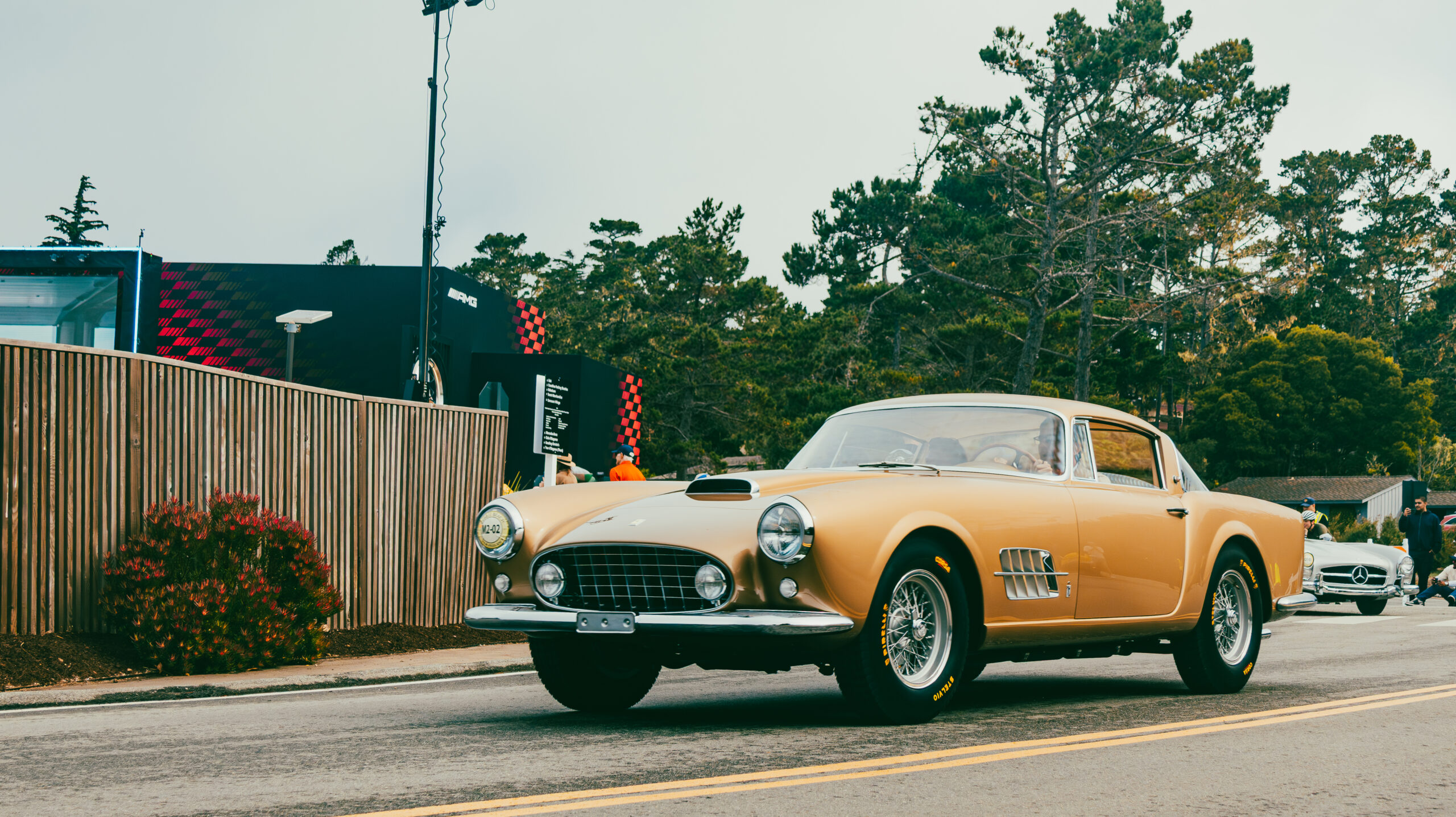
This Ferrari 410 Superamerica was an instant favorite of mine. Finished in gorgeous Oro Chiaro Metallico (Light Gold Metallic) with a tan interior, this car is one of twelve early Pininfarina-bodied Series 1 cars. The details on this car are just perfect, from the tire stickers to the chrome trim. The 410 Superamerica was the top of the Ferrari range in its day, combining a comfortable GT car chassis and the monster 5-liter, 340-horsepower Lampredi V12. As Car & Driver put it in their road test: “Owning one is, or should be, the goal of every automotive enthusiast anywhere.” Each 410 Superamerica was built to the original customer’s wishes, so each car is slightly different from the rest.
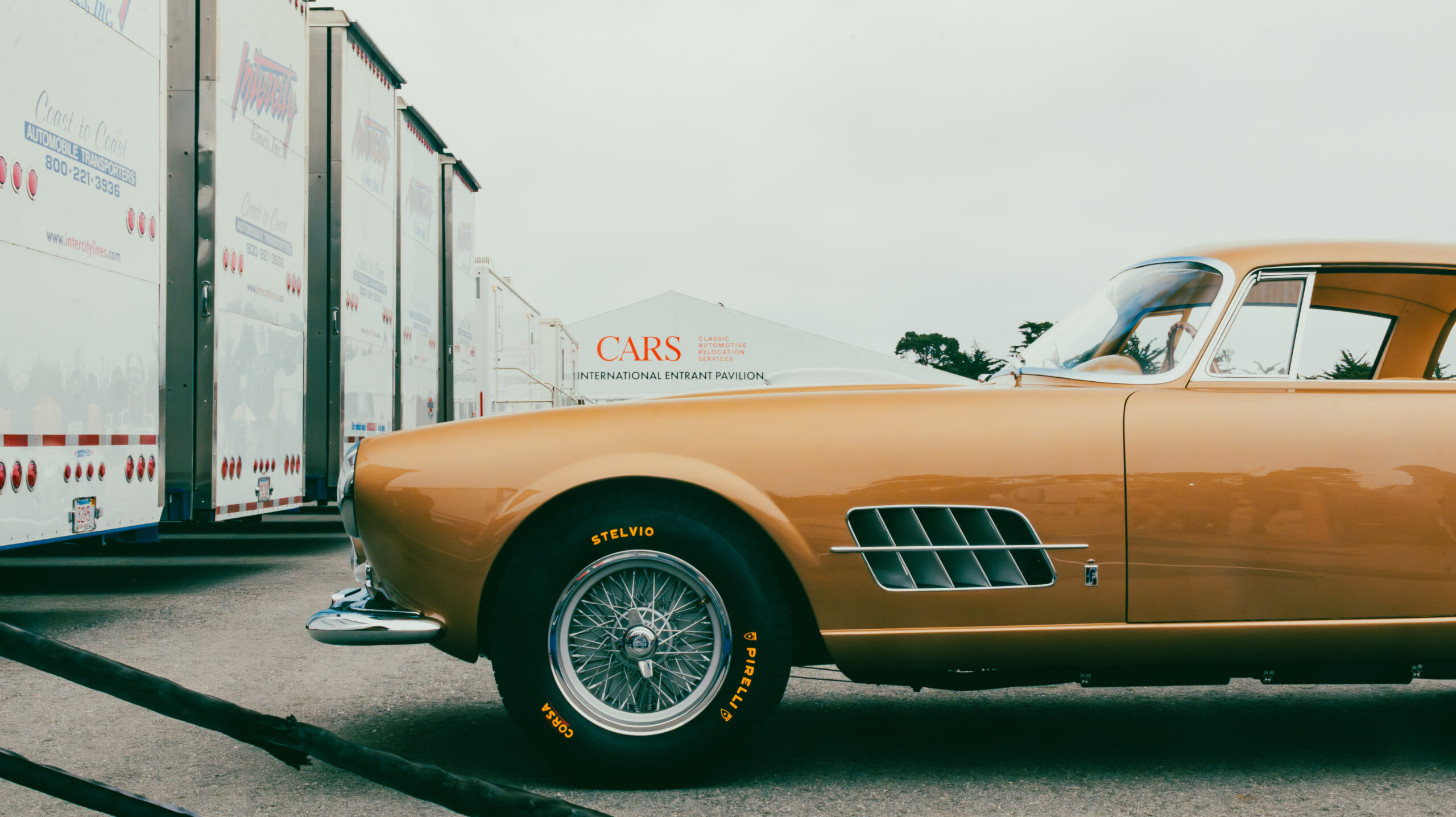
This car was the fourth 410 Superamerica built, and it has several unique features, such as the foglights on the grill and a dashboard-mounted rearview mirror. It was shown at the 1956 New York Auto Show on the Luigi Chinetti Motors stand. This car was recently restored by Paul Russell & Company to its original Auto Show specification. Every 410 Superamerica is a special car, but this one is easily my favorite.
1961 Aston Martin DB4 GT Zagato
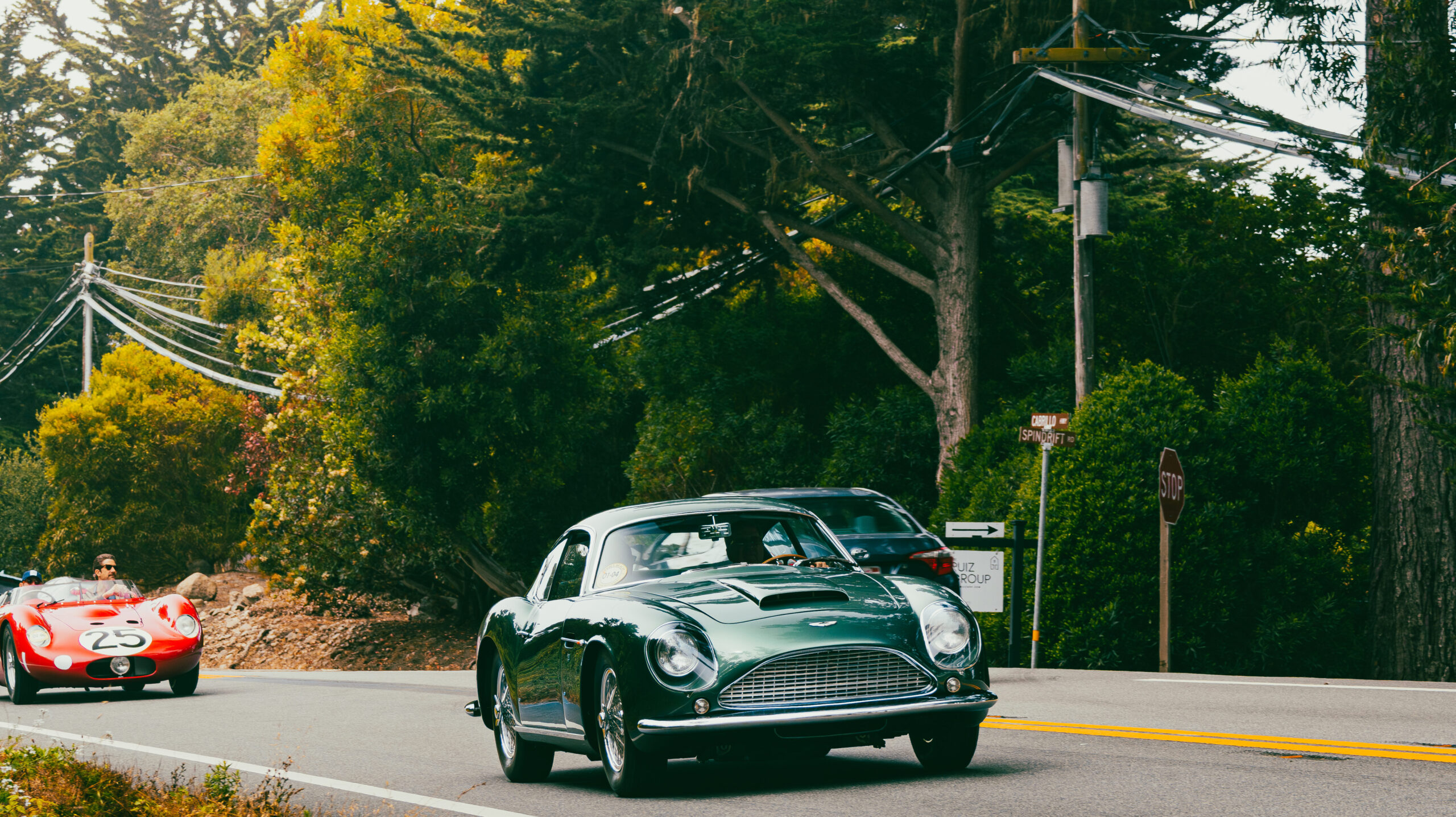
The Aston Martin DB4 GT Zagato is the most Italian British car ever built. Designed as a lightweight version of the existing DB4 GT to beat Ferrari’s new 250 SWB, the DB4 GT Zagato didn’t live up to expectations on the track, but it remains one of the most beautiful sports car designs of all time. The body was penned by 23-year-old Ercole Spada, his first of many amazing designs for Zagato. Many changes were made to the DB4 GT Zagato besides the body, including a lighter drilled chassis and several engine upgrades.
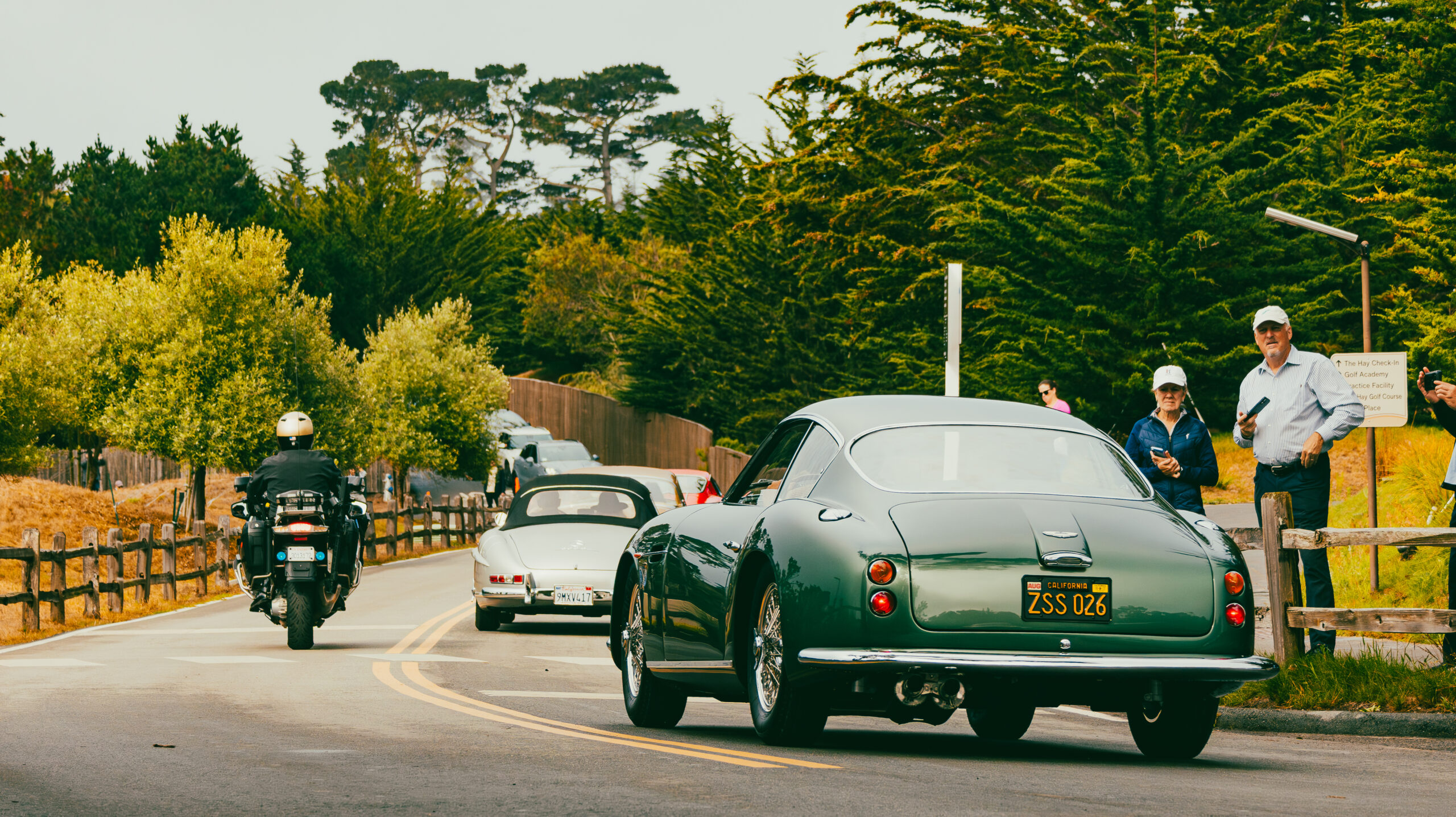
Building a DB4 GT Zagato was a costly operation: after the chassis was built in England, it was shipped to Zagato for its body, then sent back to the Aston Martin factory for its interior—although a few were upholstered in Italy. Aston Martin intended to build 25, but only 19 were finished. This car was shown at the 1961 Turin Auto Show and was specified as a road car, so it has front bumpers and chrome trim, unlike the racing examples. Ercole Spada sadly passed away only a few weeks ago, so seeing this car get driven on the road was a proper tribute to him. Surprisingly, this car didn’t win any awards at the Concours.
1962 Shelby Cobra
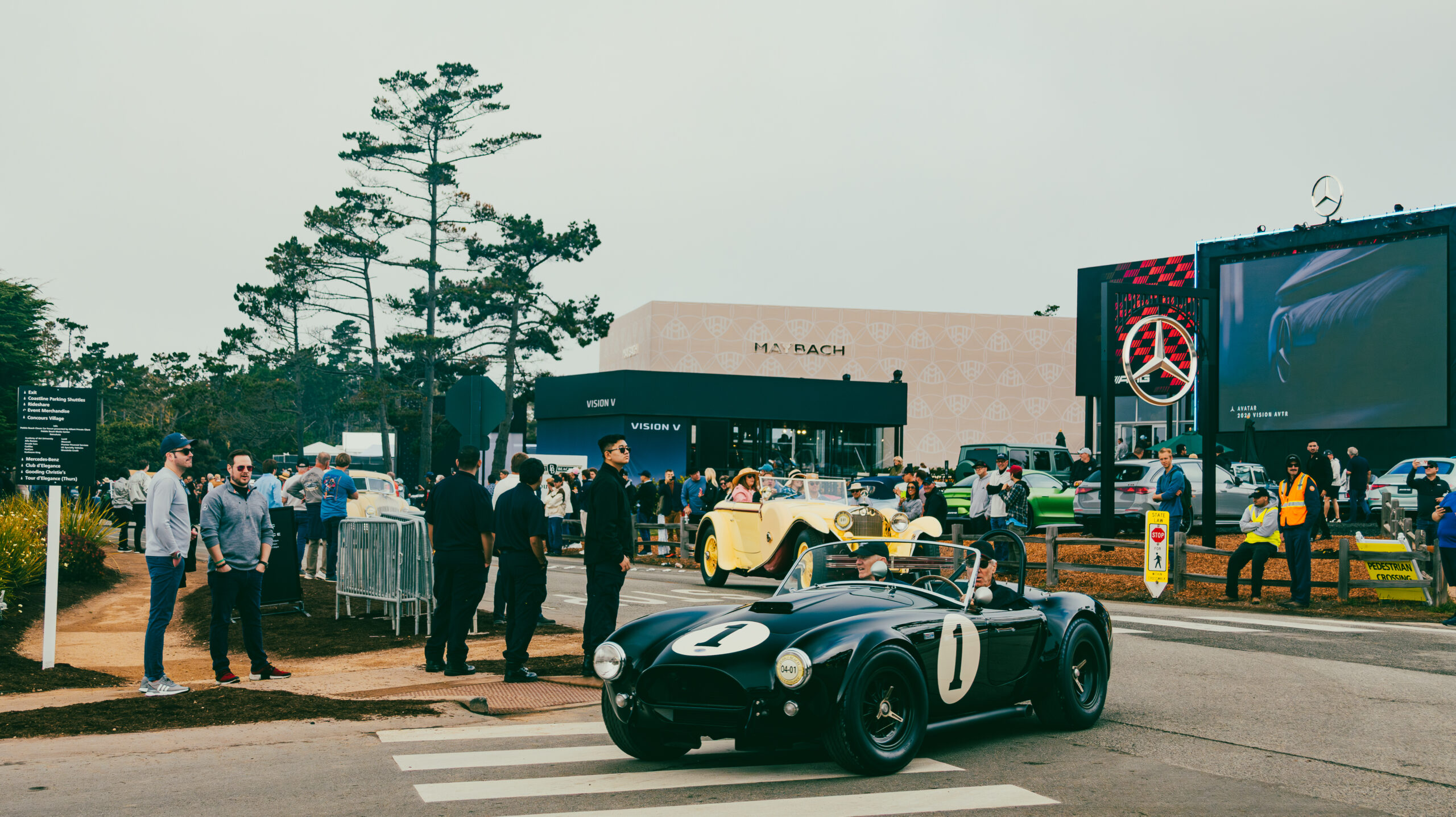
The Cobra class was probably the most original group of Cobras ever assembled. Most Cobras were driven hard (and often crashed) before they became collector cars. But the Cobras at this year’s Tour were some of the finest examples left. (One 427 had only 3,000 miles!). This Shelby Cobra, CSX 2001, is the first production Cobra ever built. It was sold new to a doctor in Pennsylvania, who quickly traded it back to the dealership after realizing that winter in Pennsylvania was not the best time to drive a Cobra. It was then sold to Lloyd “Lucky” Casner, one of the founders of the Camoradi racing team. Camoradi was the first commercially sponsored American racing team, known for its Maserati Tipo 61 “Birdcages,” which won the Nurburgring 1000KM in 1960. Casner bought the Cobra to race at Le Mans with Jean-Marie Vincent, but he couldn’t make it. Vincent modified the Cobra, installing a 289ci V8 along with many other upgrades. Vincent and Casner raced it in the 1964 Tour de France Automobile, a 3,000-mile rally that included timed stages and wheel-to-wheel racing on France’s best circuits, including Reims and Rouen.
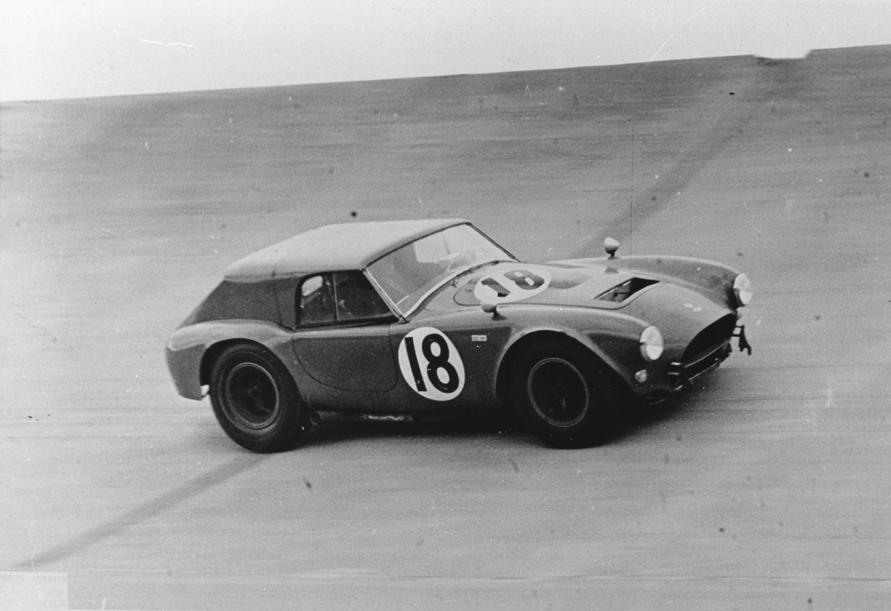
This Cobra didn’t finish the Tour de France, but it was later successfully raced around France, with Vincent winning six of the eight races he entered. It spent most of the next 40 years in Europe, except for a brief period in Casablanca. In 2006, it was purchased by legendary Californian collector Bruce Meyer, who commissioned a restoration and repainted it in his favorite color, black. Bruce still owns CSX 2001, and he drove it on the Tour.
1951 Ferrari 340 America Touring Barchetta
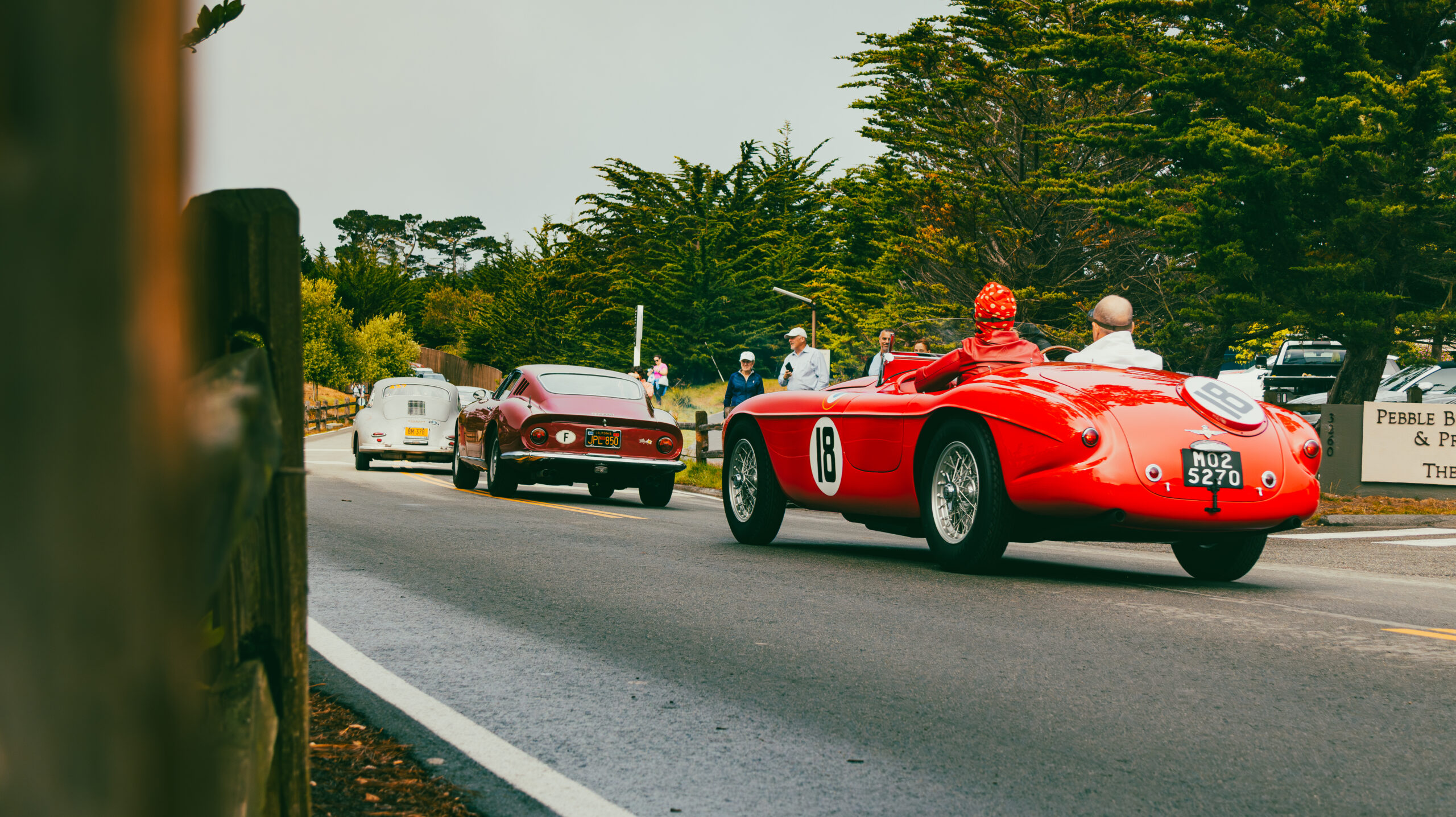
This Ferrari 340 America Touring Barchetta, chassis 0120/A, is one of six with Touring-designed coachwork. The 340 America was created after Luigi Chinetti suggested that Ferrari sell cars in the American market, which Ferrari had previously ignored. The 340 America was also the first Ferrari powered by the Lampredi “big-block” V12. But not all 340 Americas went to America, including this one. This 340 was delivered new to Edward Ramsden Hall, the British driver who finished Le Mans solo, driving a twenty year-old Bentley in 1950 to eighth place. Hall ordered this 340 America in 1951, just a month before Le Mans, and it arrived in time. He entered it at Le Mans with Juan Carlos Navone as his co-driver, but they did not finish. DK Engineering has just finished restoring this car to its 1951 Le Mans livery, and this is its first public appearance as a complete car in 70 years!
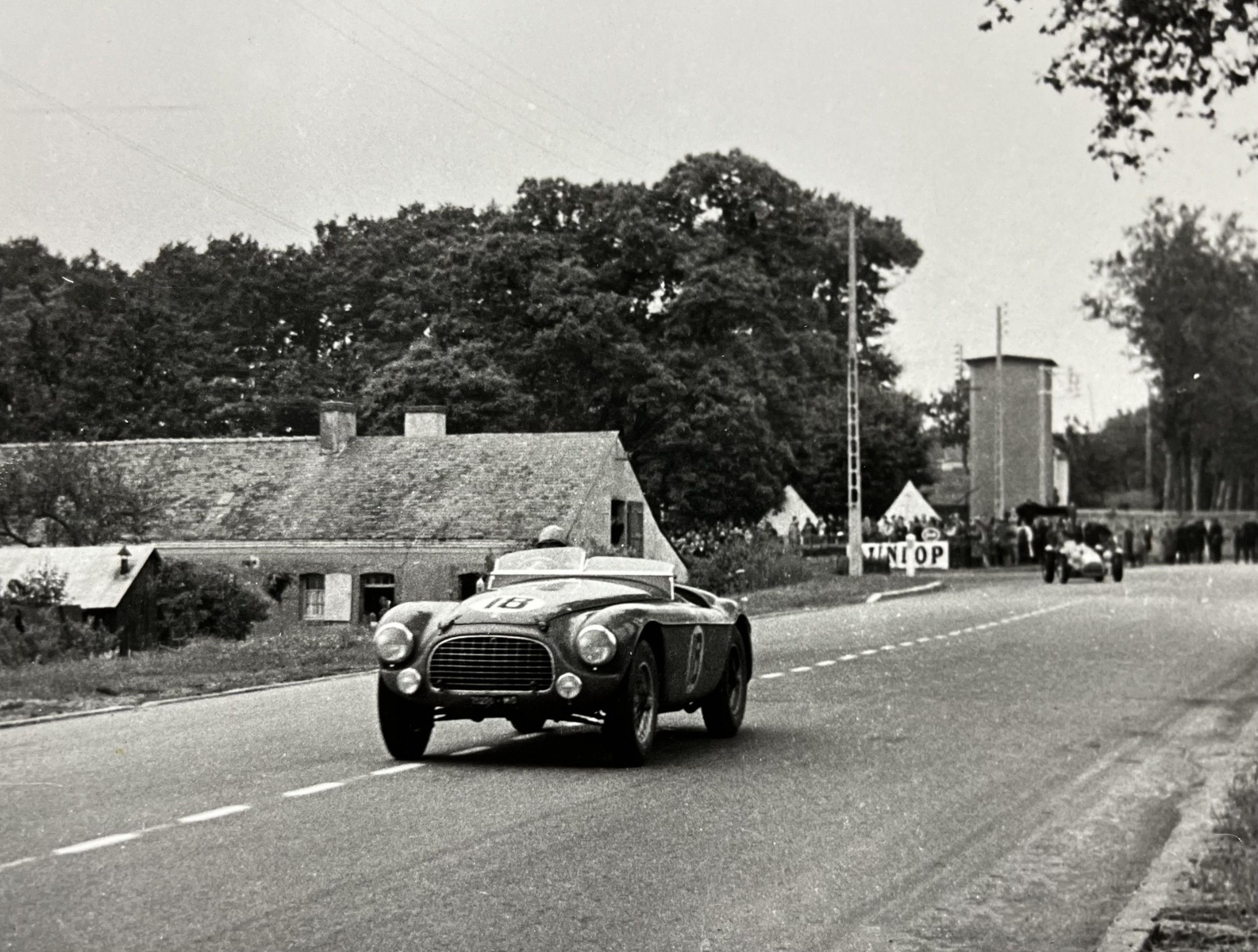
This 340 America at Le Mans in 1951. Photo: DK Engineering
1956 Maserati 200SL
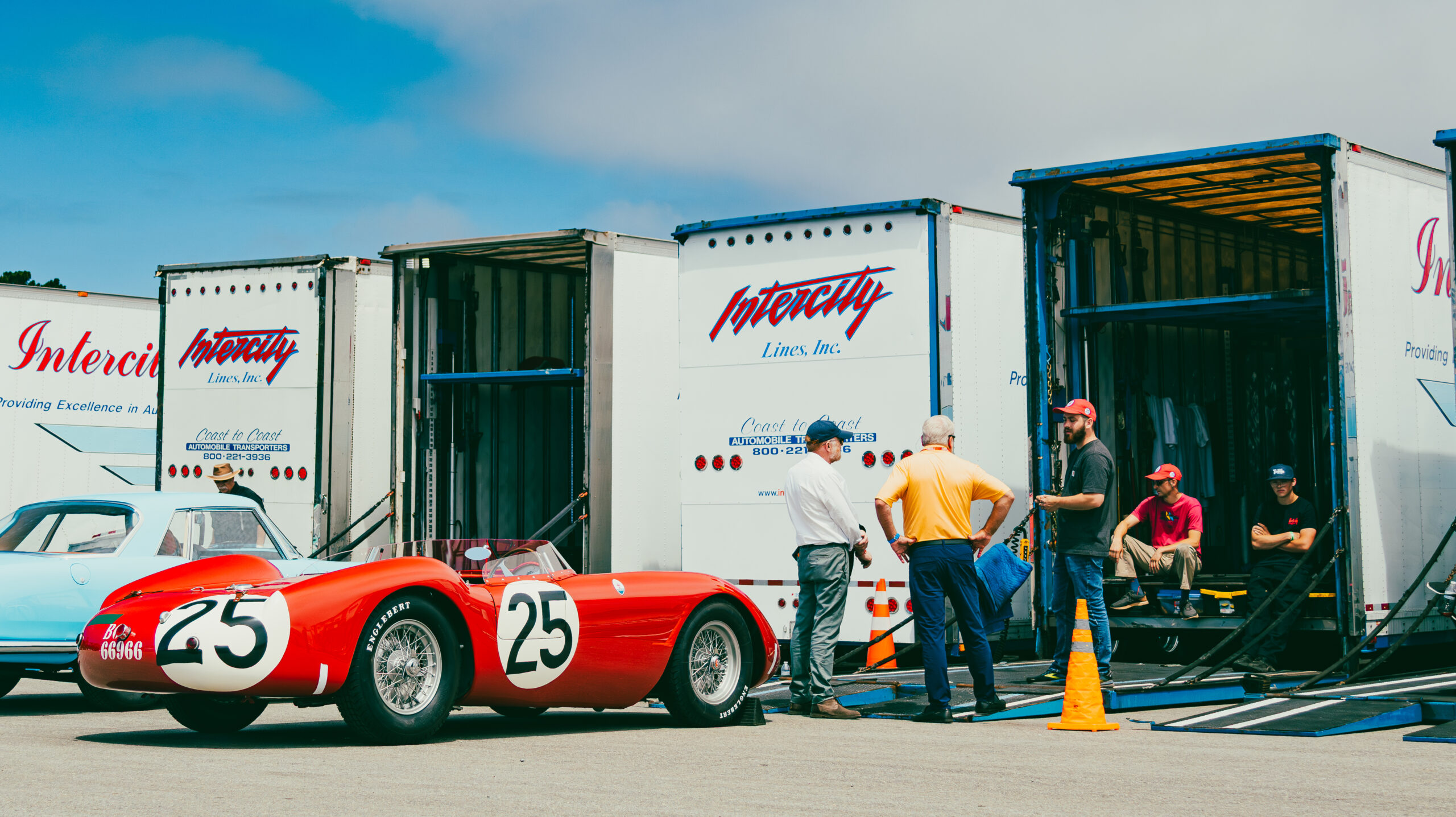
This Maserati 200SL was one of my favorite cars of the entire week. While all Maserati racers are beautiful, there was something special about this one — maybe it was those gorgeous racing numbers — but the judges agreed. The 200SL was Maserati’s challenger for the 2.0-liter class, while the monster 450S went for overall wins. This car, chassis 2402, was built by Fiandri & Maglioli, former Maserati employees who started their own carrozzeria. It was tested by Stirling Moss at Monza three days after it was built.
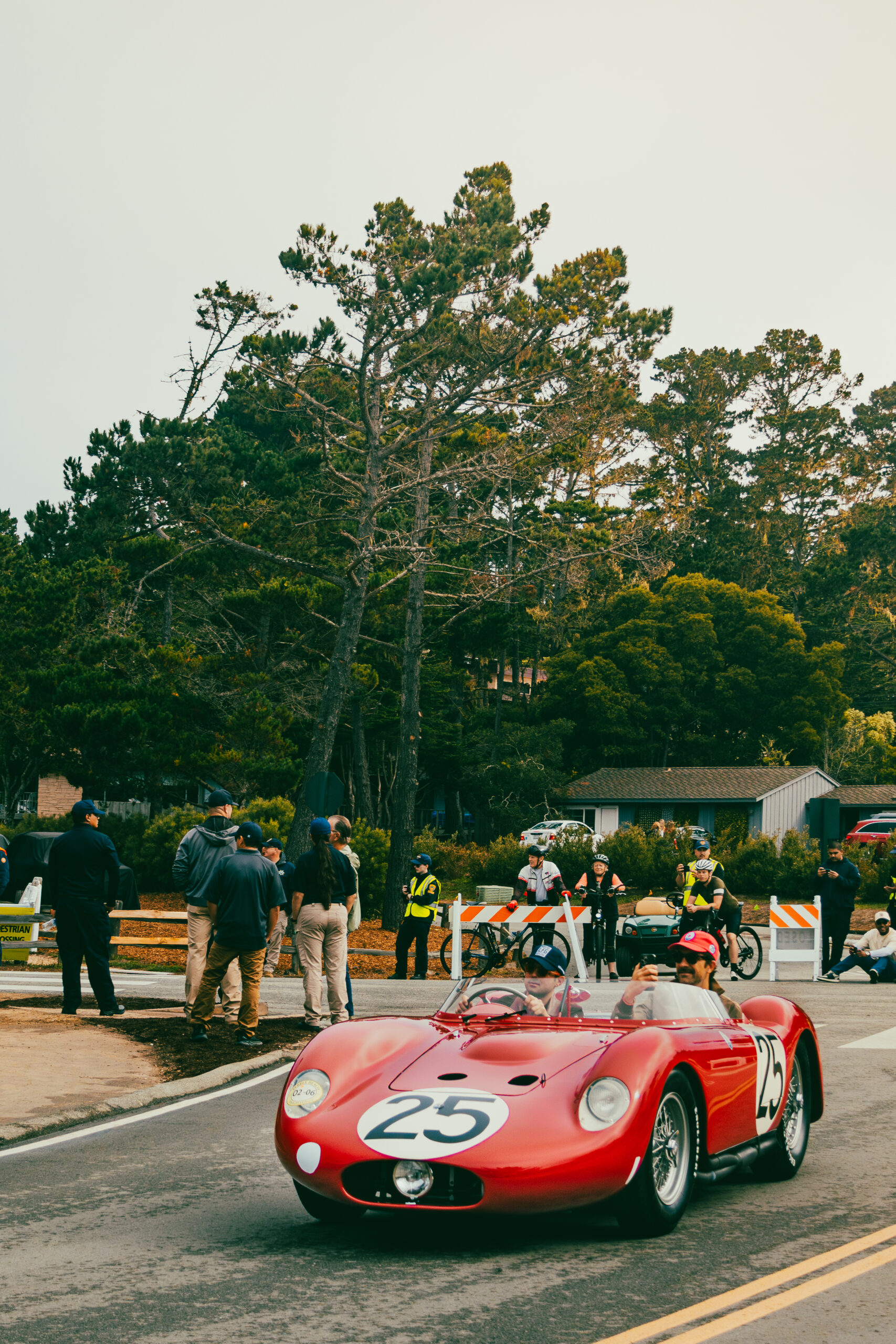
This car was entered by the Maserati works team in the 1957 24 Hours of Le Mans, driven by the French duo of Leon Couliboeuf and Jose Behra (the brother of the more famous Jean Behra). The 1957 race did not go Maserati’s way, and only one of their cars finished. This car did not finish due to a fuel tank issue. The same drivers also drove 2402 at the Swedish GP, but the car was involved in an accident. It was then sold to Jo Bonnier, who raced it around Europe. This car did very well with the judges, winning the Post-War Sports Racing class and making the final four Best Of Show contenders.
1964 Ferrari 250 LM
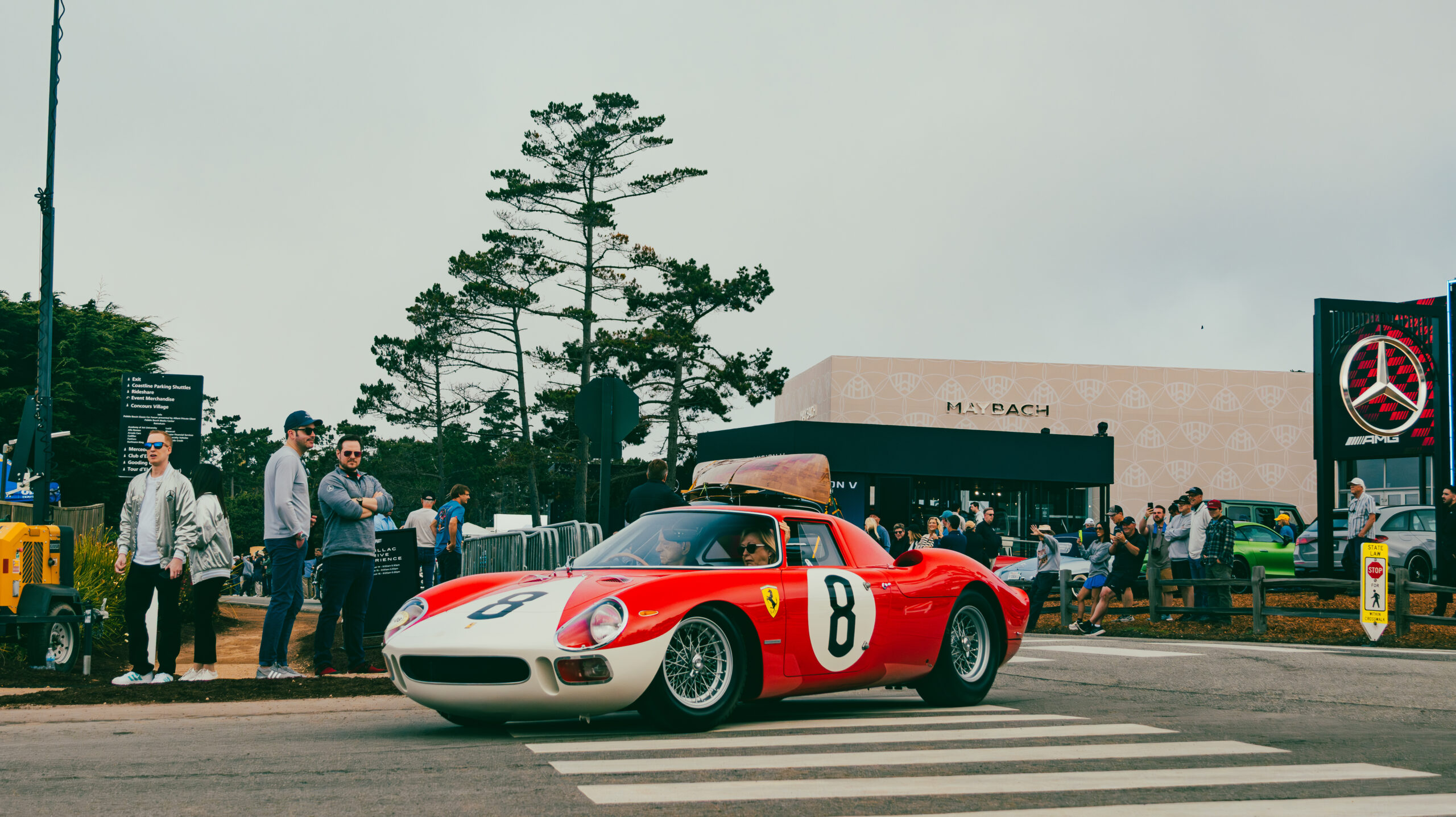
The 250 LM was designed to replace the legendary 250 GTO in GT racing. But the 250 LM was a bespoke mid-engine design that only shared the powertrain with the 250 GT road car. In fact, the 250 LM was really just a toned-down version of the 250 P prototype racer. Even though the FIA usually gave Ferrari special treatment, they refused to homologate the 250 LM as a GT car. Enzo was furious. But even when forced to run in the prototype class, the 250 LM won several major races, most famously the 24 Hours of Le Mans in 1965, after all the other prototypes broke down. This car, chassis 5909, was delivered to Luigi Chinetti’s North American Racing Team (N.A.R.T.). It was entered at Le Mans in 1964, driven by David Piper and future F1 World Champion Jochen Rindt. 22-year-old Rindt qualified this car eighth fastest, behind only the Ferrari prototypes and GT40s. But it was all for nothing, as their race ended on the very first lap due to an oil filter failure.
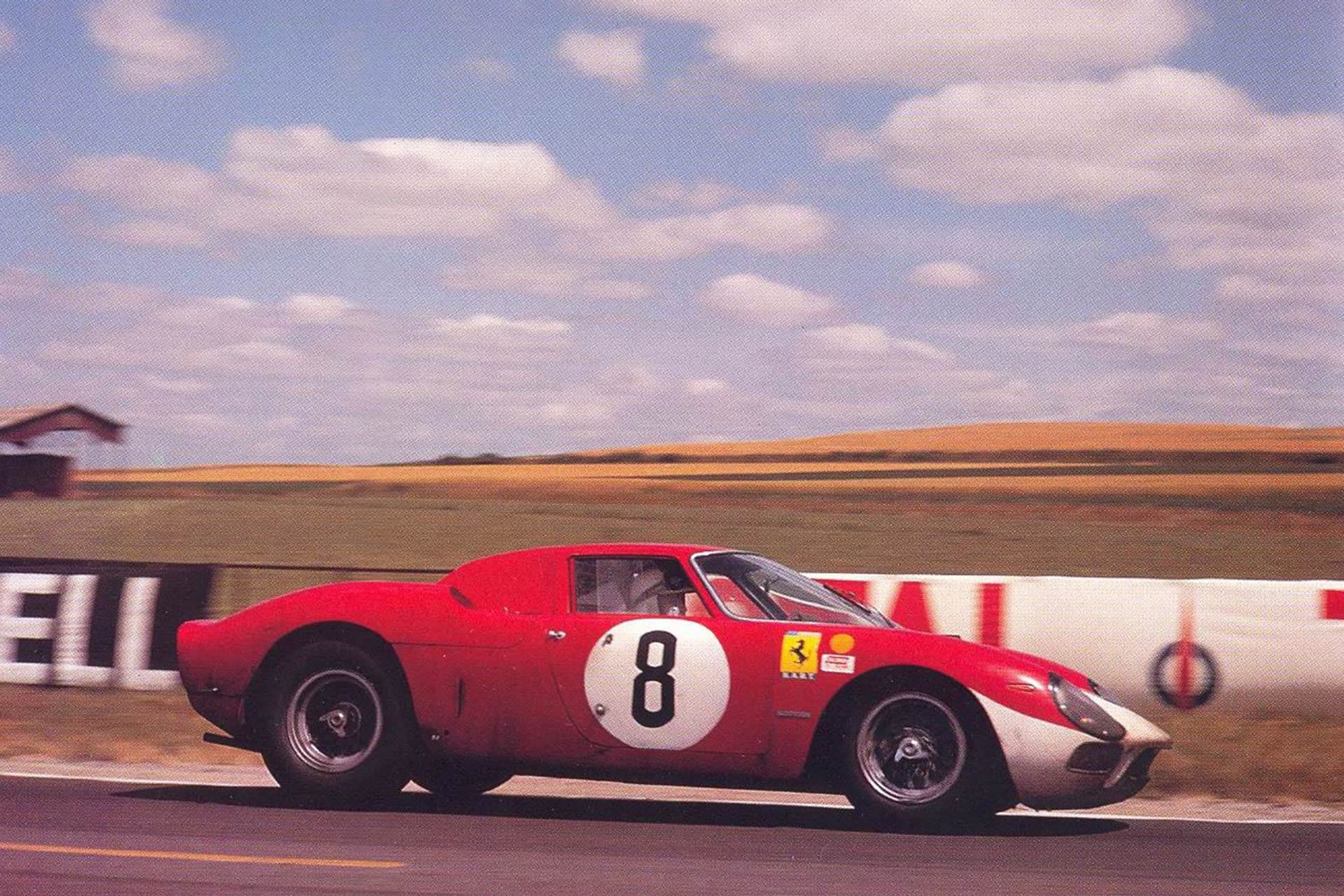
This 250 LM racing at Reims in 1964, driven by John Surtees and Lorenzo Bandini. Photo: Girardo & Co
This car also raced in the 1964 12 Hours of Reims, where John Surtees and Lorenzo Bandini battled against another 250 LM driven by Graham Hill and Jo Bonnier. Starting at midnight, the pair of 250 LMs battled for the lead lap after lap, at an average speed of 126 miles an hour. In the end, Surtees and Bandini had to settle for second. Amazingly, the winning 250 LM of Hill and Bonnier was also on the Tour, and these two cars were reunited for what might be the first time since 1964. Only at Car Week. This car was then sold to Bob Grossman, who raced it under his Scuderia Bear team. It won its class at the famous Bahamas Speed Week and finished third overall at Bridgehampton in New York. This was this 250 LM’s fourth appearance at the Concours. It took home the Enzo Ferrari Trophy for the best Ferrari at the Concours.
1957 Chrysler Super Dart 400
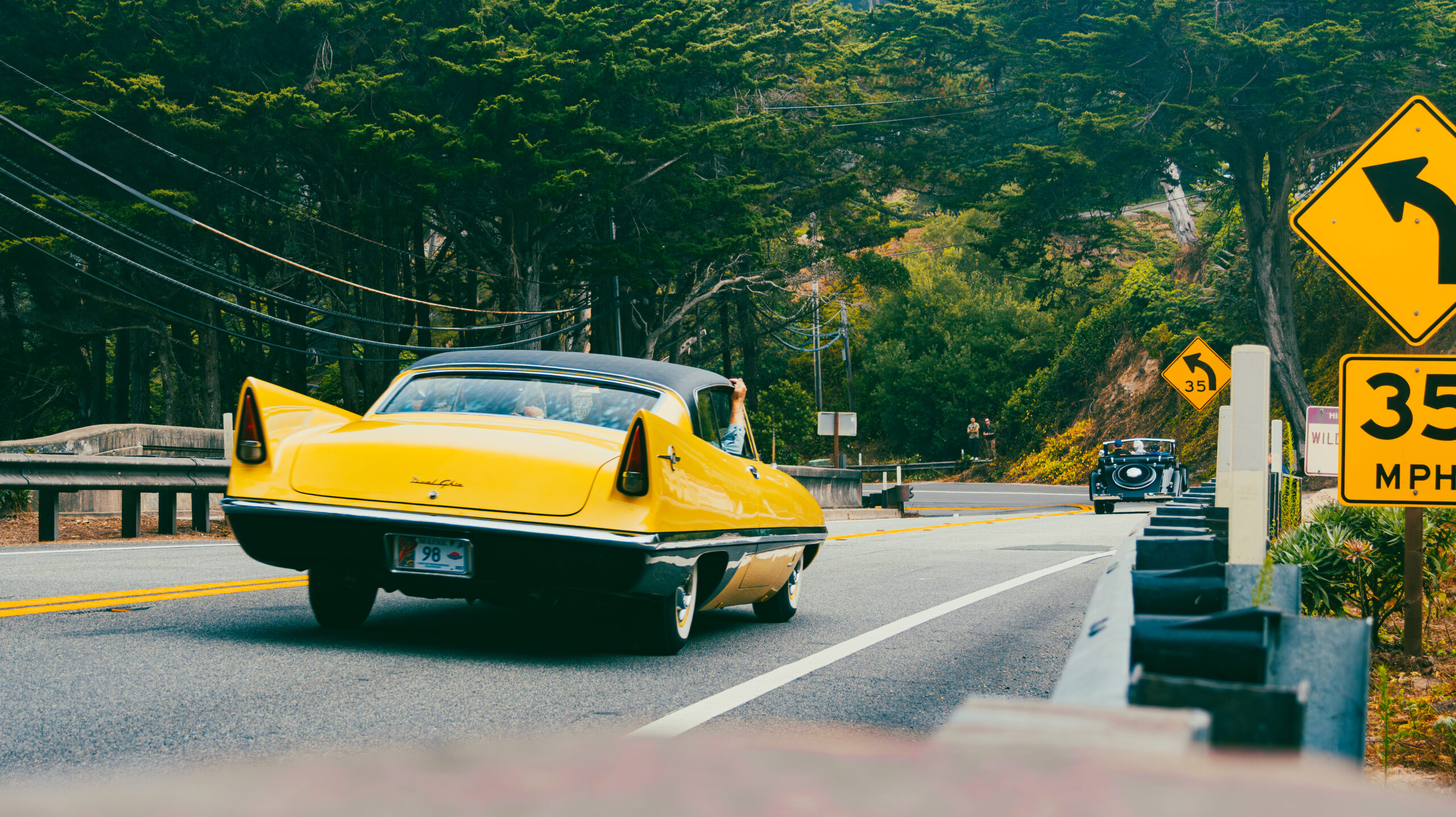
This one-off concept car debuted at the 1957 Turin Auto Salon. Designed by Virgil Exner at Ghia, the Super Dart 400 was the successor to the previous year’s Dart concept. This car looks very similar to another one-off Ghia design, the Ferrari 410 Superamerica from the year before. This was my favorite of the many Exner designs on the Tour, which ranged from relatively restrained to absolutely wild. The Super Dart 400 is based on the Chrysler 300C chassis, powered by a 400-horsepower 329ci V8. After Turin, it was sold to Dual Motors, who displayed it at their stand at the 1958 New York Auto Show.
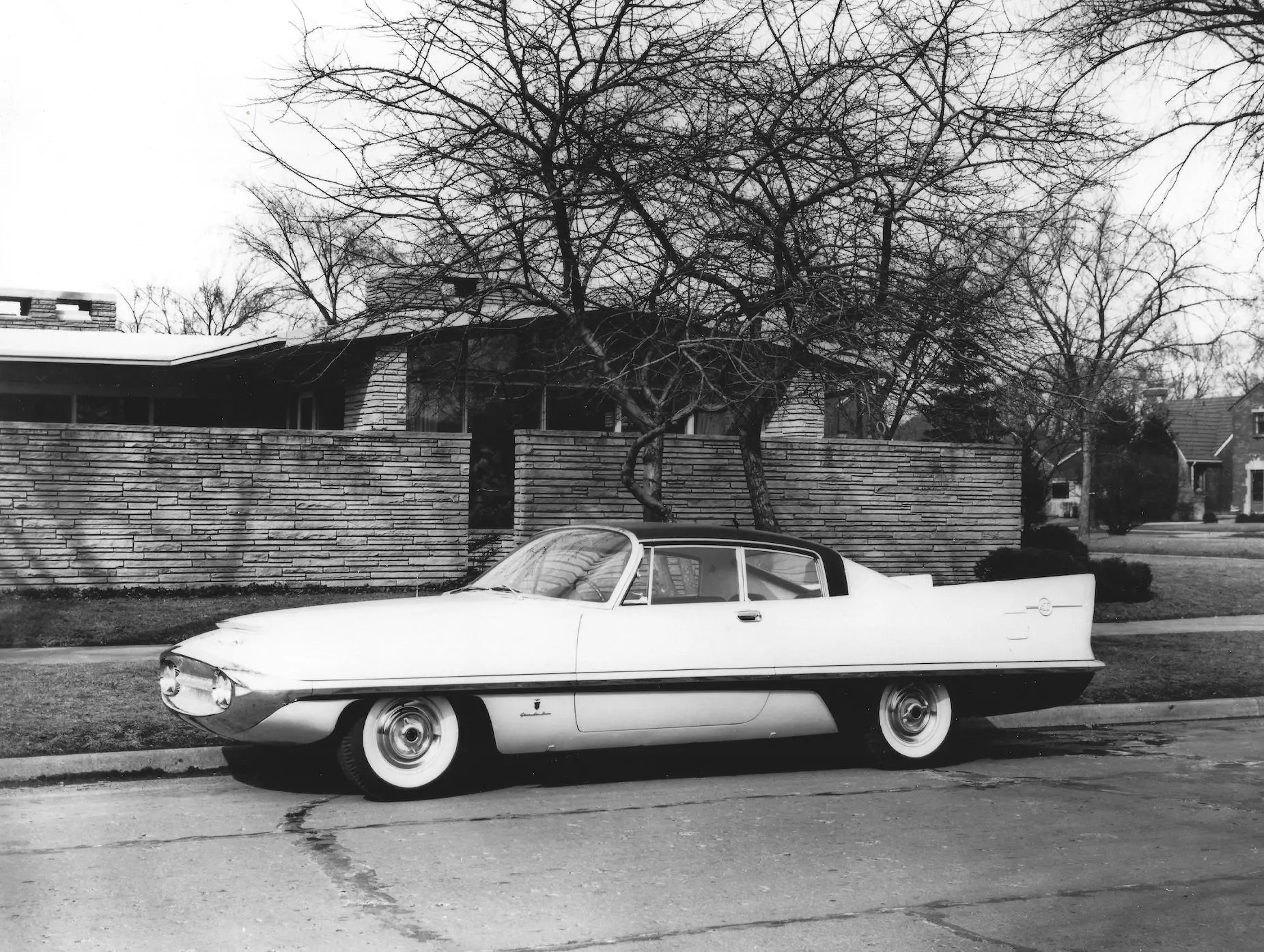
Photo: Bonhams
Alex Freeman purchased the Super Dart at the Auto Show for $15,000 – almost the price of a Ferrari 410 Superamerica. Freeman owned the Super Dart for twenty years, clocking up 38,000 miles, while taking very good care of it. It has had only four owners, and it remains entirely original.
1952 Jaguar C-Type
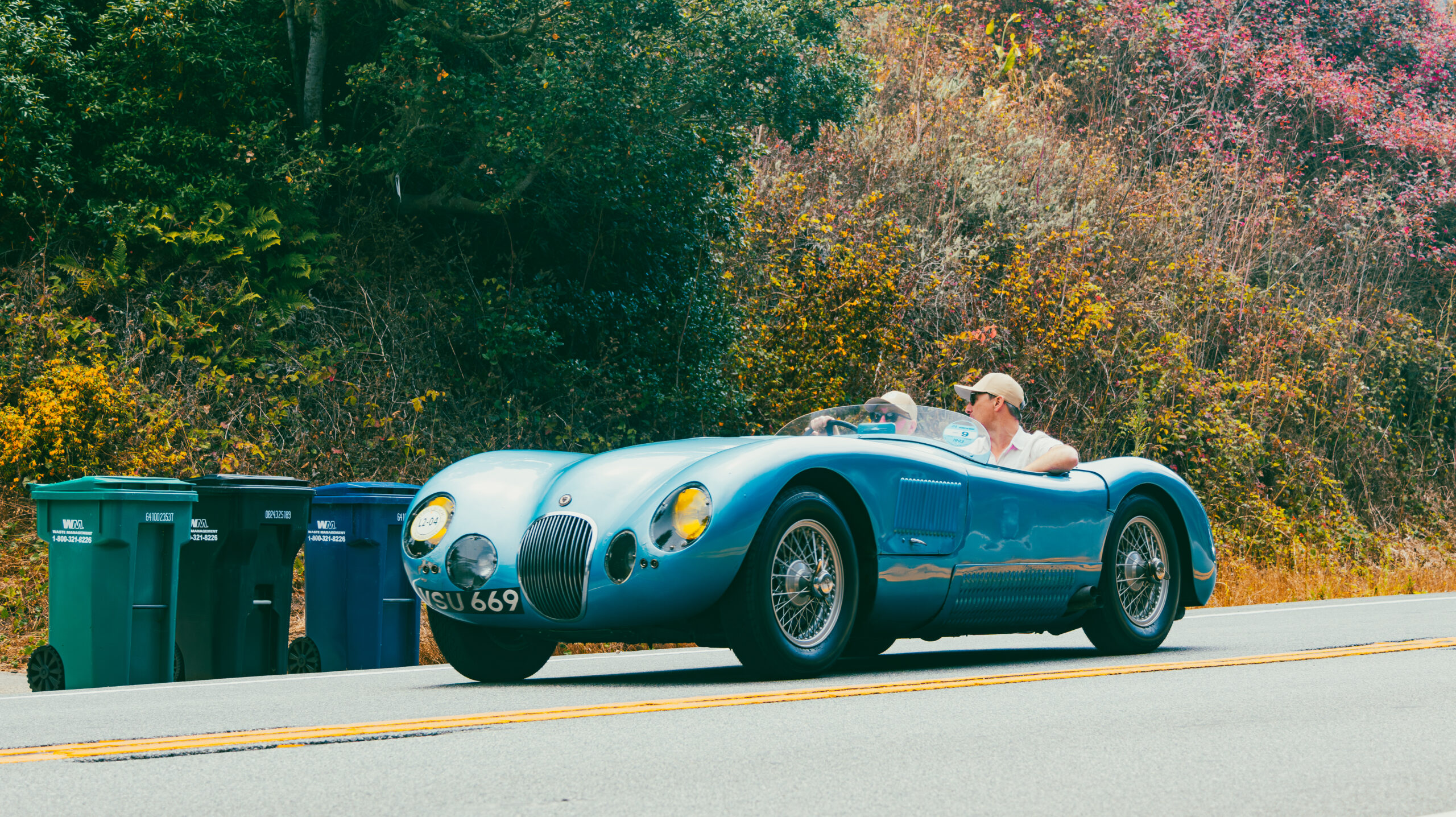
This Jaguar C-Type was another one of my favorites. It was delivered through the dealership of the famous importer Max Hoffman and was sold to Robert Blackwood, who entered it in several SCCA races. Its first win was at MacDill Air Force Base in front of 90,000 spectators. It was also entered in the 1954 12 Hours of Sebring and the Watkins Glen GP, driven by John Gordon Bennett, who would eventually become the president of Jaguar North America. The best part of this car was the color. C-Types look good in many colors, but this blue was perfect. This car was incredibly original and won the Post-war Preservation class.
1965 Bugatti Type 101C-X Roadster
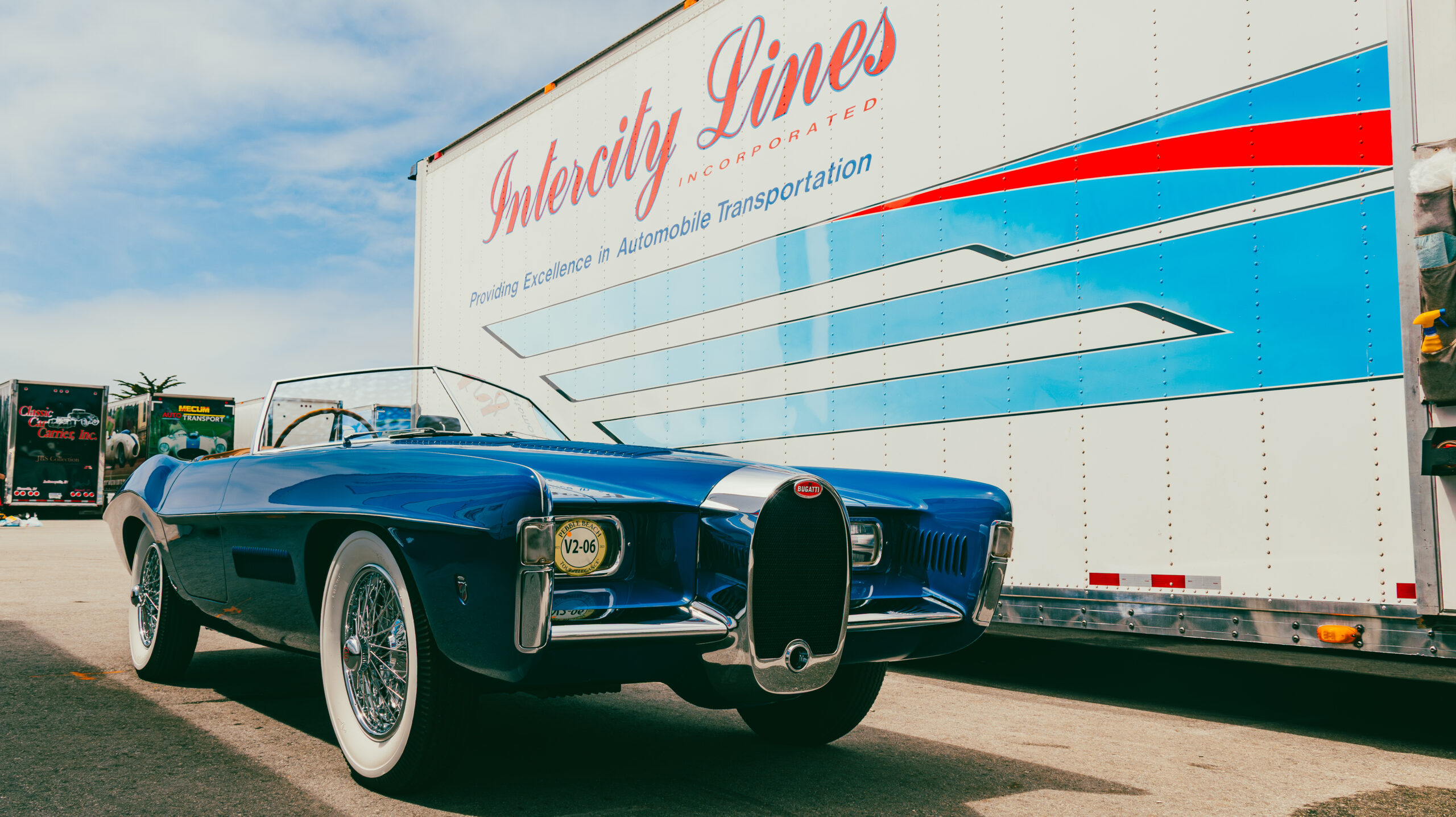
This was probably the wildest car at the Concours. This car is based on a 1951 Bugatti Type 101 chassis, a design that was already outdated before it was even revealed, given its ’30s roots. Bugatti, like many other car makers after WWII, had neither the time nor the money to create something new, and the T101 was their last attempt to keep the company alive. The T101 was powered by a 3.3-liter straight-eight producing 135 horsepower, and the T101C had a supercharger that increased output to 190 horsepower. Seven T101Cs were built, but one was never completed and remained as a bare chassis. Now our story jumps eleven years ahead to 1962. After being fired from Chrysler due to company politics, Virgil Exner started his own design firm with his son, Virgil Exner Jr. Around the same time, E. Allen Henderson had acquired the T101C chassis from the Bugatti estate, and Exner soon heard about it.
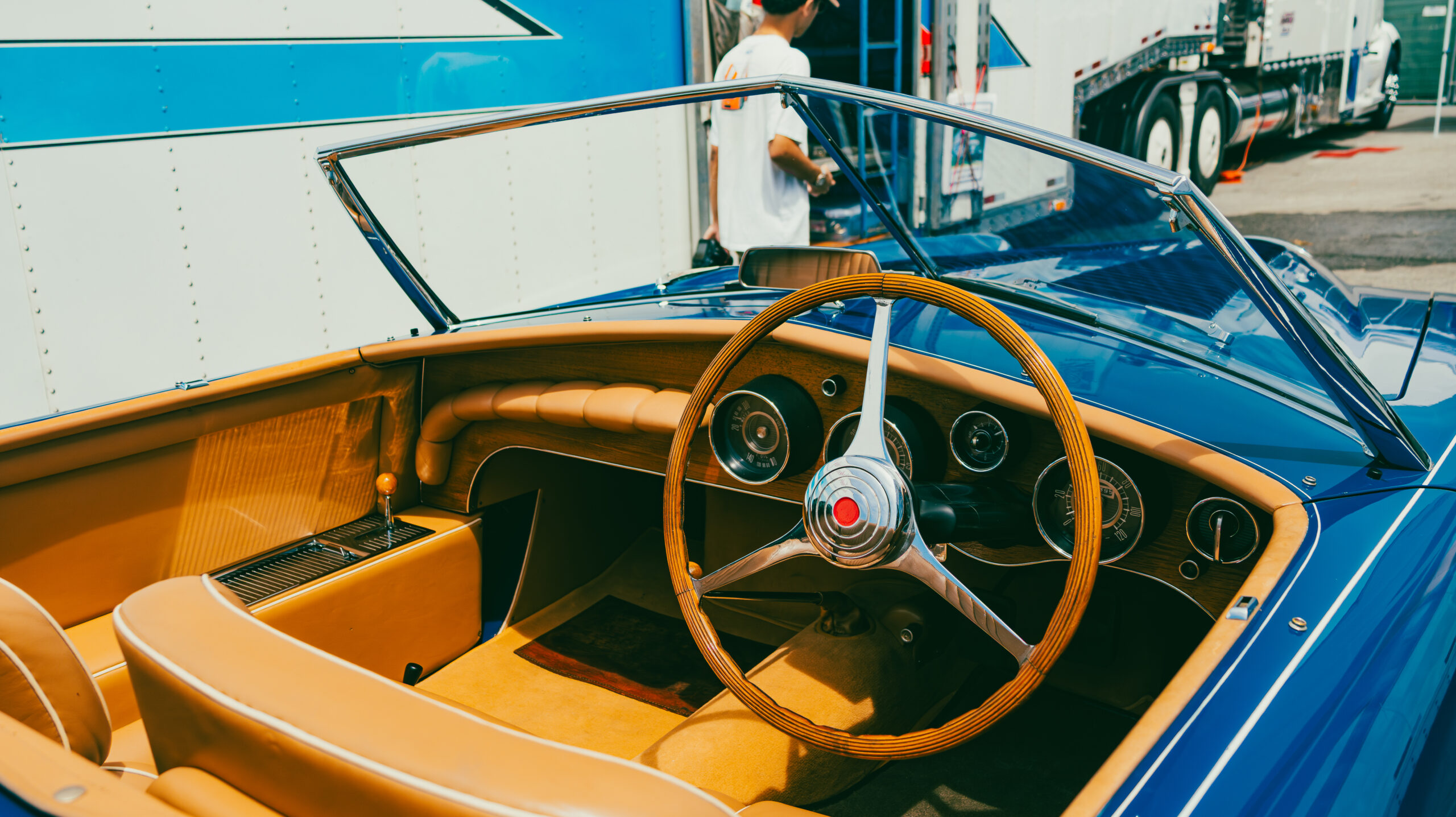
Exner purchased it for $2,500, with the intention of designing custom coachwork for it. Exner Jr. worked with his best friend, Mike Cleary, to modify the chassis, shortening it by 18 inches! Ghia built the T101C-X for free to repay the consultancy fees that they owed Exner. The design that the Exners created is strange, and yet quintessentially Bugatti, from the wire wheels to the split windshield. It’s hard to pin down what era this car was designed in. ’40s? ’50s? ’60s would not be my first guess. Exner debuted the T101C-X at the 1965 Turin Auto Salon, and he hoped that there would be interest in building a series of the design on a new chassis. Sadly, it never happened, and Bugatti would not be revived for another 30 years. This car won the Elegance in Motion award, and I think it was well deserved.
These were just a few of my favorite cars on the Tour d’Elegance. There were so many incredible cars there and so little time to shoot photos of them. I plan to get there earlier next year.