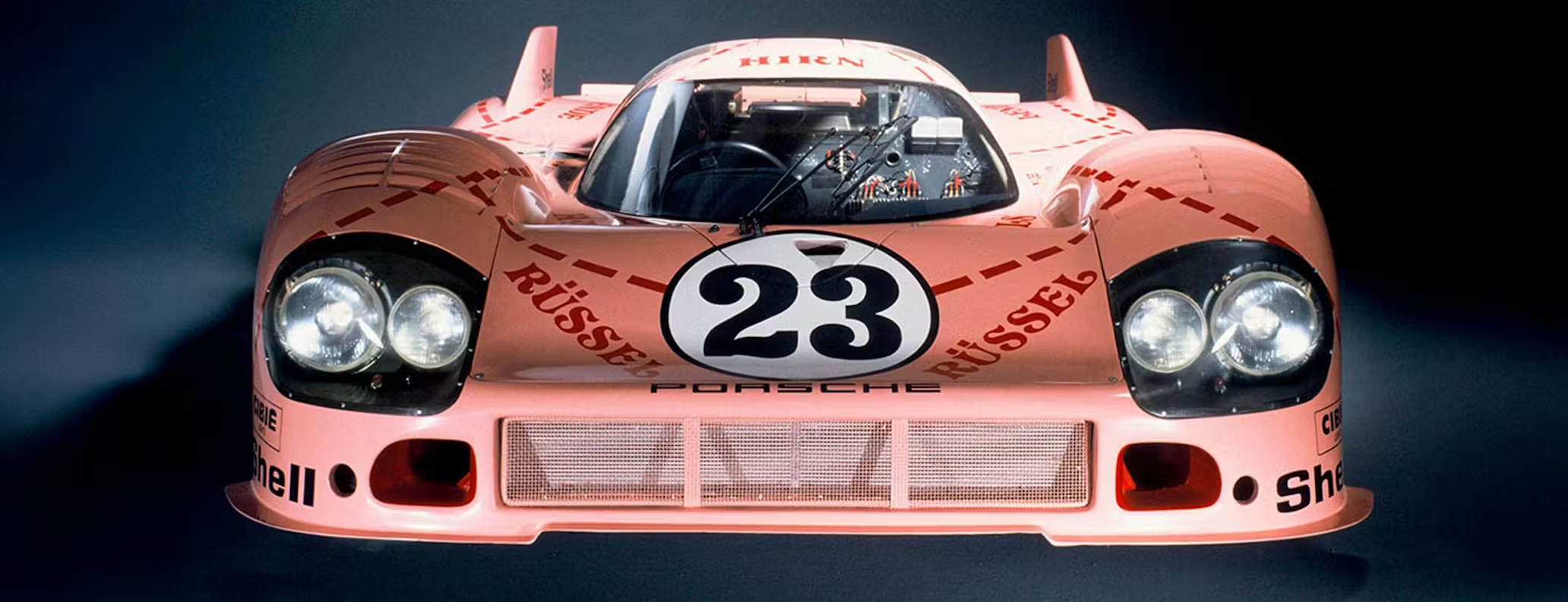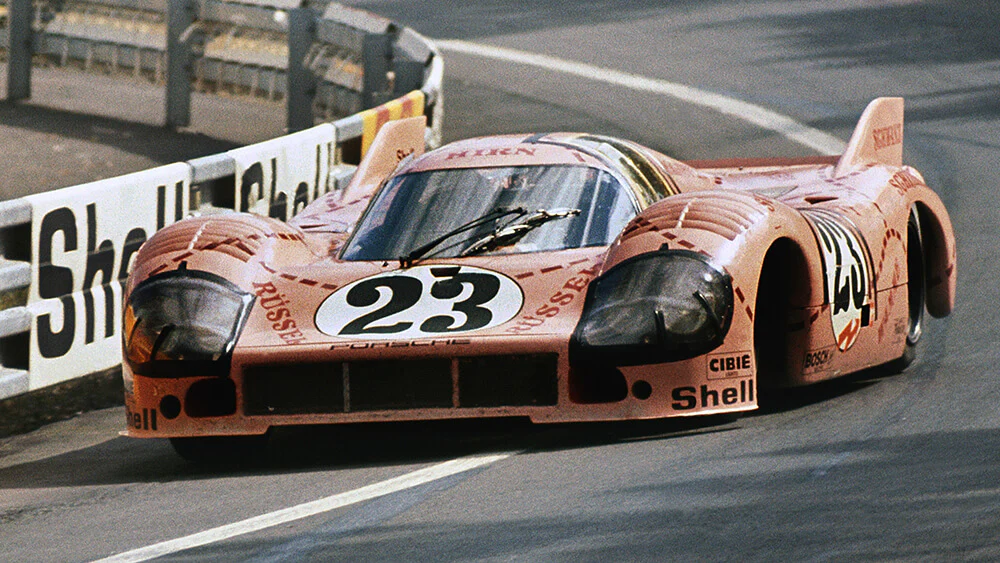
No one racing car has more nicknames than the Porsche 917/20 “Pink Pig”, or should I say “Big Bertha”, or “Truffle Hunter from Zuffenhausen”? The origins of the iconic livery are usually attributed to a bit of fun by the designers, but the whole story is quite fascinating. In 1970, Porsche had two versions of the 917. The 917 LH (Langheck, long-tail in German) was designed only for Le Mans and capable of over 240 miles an hour, but it was difficult to handle at low speeds. The 917 K (Kurzheck, short-tail in German) was easier to drive, but it lacked top speed. Porsche wanted a short-tail 917 with lower drag. Porsche met with a group of French designers from the Society for the Study of Automotive Achievement (SERA) to discuss the design of the new car. SERA had been involved with the aerodynamics of the 917 from the start and was responsible for the 917 LH. But that didn’t mean the German designers were happy about it. Hiring a French firm was not something Ferdinand Piech worried about, as his goal was to win by any means necessary, which was obvious during the 917 project. Porsche’s own design team, led by Richard Soderberg, was working on its own version of the new 917. The in-house design was quite radical, with fully covered wheels and flowing bodywork like a concept car. It’s reminiscent of the Pininfarina-designed Ferrari 512 S Modulo concept car, which debuted that year and was based on the 917’s main racing rival, the Ferrari 512 S.
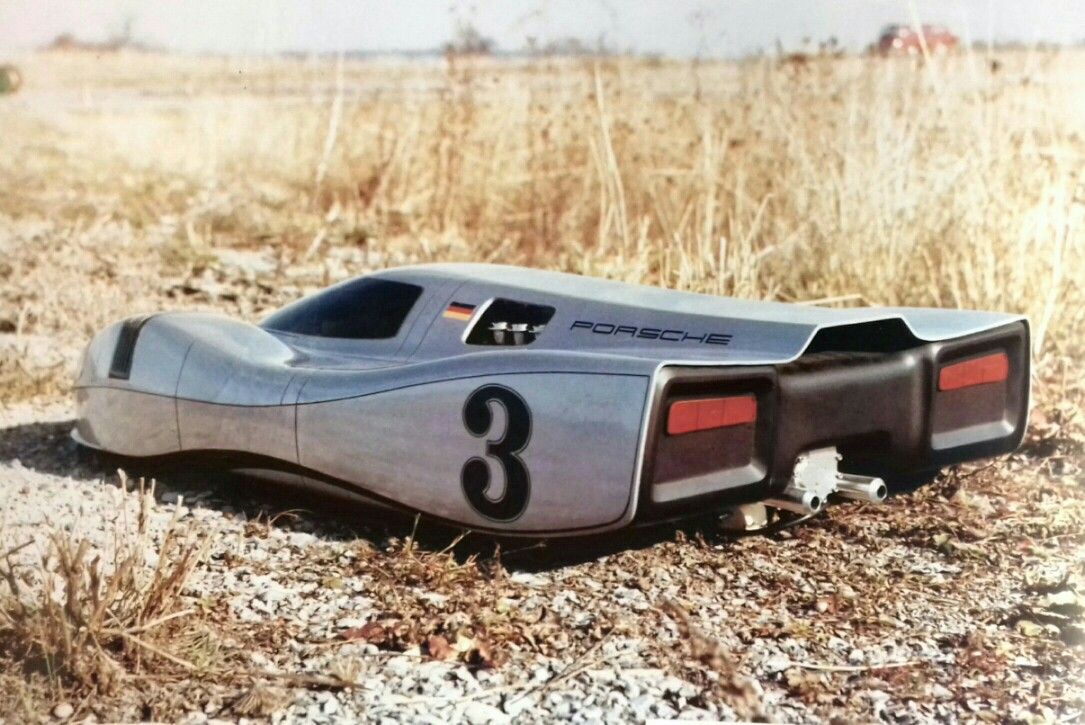
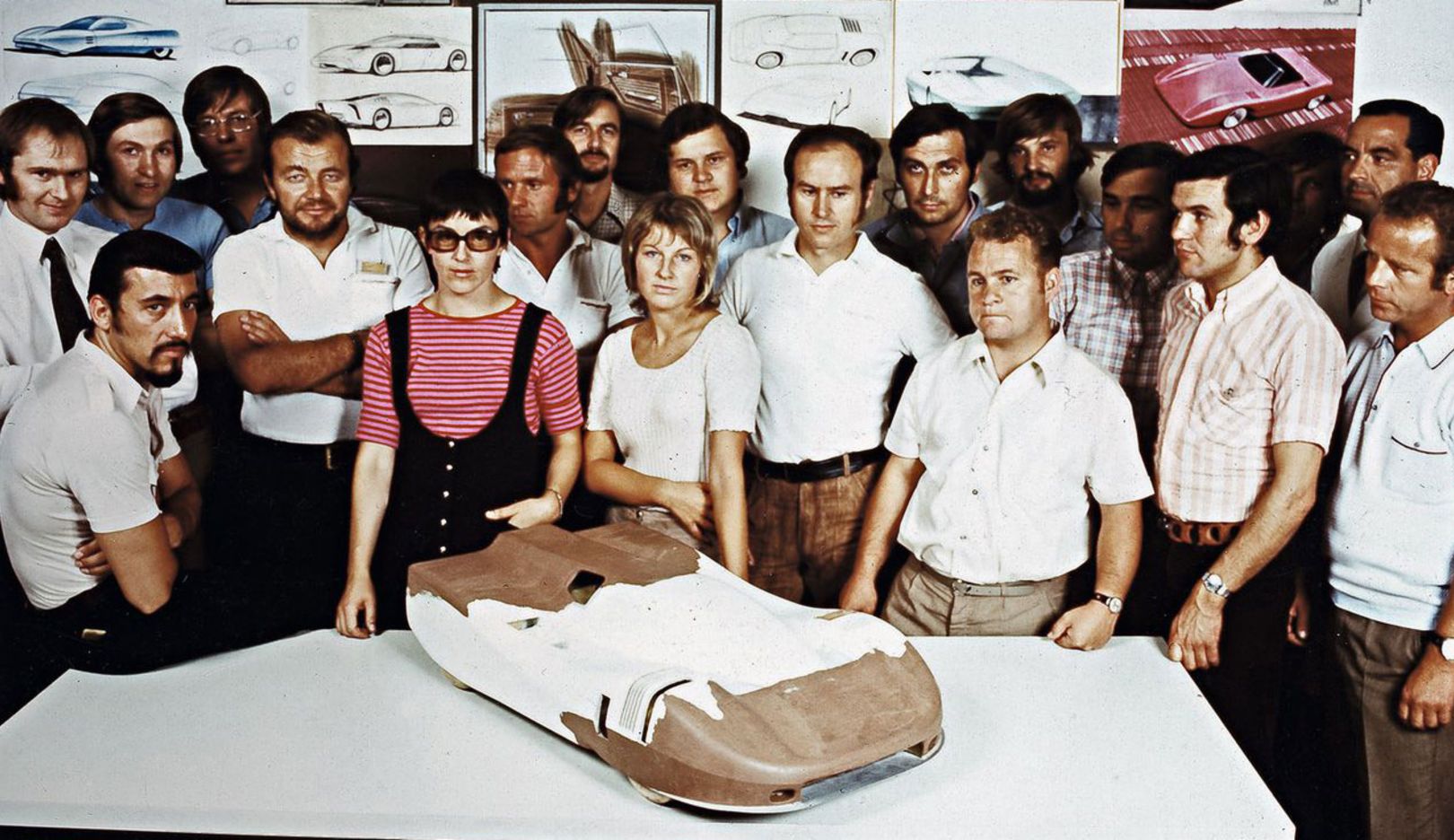
Porsche’s in-house design for the 917/20 project looked spectacular, but the wheel covers would have made pit stops very difficult. The team made their own changes to the model after their design was turned down, turning it into a miniature concept car.
Both models were tested in the wind tunnel, and Porsche’s was less efficient than SERA’s. But the decision had already been made to use SERA’s design. Porsche’s design may have been rejected due to the difficulty of changing tires with the wheel covers. Politics could also have affected the decision, as getting a completely new body approved by the regulators would be difficult. Charles Deutsch, the head of SERA, was also the race director at Le Mans, so SERA’s design was always going to be approved by the organizers. So it was a wise choice.
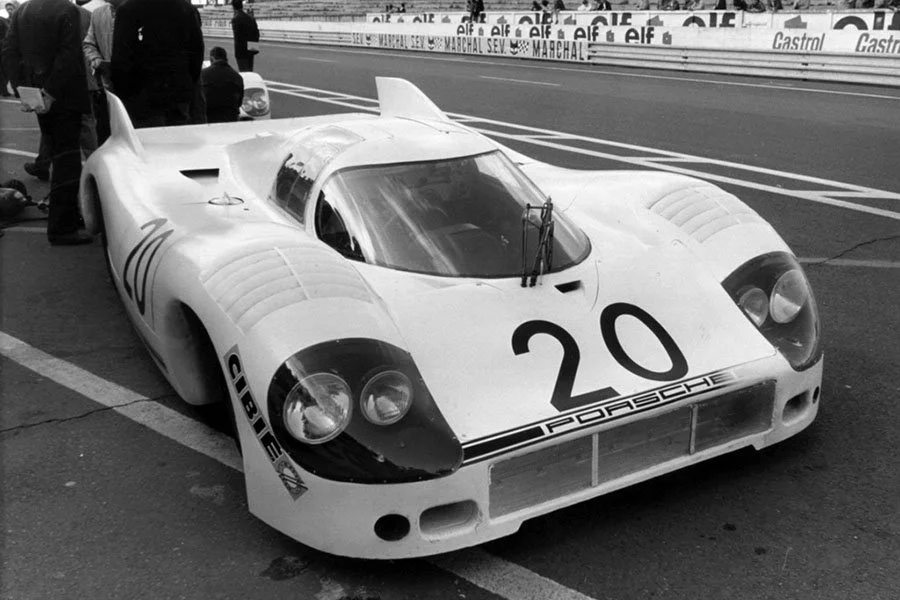
The 917/20 at the 1971 Le Mans test weekend.
But it wasn’t a pretty one. SERA’s design was universally considered ugly, and Count Rossi of Martini & Rossi refused to sponsor the car after seeing it. It was 87 inches wide, nine inches wider than the other 917s, and the wheels were embedded deep in the wheel wells. The nose was also shortened. It was so wide that it wouldn’t fit in a standard transporter, so it was loaded onto the back of an old military truck and driven to Le Mans. The car was entered in the 1971 Le Mans test weekend, where it immediately had all the issues it was explicitly designed not to have—and more. Several changes were made to address the 917/20s high-speed instability, including a rear Gurney flap, along with brake and suspension upgrades, and it performed much better.
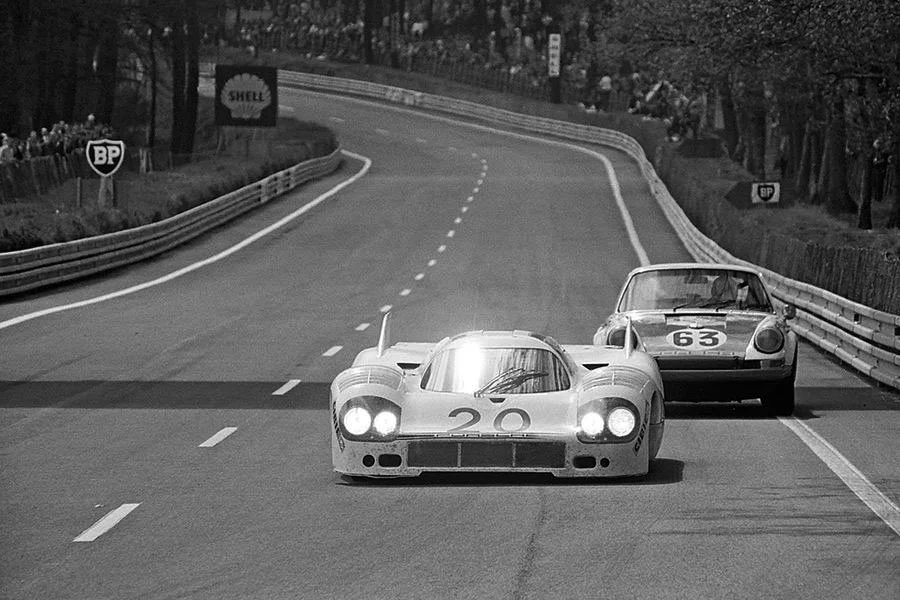
The 917/20 lapped the entire field during the three-hour race at Le Mans before retiring due to rev limiter issues.
It was only the fifth fastest car of the test, however, and Jackie Oliver stole the show with a 155-mph average lap in his 917 LH. There was a three-hour race at Le Mans that weekend to increase attendance, and the 917/20 was entered with two Ferrari 512 Ms as its main opponents. Driven by Willi Khausen and Gijis Van Lennep, it easily led the race until issues with the rev limiter forced it to retire. It was sent back to Weissach for further development and significantly improved. Ironically, wind tunnel testing revealed the 917/20 had more drag than either the 917 LH or 917 K.
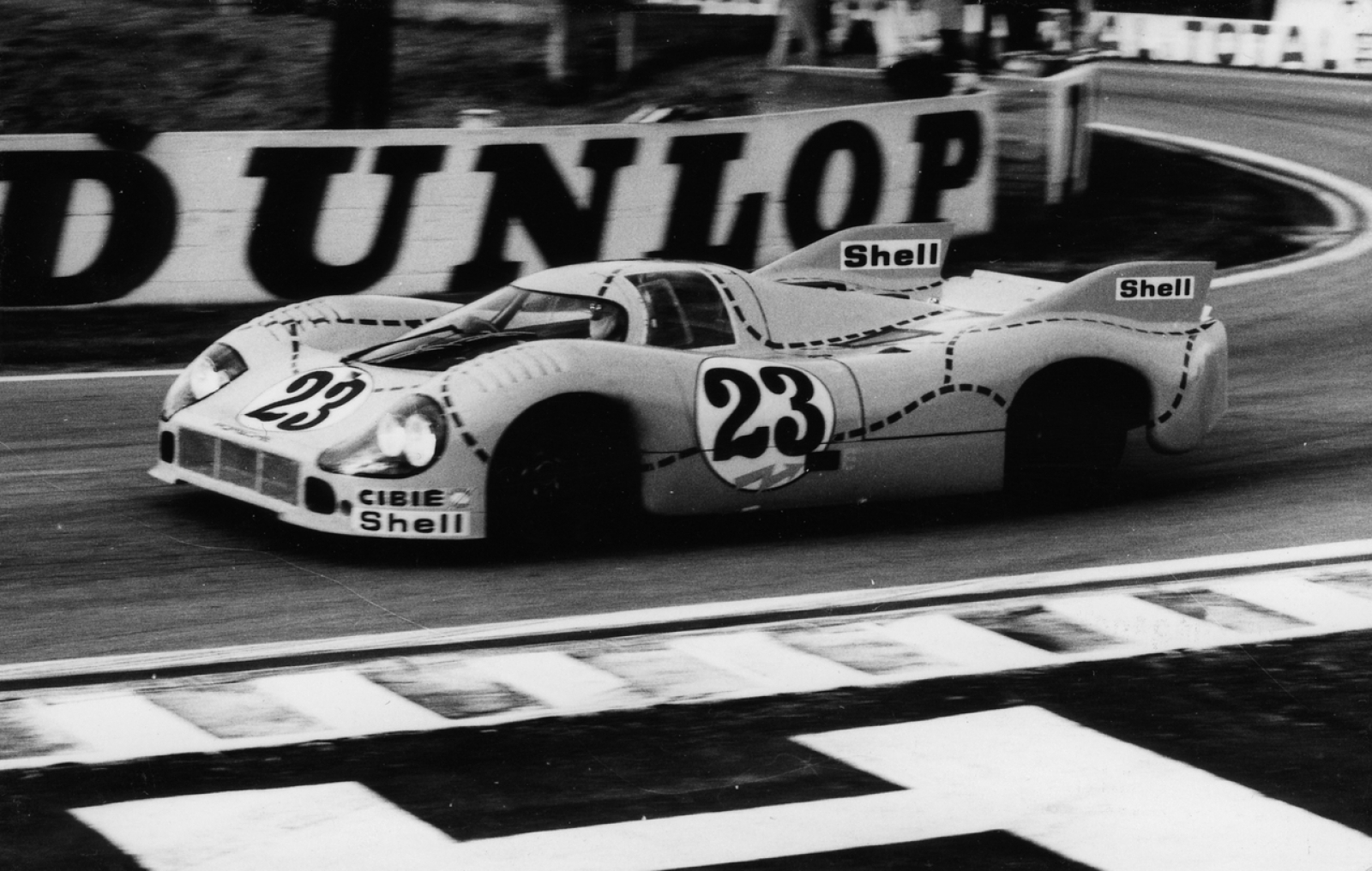
The Pink Pig seems to float over the road in this photo, as the wheels hide in the wheel wells. Note that the names of the cuts of meat were not on the car yet.
When Porsche designer Anatole “Tony” Lapine first saw the 917/20 in a garage, he said it looked like a pig in a barn. Piech was not pleased with his remarks. But now Lapine and Soderberg were tasked with designing the livery for said pig. Lapine had experience with wild 917 liveries, as he created the “Hippie Car” of the previous year (which Piech was not a fan of). While many articles say the livery came about because of the designer’s sense of humor, it was most likely done out of spite, though I’m sure they got a good laugh out of it. With no major sponsors to worry about, the car was painted pink, and a butcher’s chart was added on top. The names of the meat cuts weren’t added until race day.
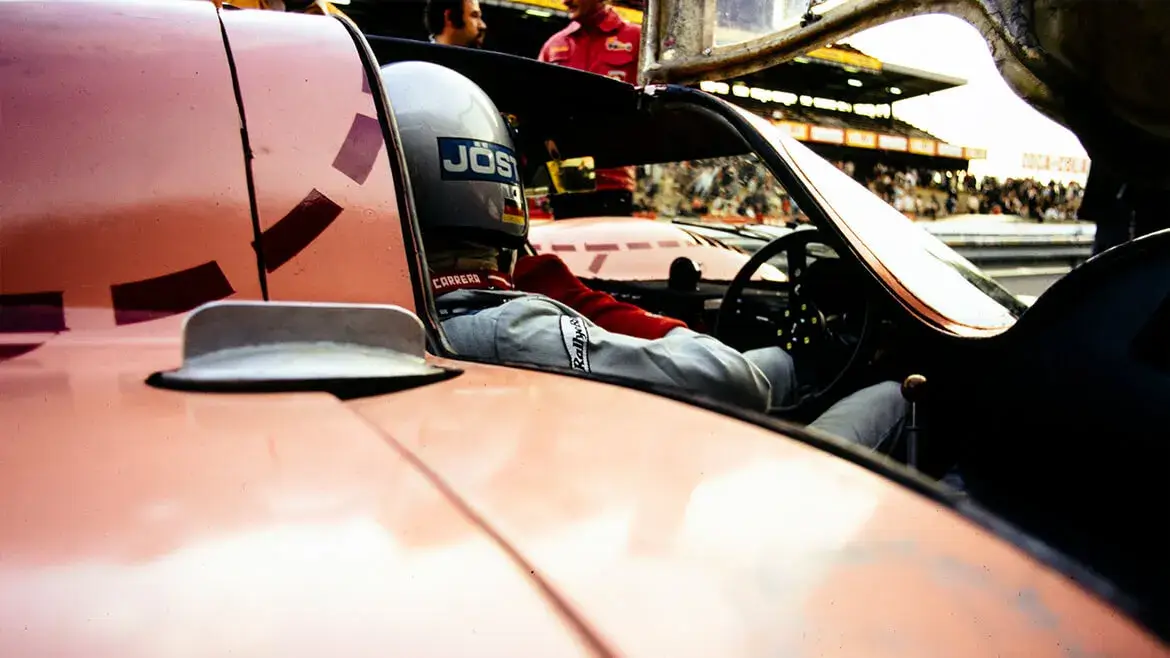
Reinhold Joest sits in the Pink Pig.
The 917/20 was entered by the Martini team, but without their sponsorship due to Count Rossi’s dislike of its looks. Reinhold Joest and Willi Khausen were chosen to drive the Pink Pig at Le Mans. They qualified seventh, eight seconds slower than Pedro Rodriguez, who won the pole in his Gulf 917 LH. The Pink Pig’s race started well, and it was running in third place overall by the seven-hour mark. Joest complemented the Pink Pig’s handling later, saying “But when I drove it the car was so much easier than what I’d driven before, very different, and on the straight it was better than I had experienced before. It had less drag, the balance was perfect and there was plenty of downforce.” While it was made fun of by many people, the Pink Pig was a genuine competitor at Le Mans. The aero wash generated by the Pink Pig’s aerodynamics was extremely strong. Alain De Cadenet was driving a Ferrari 512 M at Le Mans that year, and said that Khausen blasted past him at over 230 miles an hour and literally sucked his car off the road. The Pink Pig left an intense vortex in its wake, while the other 917s didn’t have the same issue.
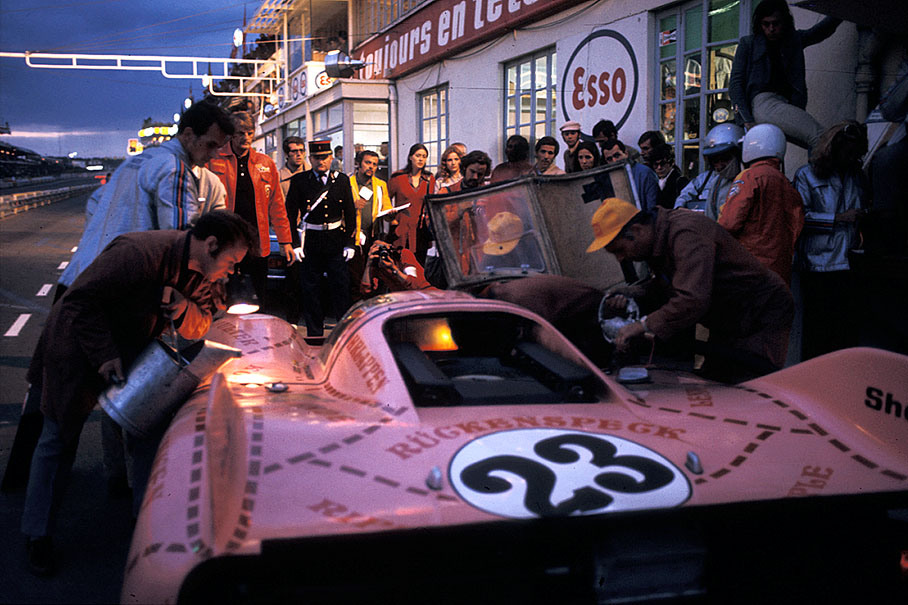
The Pink Pig stops right after sunset at Le Mans.
During the night, the Pink Pig’s race began to unravel. A throttle cable broke on lap 179, right before the pit lane. Joest pitted for a repair and returned to the track in fifth place. Then, while braking for the Arnage corner several laps later, the car suddenly snapped and turned right into the barrier. Joest claimed the crash was due to a brake problem, but not all the mechanics believed him. When the Pink Pig was restored in 1984, he found that the front brake pads were worn down to the metal. He suggested that Porsche should have changed the brakes more often than the other 917s, given its lower drag. After Le Mans, the Pink Pig was never raced again. It wasn’t quicker than the 917 K, and it had no other benefits, let alone the fact that Count Rossi was appalled by its looks. The Pink Pig may have been an experimental car that became a strange joke, but it’s one of Porsche’s most iconic cars and is fondly remembered.