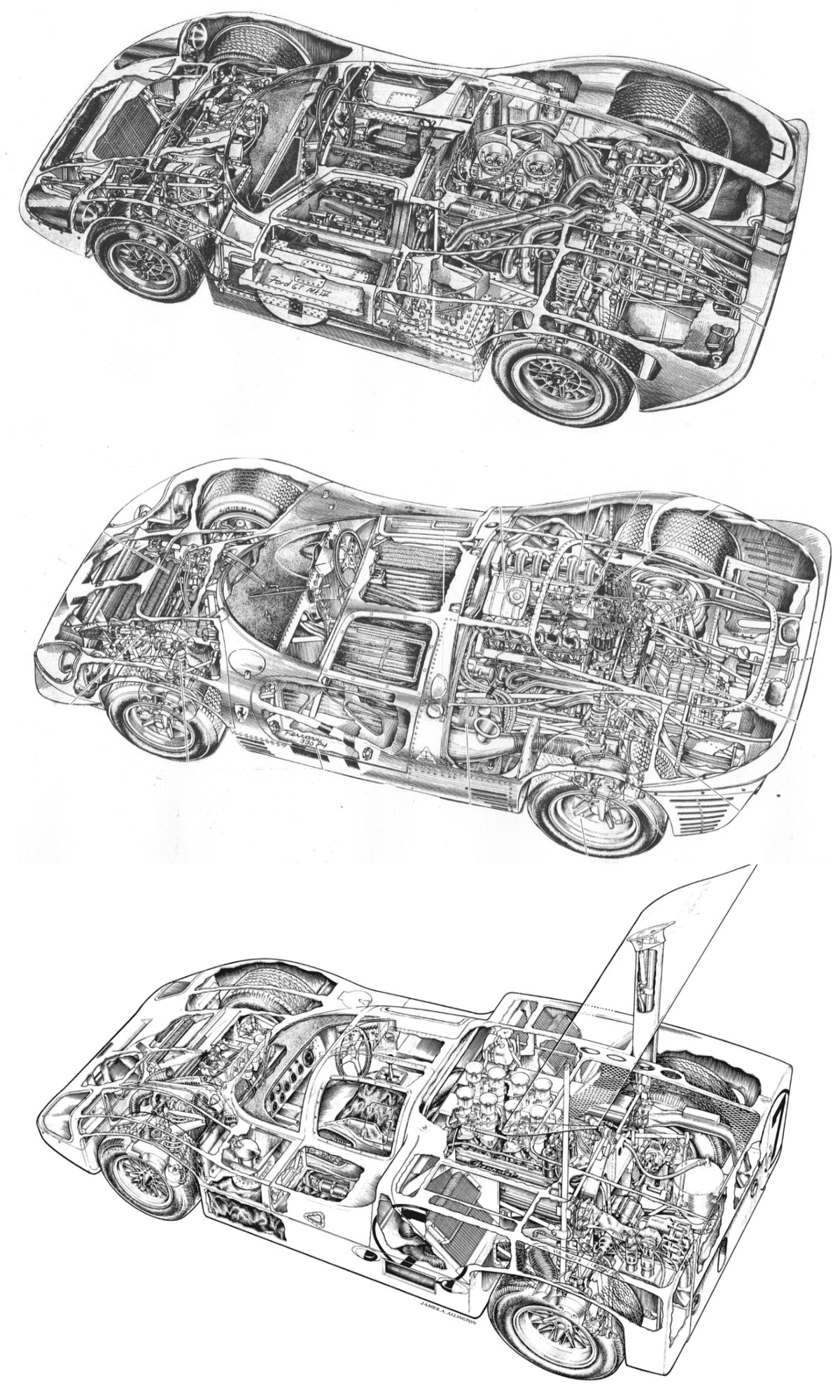
It’s the beginning of 1967. Just six months before, Ford was on top of the racing world, having crushed Ferrari at Le Mans in 1966. But the GT40 MKII that had won Le Mans easily wasn’t going to have it easy this year. Ferrari, which had spent most of 1966 preparing for F1’s switch to 3-liter engines and dealing with strikes at its factory, was building a new and improved car to replace the 330 P3 that had been embarrassed at Le Mans. And Chaparral, the Texan team led by Jim Hall, was designing a new car using its groundbreaking aerodynamic knowledge. All three of these cars were the ultimate evolution of a platform that had raced for several years. These three cars were designed with very different philosophies, but they were all winners. Let’s take a look at how three very different manufacturers answered the same question — how to build the best prototype racer yet.
Illustrations By James A. Hallington
Ford GT40 MK IV
Weight: 2646 LBS
Chassis: Aluminum Honeycomb monocoque
Powertrain: 7.0-liter Ford V8, 4-speed manual
Top Speed: 224 MPH
Wins: Sebring 12 Hours, 24 Hours of Le Mans
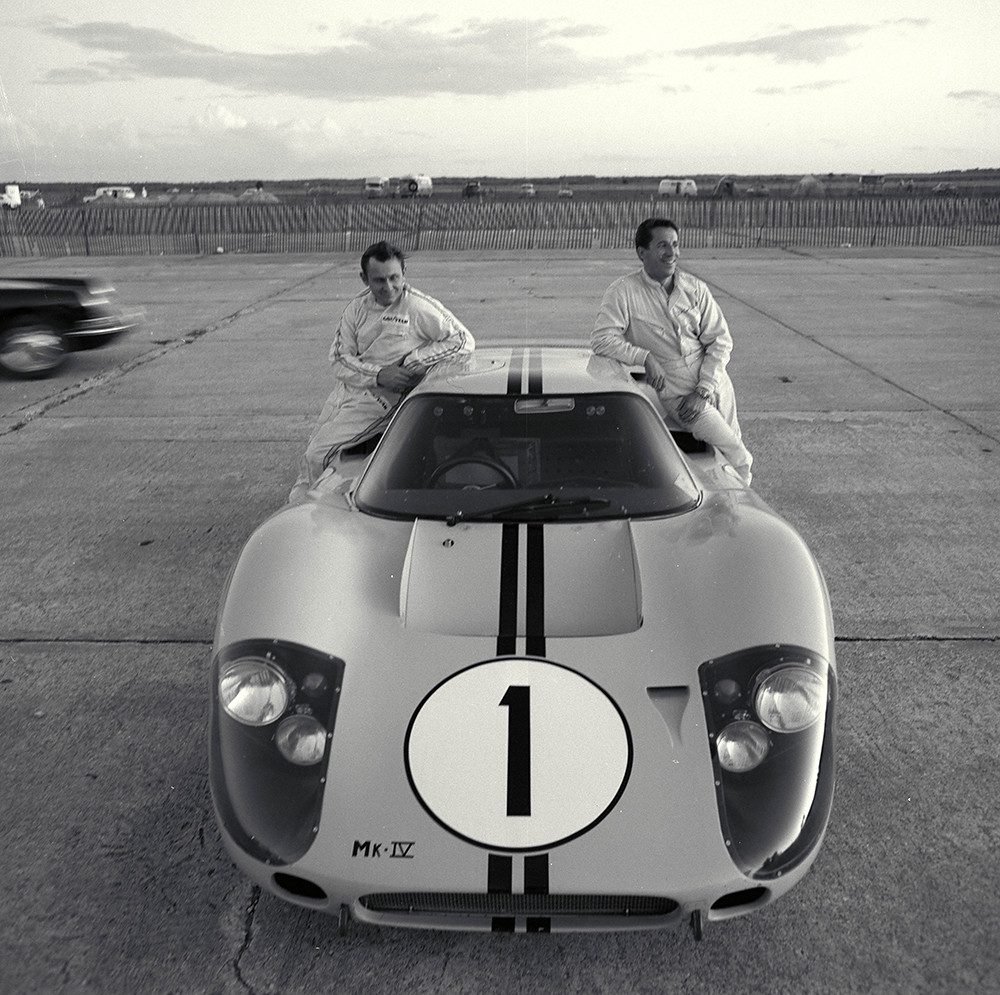
Bruce McLaren and Mario Andretti pose with their Sebring-winning GT40 MK IV.
The GT40 MKIV may have raced only twice in 1967, but its story began two years before. After the disaster that was 1965’s Le Mans, Ford held a meeting with all of the major players working on the project to decide where to go next. The answer was a “divide and conquer” strategy.
Shelby American focused on improving the flawed GT40, eventually creating the 7-liter MKII. Ford’s Advanced Vehicles Division was tasked with designing a new 7-liter car with a stronger transmission, known originally as the GT-P. The engineers working on the GT-P targeted a wildly optimistic top speed of 250 mph. FAV engineer Chuck Mountain discovered Brunswick, a large consumer products company with a cutting-edge engineering division. Brunswick made an aluminum honeycomb material that could be used for a new chassis.
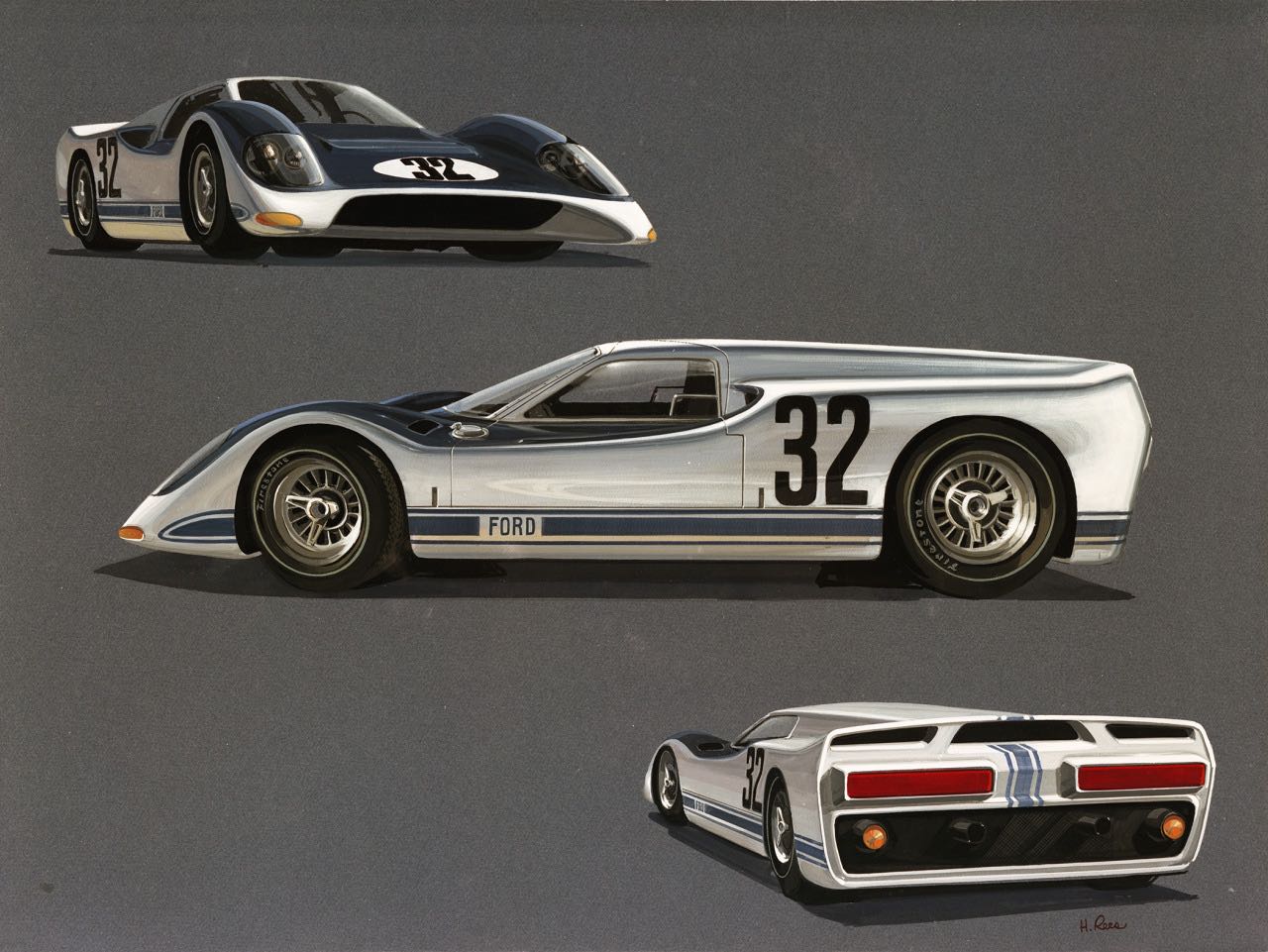
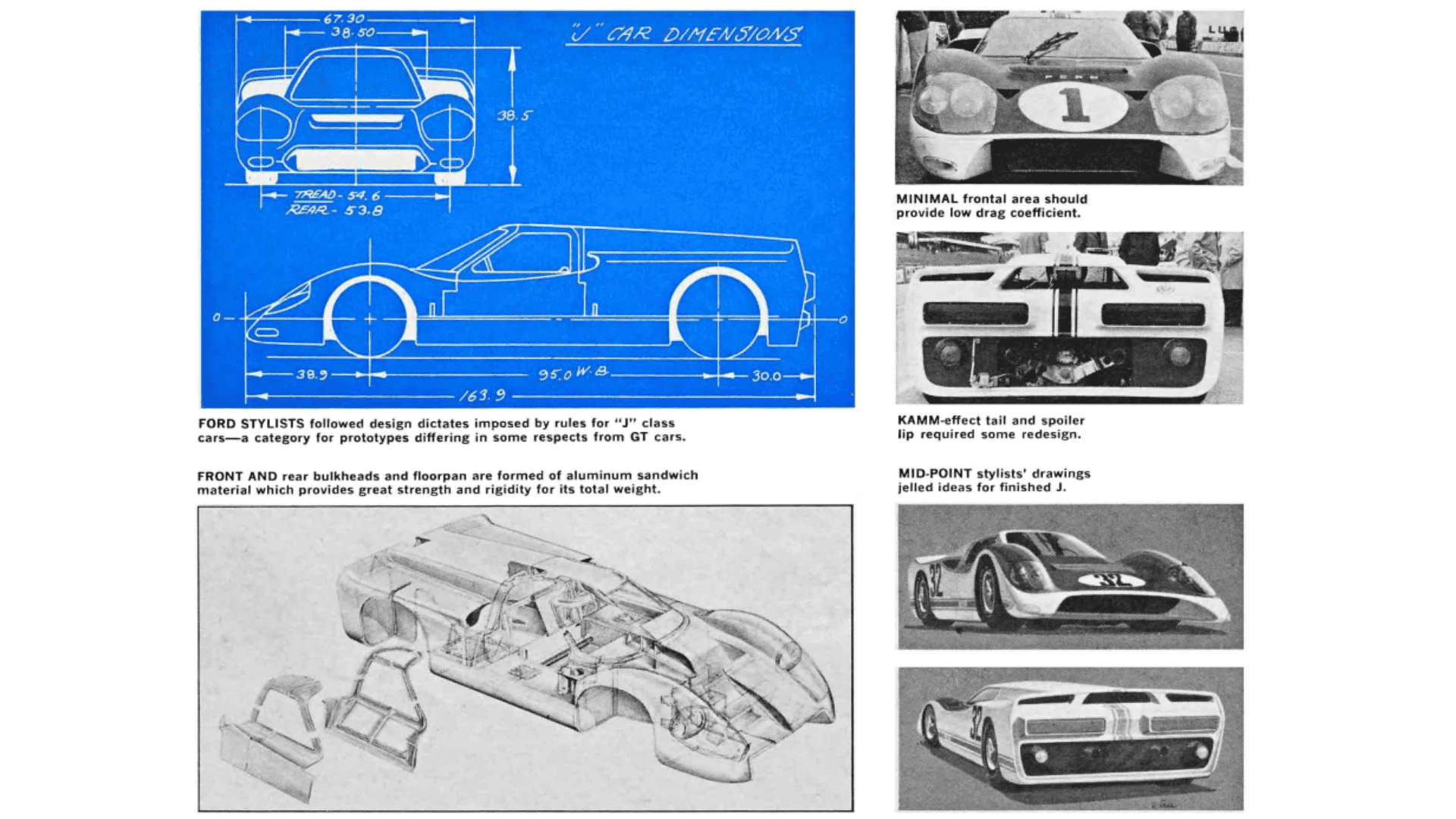
The J-Car was built by a team of engineers who had never designed a racecar before, so it had some unique features.
Mountain designed an innovative aircraft-inspired “multicoque” chassis as the basis of the GT-P. It had several torque boxes secured by the bulkheads and floor, and the fuel tanks were built into the side torque boxes. The chassis was mostly glued together rather than riveted, and it was baked in an autoclave. The GT-P name was eventually dropped, and the car was renamed “J-Car”, for the FIA’s Appendix J regulation it was built to. The strangest thing about the J-Car was that no one on the FAV team had ever designed a racecar before. The car was designed without access to a wind tunnel, but wind tunnels were still misunderstood in car design, so it wasn’t a major issue. The J-Car’s designers considered aesthetics, too. Designer Homer LaGassey said, “We don’t believe that speed and aesthetic styling are necessarily incompatible”.
The J-Car was a sleek but odd design. It was two inches lower than the already low GT40, with a squared-off tail and an odd “crab claw” nose. But some elements of its design were cutting-edge, such as the computer-optimized suspension geometry. FAV designed a 2-speed automatic transmission, but the finished J-Car used the proven T44 4-speed manual.
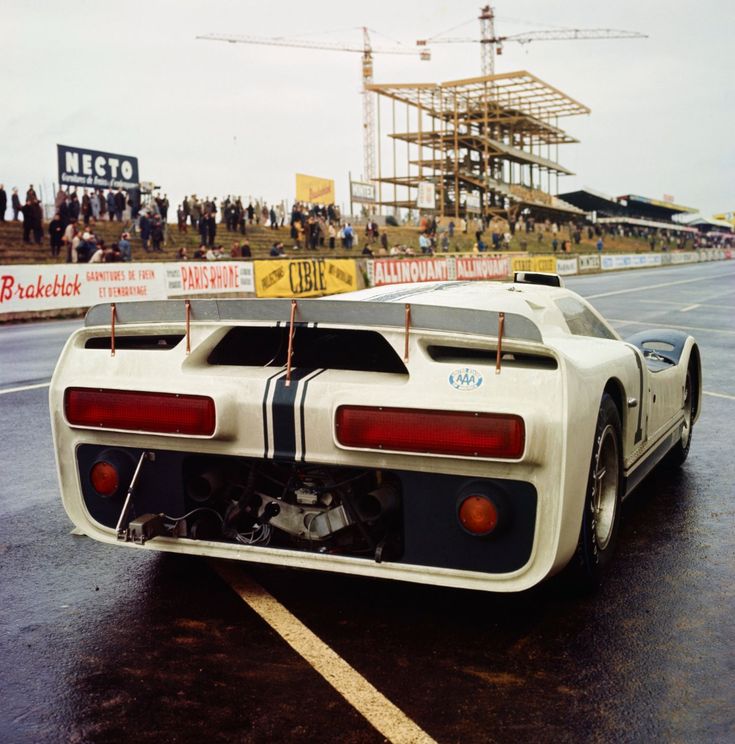
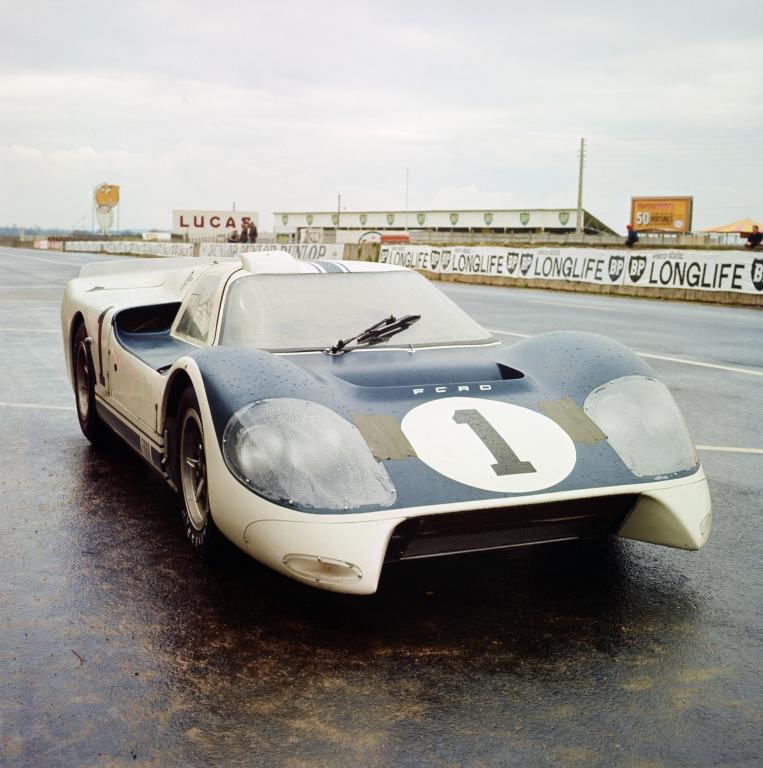
The finished J-Car was very close to the original sketches, as seen here at the 1966 Le Mans test. It set the fastest time there, but its aerodynamics were flawed.
The coil-over-shock absorber suspension used long tubular trailing links at the rear and tubular A-arms up front, both anti-sway bars being easily accessible for quick adjustment. The wheels were an innovative turbine-style design intended to cool the brakes. The 7-liter V8 from the MKII was upgraded and made 550 horsepower. Most importantly, it was 300 pounds lighter than the MK II. The finished J-Car was driven by Chris Amon and Bruce McLaren at the 1966 Le Mans test, where they set the fastest time (they didn’t get anywhere near 250 mph). But Ford focused on the MKII, which paid off with a Le Mans win.
Ken Miles believed that the J-Car had a future in the new Can-Am series, so a second car was built. Tragically, he died in the second J-Car after a mysterious crash at Riverside in August 1966. The chassis of the crashed J-Car was far more damaged than expected. The other J-Car chassis was riveted together to avoid anything similar to Ken Miles’s accident. After winning Le Mans in 1966, Ford decided to return with a car fully designed and built in America.
Roy Lunn, one of the key execs in the GT40 program, still believed in the J-Car. So did Phil Remington, Shelby’s master fabricator. Remington flew to Dearborn, Michigan, to improve the J-Car’s aerodynamics. With the help of a few clay modelers and designer Ed Hull, Remington spent a week redesigning the J-Car entirely by eye. The J-Car’s flat tail was replaced with a tapered rear, and its crab claw front end was replaced with a much more conventional design. The chassis sills were squared off to prevent air from escaping underneath the car. In wind tunnel testing, the new body produced significantly less drag.
Some things just look right, and
others don’t. We knew what the car was doing with the existing bodywork, and I wanted to steer clear of that, so I guess we just got lucky. – Phil Remington on redesigning the J-Car
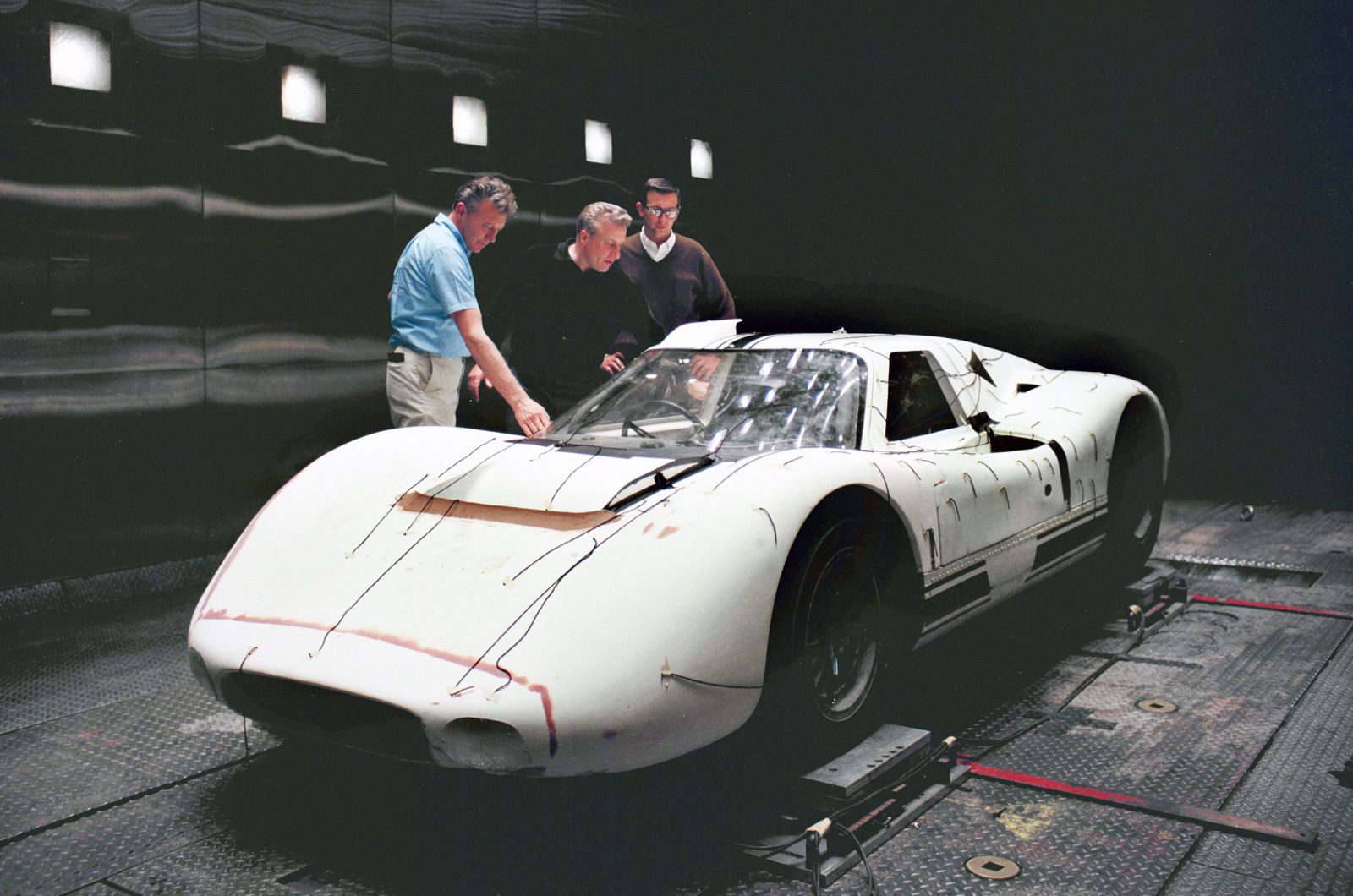
Ford entered several upgraded MK IIBs at the opening round of the 1967 World Championship, the Daytona 24 Hours. It was a disaster, as all but one of the GT40s transmissions broke, and the MK IIs couldn’t keep up with the new 330 P4 or Chaparral 2F. A new car was needed, so the redesigned J-Car design was christened MK IV and went to test at Daytona. At Daytona, Mario Andretti went four seconds faster than his qualifying time in the GT40 MKII. It debuted at Sebring, driven by Andretti and Bruce McLaren. Andretti put the car on pole by 2.6 seconds, beating the Chaparral 2F. Ferrari declined to bring any works cars to Sebring, and their top privateer teams were also missing. So the race was a battle between Ford and Chaparral, but the Chaparral retired after the halfway mark with transmission issues. After the success at Sebring, Ford built four more MK IVs for Le Mans, at a cost of a million dollars each!
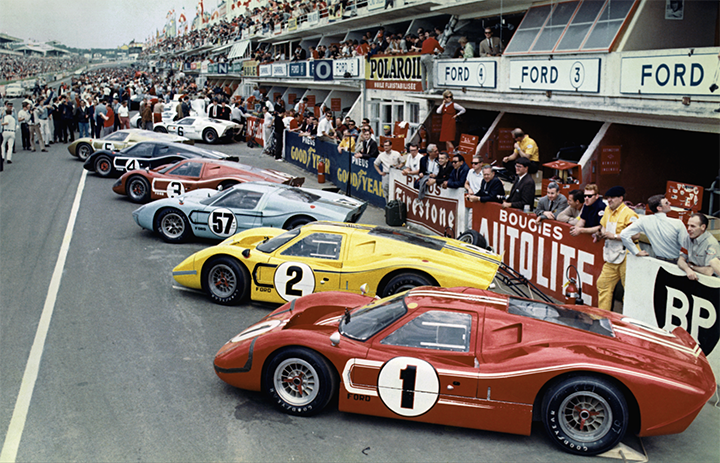
The mighty Ford team, consisting of four MK IVs and three MK IIBs, lines up at Le Mans. Only two of the seven GT40s finished.
There were four GT40 MK IVs entered at Le Mans, with another three MK IIBs, against two Chaparral 2Fs, and seven Ferrari P-cars. The MK IV was an excellent car for Le Mans, as it was very comfortable (by prototype standards), and its massive engine allowed it to haul across the French countryside with ease. Dan Gurney said, “On the straights, it was so stable that I could have kicked back and smoked a pipe”. The brakes were the car’s only flaw, as they struggled to slow down the heavy MK IV from over 210 mph. Four GT40s crashed at Le Mans, and the other two had major issues. But Dan Gurney and A.J. Foyt took the lead early and held it all the way to the end, finishing 4 laps ahead of the #21 Ferrari 330 P4. Both drivers said they never needed to push the GT40 MK IV to its limit. Their average speed was 135 mph, a huge 10 mph faster than the year before.
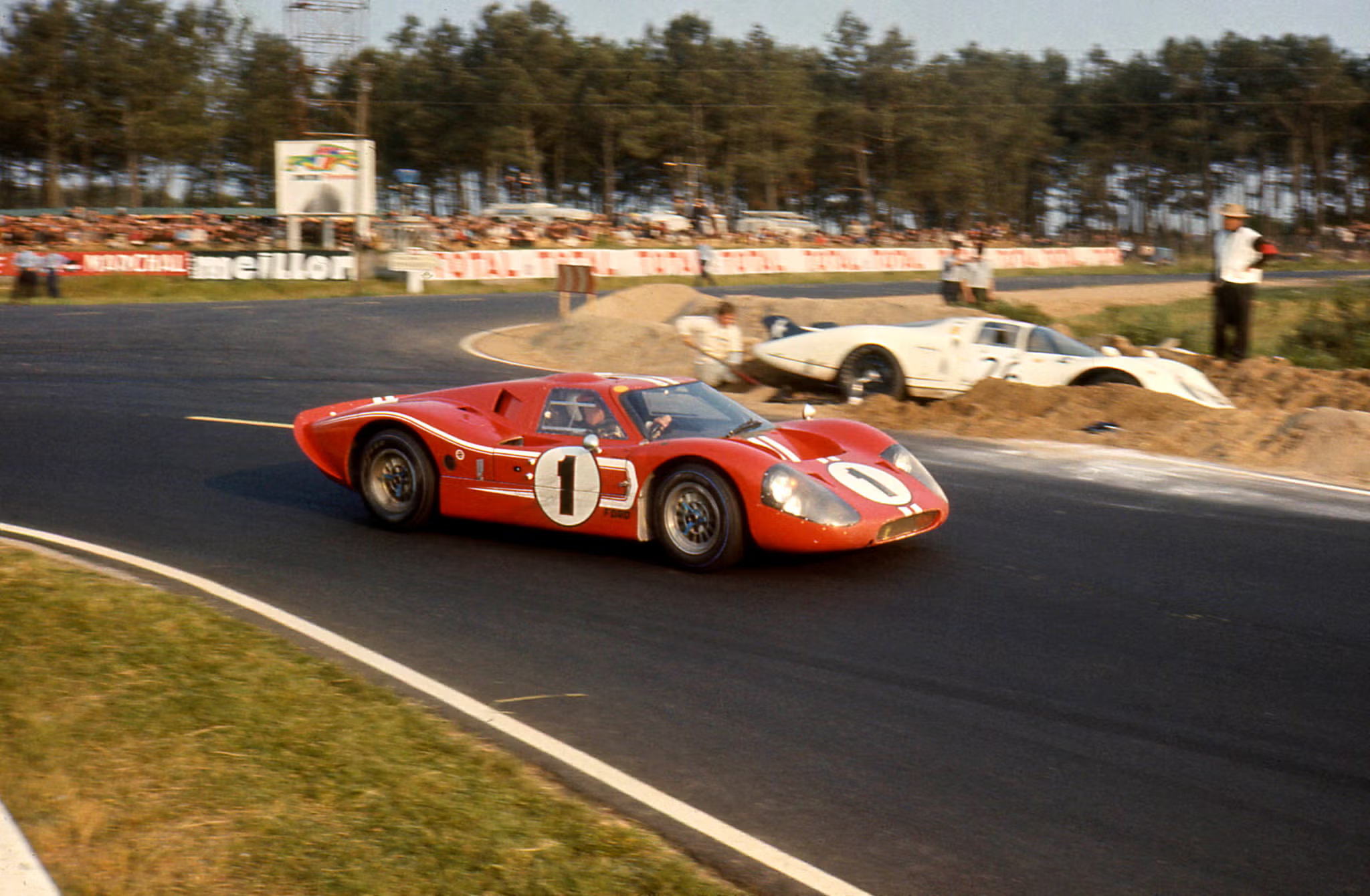
AJ Foyt drives through Mulsanne Corner in the winning #1 GT40 MKIV.
After the 1967 Le Mans win, there was nothing left for Ford to prove. Ford had won with an all-American car, so they could no longer be accused of stuffing a big engine in a car they didn’t design. There were several proposals to develop a new car for 1968, but the FIA’s sudden decision to limit engine displacement to 3 liters killed any plans. The GT40 MK IV was the perfect car for Le Mans. The MK IV didn’t really meet its goal of being lightweight, as it was only around 75 pounds lighter than the MK II (not a small savings, but its rivals were hundreds of pounds lighter). It wouldn’t have been competitive at most shorter tracks, as it was much heavier than its rivals, but it ended its very short career with a perfect record — two starts and two wins.
Chaparral 2F
Weight: 1753 LBS
Chassis: Fiberglass composite monocoque
Powertrain: 7.0-liter aluminium-block Chevy V8, Three-speed semi-automatic torque converter
Top Speed: 190+ MPH
Wins: BOAC 500
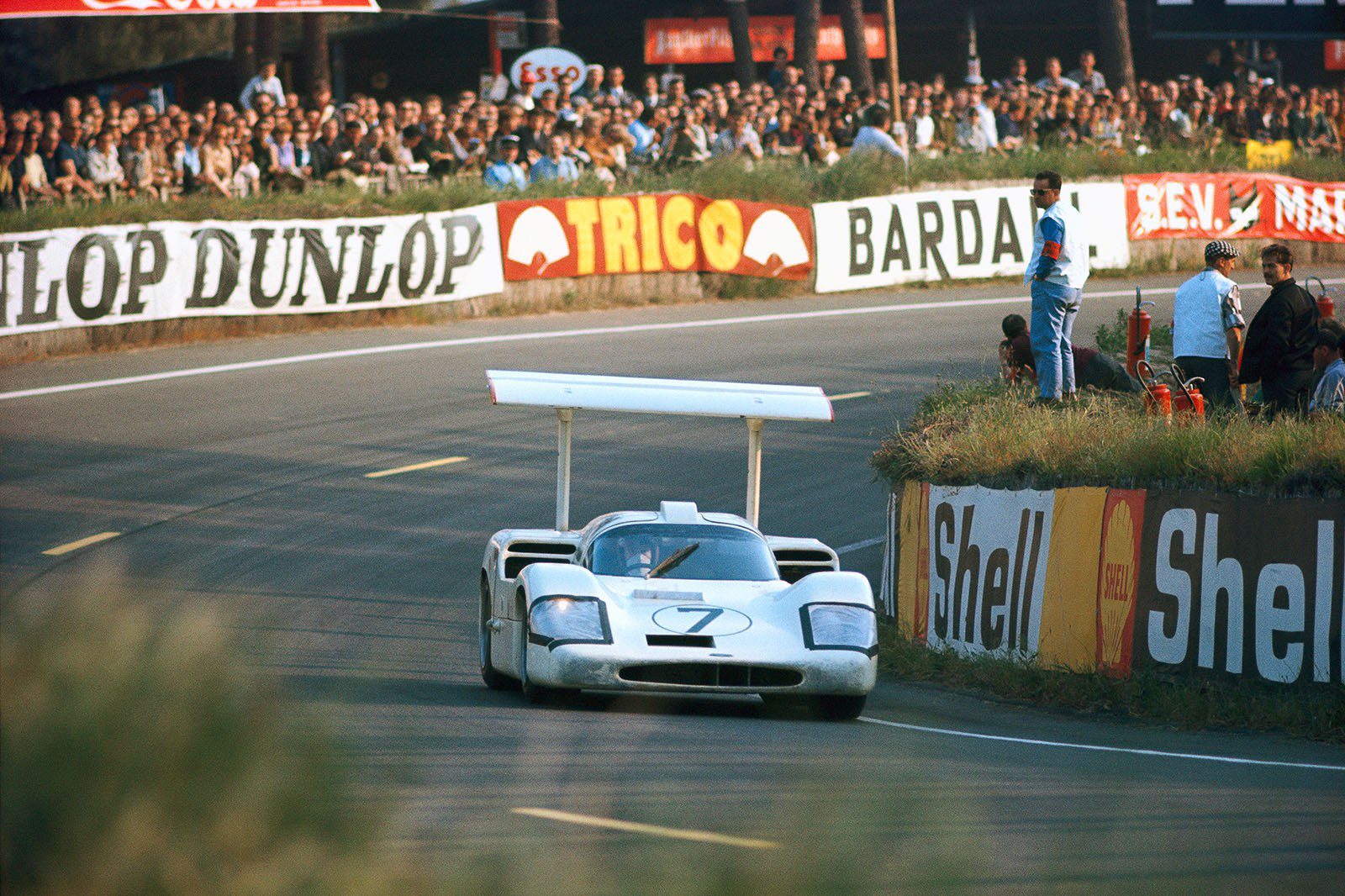
To a modern racecar designer, the 2F’s design philosophy is the most familiar. While the wing was startling to most people in 1967, and the side-mounted radiators and semi-automatic transmission were odd, it’s difficult to name a modern racecar that doesn’t have them. Jim Hall was way ahead of his time in many areas of racecar design, especially aerodynamics. Hall had raced the best of Europe’s sports cars, but he thought he could do better — and he had both the engineering knowledge and the resources (thanks to his successful oil ventures and backdoor help from GM’s R&D division) to try.
As an article from the time put it, “Chaparral is certainly the only motor company in the world that has a combined President-Chairman-of-the-board-Executive-Director-Design-Chief-Production-Supervisor who can also get behind the wheel and outscorch Mario Andretti.” Hall and Hap Sharp, another wealthy driver with engineering know-how, set up shop in Midland, Texas, where they and a small team of engineers and builders created the world’s most innovative racecars.
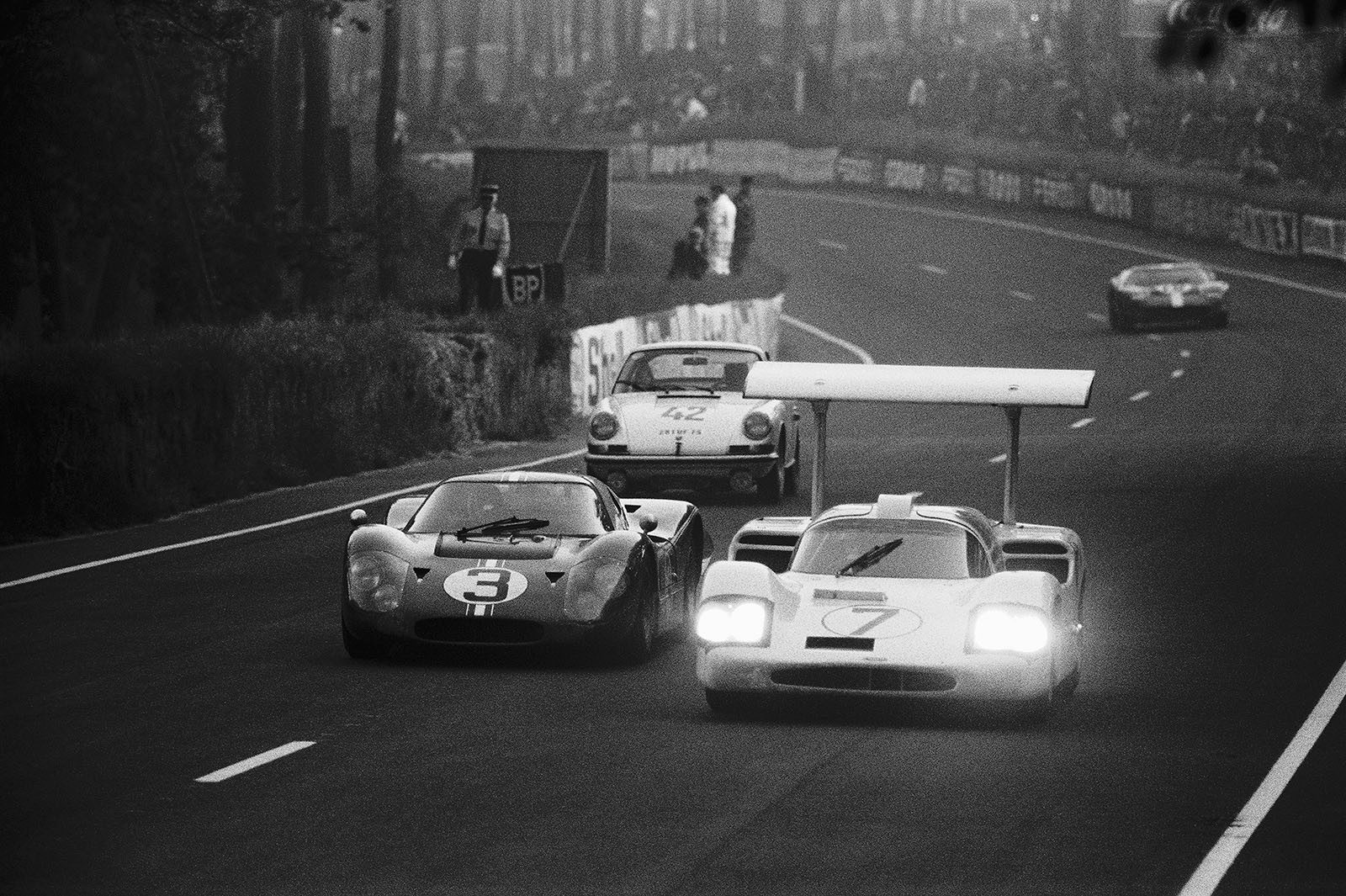
The Chaparral 2F of Phil Hill/Mike Spence battles the #3 GT40 MK IV of Luchien Bianchi/Mario Andretti at Le Mans.
Chaparral’s World Championship campaign began with the 2D in 1966. The 2D was a coupe version of the groundbreaking Chaparral 2. Chaparral took a completely different approach to designing the 2. It was built on a composite fiberglass monocoque and used a two-speed semi-automatic torque-converter transmission that required only two pedals to operate. Chaparral always hid the details of the transmission, but it didn’t give them a significant advantage. The 2 was converted into a 2D coupe to comply with FIA regulations.
The 2D was fast but unreliable, finishing only one race. But it was the 1000KM of the Nurburgring, and it won. The fact that a car designed on the other side of the world by a team that had never even raced in Europe before won easily shows how good the 2D design was. In the first season of the Can-Am series, Chaparral debuted its radical new 2E, which featured a massive driver-controlled rear wing and side-mounted radiators. In 1967, Chaparral took the lessons learned from Can-Am and applied them to a new prototype racer, the 2F. The 2F was built on a fiberglass monocoque from the older 2. It was powered by a 7.0-liter aluminum-block Chevy V8 from GM R&D, producing 525 horsepower, and the torque converter gained an extra speed. The 2F’s body was much less beautiful than the 2D’s, but styling was never a consideration at Chaparral.
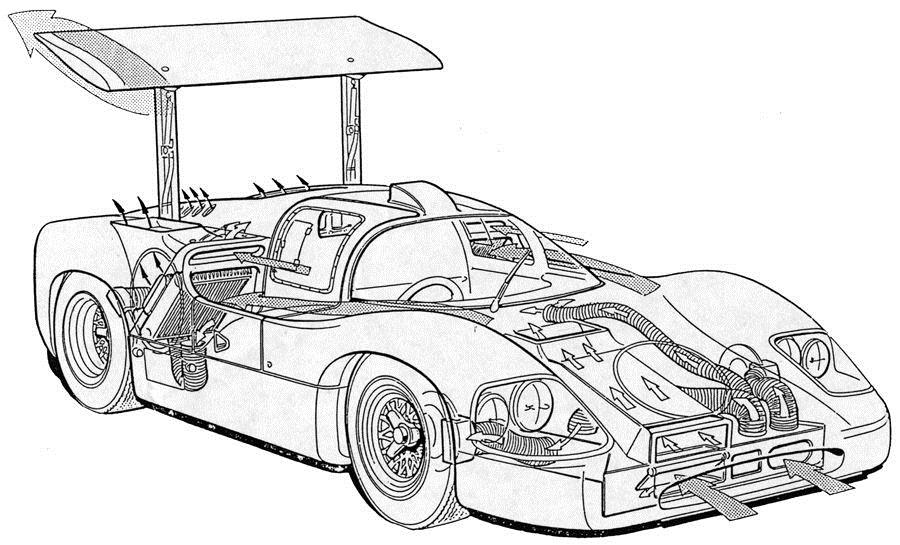
The 2F’s Aerodynamics
The 2F’s rear wing was mounted on the wheel hubs, directing downforce directly to the rear wheels rather than to the body, increasing grip without affecting the car’s balance. The wing was controlled by a third pedal on the left. It rested in high-downforce mode, but if the pedal was held down, the wing would flip up into low-downforce mode. The wing gave the driver unmatched control over his car’s handling. During development, the 2F’s front end would lower at high speed. The solution was a spring-loaded door in the front air intake that opened at high speed when the wing entered low-downforce mode, reducing front downforce. Chaparral’s knowledge of aerodynamics was far ahead of that of other racecar constructors of its day, but very basic compared to modern designers.
The 2F was much lighter than the GT40 MK IV and more powerful than the 330 P4. It also had far better aerodynamics, and it was easily the quickest car at every track except Le Mans. At its Daytona debut, the 2F qualified second. It crashed a few hours into the race, but there were bigger problems hidden by the crash. The three-speed transaxle was pushed to its limit by the new V8, but GM didn’t want to create a new one, so they made a few changes and hoped it would survive endurance races. It couldn’t. By the time Chaparral realized this, the 2F had to be sent to Europe, and it was too late to fix the issue.
The 2F also struggled with many electrical problems. So the 1967 season was frustrating, as the 2F qualified on the front row for every race, but it almost always broke. Sebring was an intense battle between the new GT40 MK IV and the 2F, but the 2F’s transmission broke. At Monza, it led at the start until a U-joint broke. At Spa, it set a lap quick enough to start sixth at that year’s F1 Grand Prix. But the race was won by Jacky Ickx in a Mirage GT40, who was unbeatable in the rain. At the Nurburgring, the Chaparral got into the lead again until the transmission broke. The 2F was absolutely not designed for the tight Targa Florio, but it raced there anyway. A flat tire ended the 2F’s run at the Targa. Two 2Fs were entered at Le Mans, and both failed to finish.
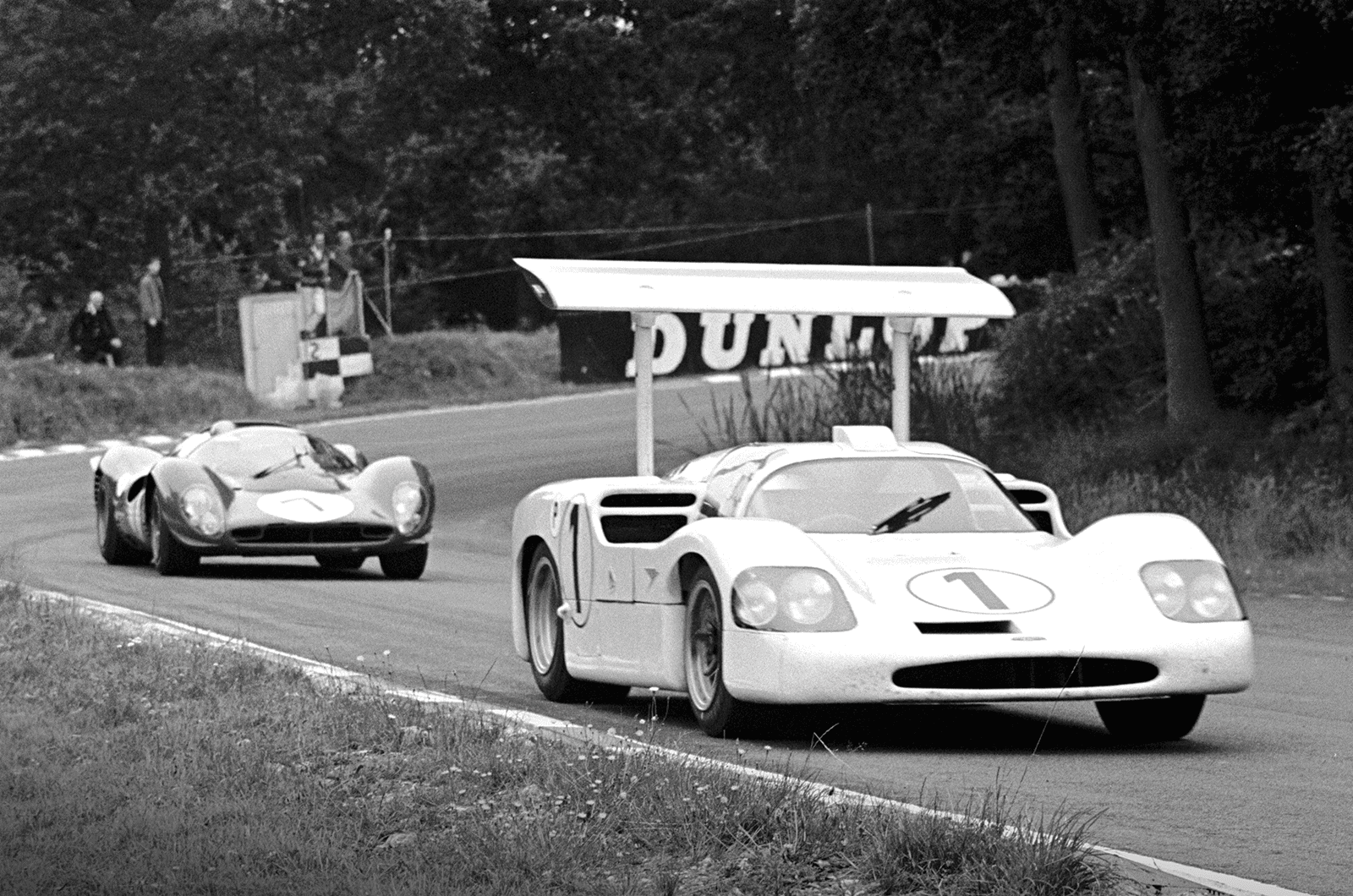
The Ferraris would go past, and the fillings would fall out of your teeth. Then the Chaparral would come past, with that very much deeper V8 growl, and the ground would shake. Precariously, you were sort of living with the gods there. It was terrific. – Doug Nye
The final race of the 1967 WSC season was the BOAC 500 at Brands Hatch. The shorter distance gave the 2F a better shot at finishing. Porsche and Ferrari were competing for the world championship, and the grid was filled with some of the best drivers in the world. The favorites to win were the two works Ferrari 330 P4s. The fast but unreliable Lola T70s led early on. Eventually, the 2F got into the lead. Jackie Stewart tried to get past in his Ferrari, but he soon realized it had nothing for the 2F. It foreshadowed the future of racing, as the gorgeous old-school Ferrari was beaten by a futuristic vision of what a racecar could be. The crowd was thrilled by Chaparral’s unexpected win. The Chaparral 2F was easily the fastest of the three cars. If it had returned in 1968, it might have been unstoppable.
Ferrari 330 P4
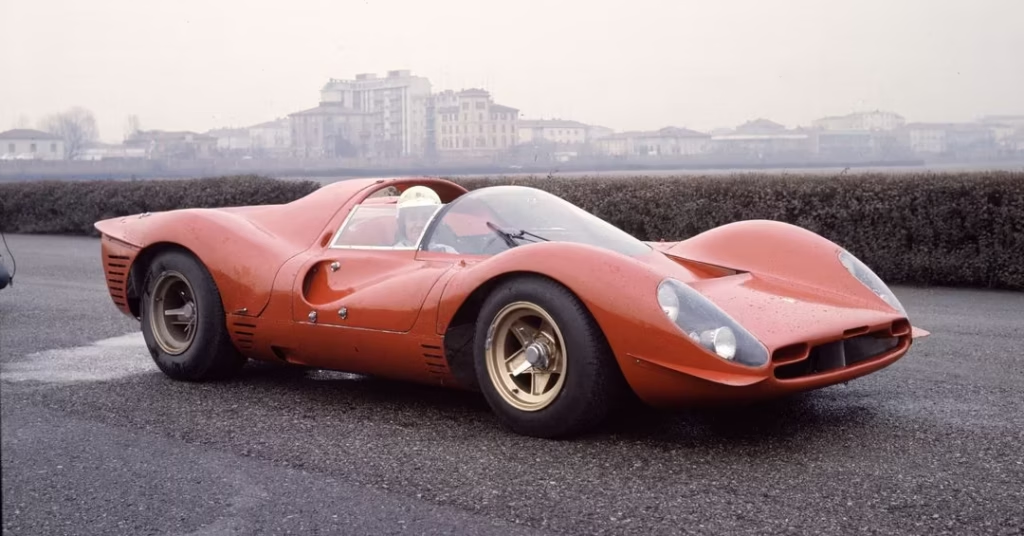
Weight: 1746 LBS
Chassis: Aluminum spaceframe
Powertrain: 4.0-liter V12, 5-speed manual
Top Speed: 199 MPH
Wins: Daytona 24, Monza 1000KM
Sublime is the ideal word to describe the Ferrari 330 P4. In looks, sound, and handling, the 330 P4 was impossible to beat. The Ferrari was just as fast as its American rivals, but it was so much sexier that it seemed like air worked differently in Italy. Chief engineer Mauro Forghieri was in charge of designing the 330 P4. The mid-engined V12 P car lineage began with the 250 P in 1963, the first mid-engined car to win Le Mans.
1966’s 330 P3 was a beautiful but disappointing car that struggled with gearbox issues. After losing the Italian Grand Prix and Le Mans in 1966, Enzo ordered Mauro Forghieri to design an F1 car to win the Italian GP, and suggested developing three-valve cylinder heads for the racing engines. He also told Forghieri to build a successor to the 330 P3, a lightweight car with a strong power-to-weight ratio, as he thought increasing engine displacement wouldn’t help against Ford.
Enzo also planned to get enough World Championship points to skip Le Mans and still win the championship, leaving Ford with a hollow victory. Forgieri put Franco Rocchi in charge of designing the new engine. Rocchi created a 60-degree 4.0-liter V12, drawing on lessons learned from the 3-liter F1 engine, including the new three-valve cylinder heads. The new engine used Bosch fuel injection and made 450 horsepower at 8,000rpm.
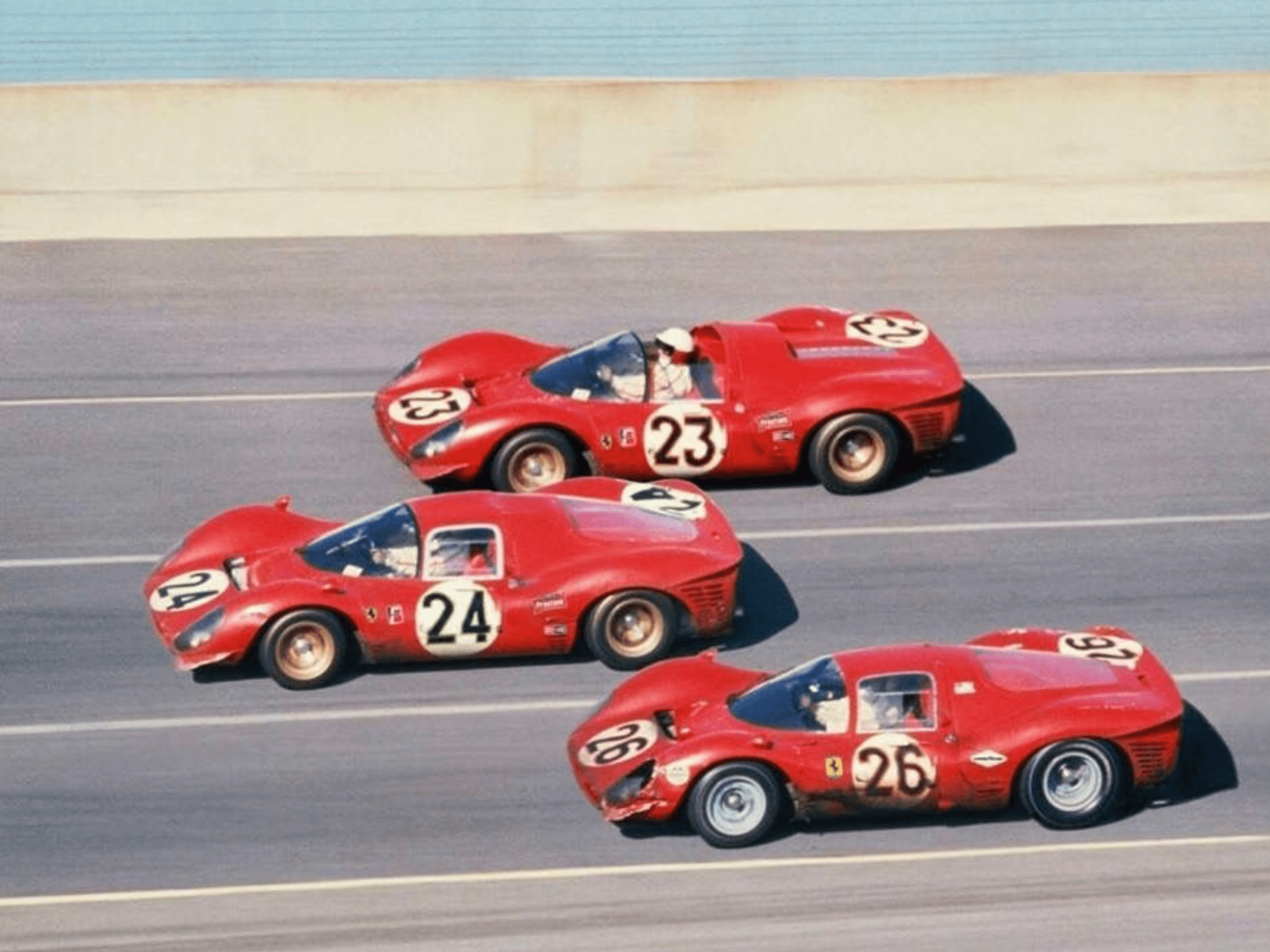
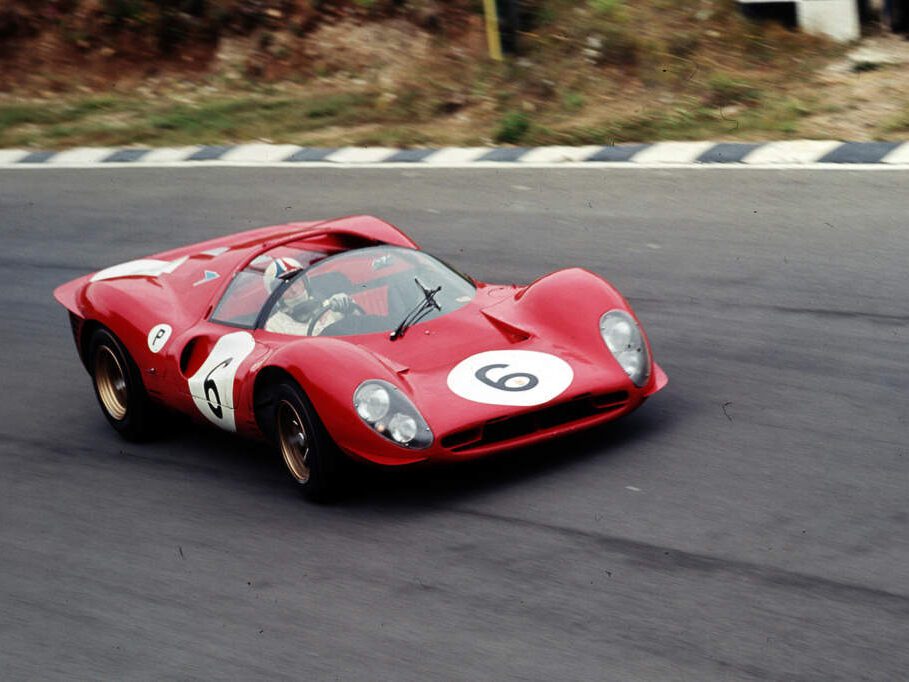
Left: The legendary 1-2-3 Ferrari finish at the 1967 Daytona 24 Hours. Right: The 330 P4 of Chris Amon/ Jackie Stewart at the 1967 BOAC 500.
The 330 P4 used the same type of chassis as the previous P cars, a spaceframe with aluminum sheets riveted around the center to create a semi-monocoque. A new 5-speed Ferrari-designed transmission replaced the 330 P3’s unreliable ZF. While the 330 P3 had used unconventional inboard rear brakes, the 330 P4 used outboard brakes for cooling and easier repairs. The suspension was revised to keep the tire tread as flat as possible on the road.
The iconic bodywork was designed by Edmondo Casoli, Ferrari’s stylist (who never got the appreciation he deserved). The 330 P4’s aerodynamics were honed in the wind tunnels of Pininfarina and the University of Stuttgart. Like the previous P cars, the 330 P4 was built in both Berlinetta and Spyder configurations. The Spyder had a lower top speed, but it was designed to keep the driver cooler on short tracks. Ferrari built three 330 P4S for 1967, and rebuilt the old 330 P3s into the 330 P3/4 for their three top privateer teams (N.A.R.T, Maranello Concessionaires, and Ecurie Francorchamps), but it was usually known as the 412 P. These 412 Ps were essentially a 330 P4, without fuel injection or the trick three-valve cylinder heads.
It’s beautiful. By comparison, the Ford Mark II
is a truck. – Chris Amon after winning 1967’s Daytona 24 Hours
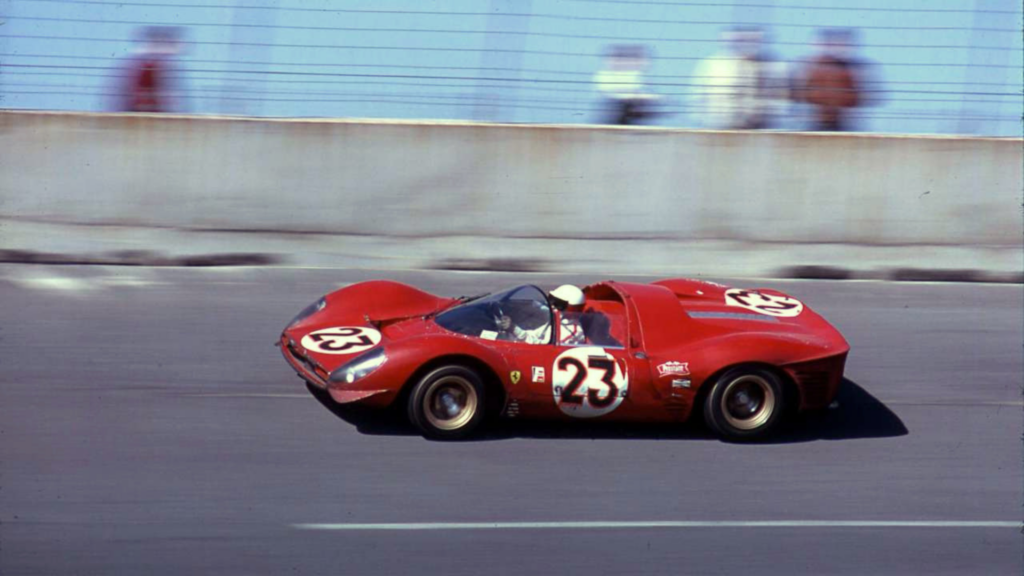
The 330 P4 made only 30 horsepower less than the GT40 MK II despite its much smaller engine, and it was a thousand pounds lighter. It was incredibly fast, quicker than the GT40 MK IV at the Le Mans test. The 330 P4 had a perfect debut at Daytona, where Ford’s GT40s suffered from transmission issues. Two 330 P4s and a 412P crossed the line together in a 1-2-3 formation finish. Enzo was so proud of the victory that he supposedly kept a photo of it in his office for the rest of his life. Ferrari skipped Sebring, possibly to avoid legal trouble if something tragic happened at the unsafe track (In 1966, several people died at Sebring in two major accidents).
At Monza, the Chaparral led until it broke, handing the win to Ferrari. At Spa, the Ferraris struggled against Jacky Ickx in the rain. One 330 P4 was entered at the Targa Florio, but it crashed. Ferrari sent one works Dino 246 to the Nurburgring 1000KM, which was dominated by Porsche. Despite Enzo’s clever plan, Porsche was challenging Ferrari for the championship, so Ferrari had to enter three 330 P4s at Le Mans.
Le Mans was an intense battle between the 330 P4s and the new MKIV GT40. While the GT40 was much quicker on the Mulsanne straight, the P4 was more efficient. The Ferrari drivers had to drive hard to keep up with the Foyt/Gurney GT40. In the end, 330 P4s finished second and third, after a valiant effort. Thanks to Jackie Stewart and Chris Amon’s second place at Brands Hatch, Ferrari won the World Championship by one point over Porsche.
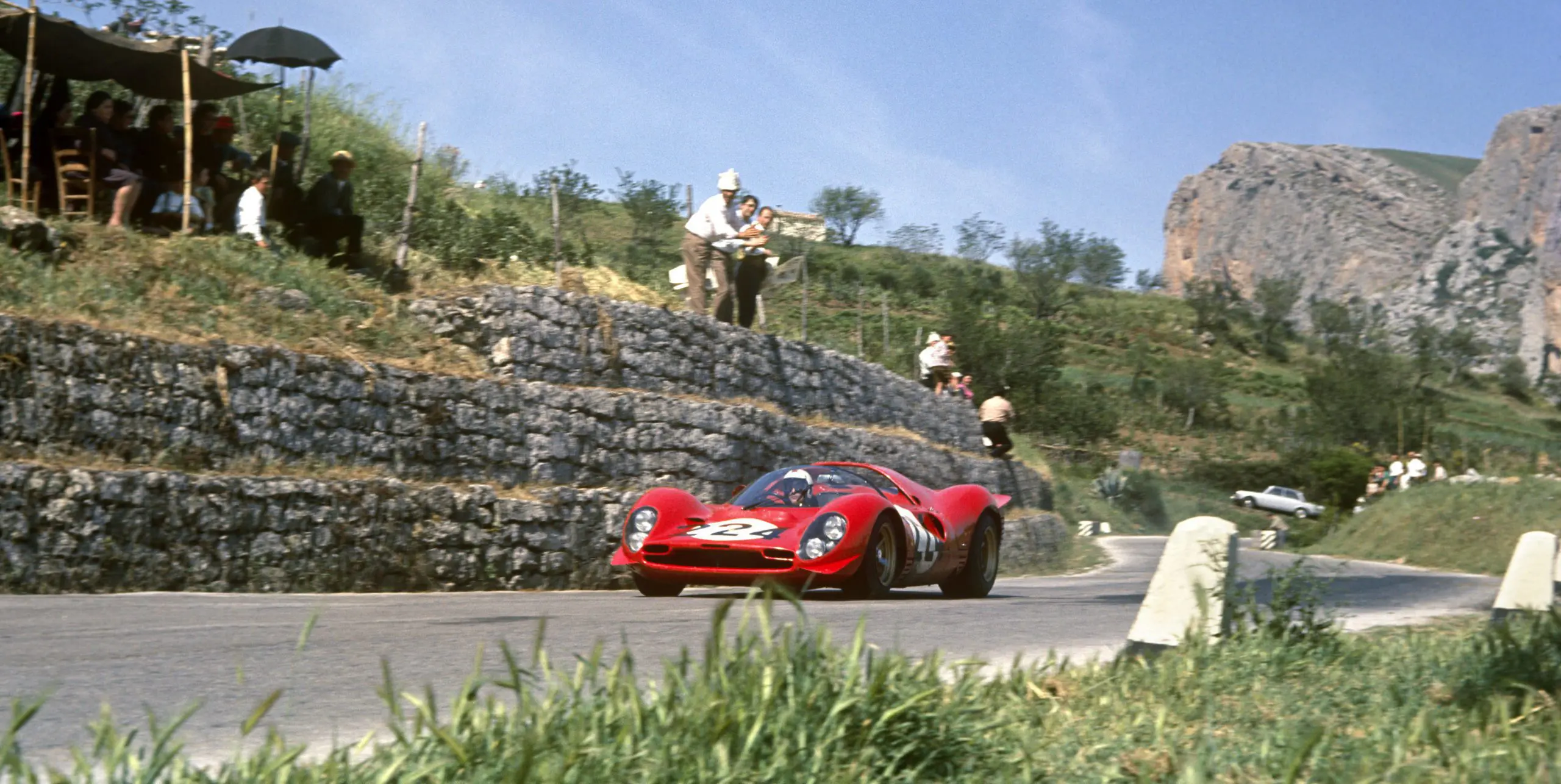
Nino Vaccarella threads his 330 P4 around the twisty roads of the Targa Florio.
Chaparral and Ferrari planned to return in 1968, while Ford was considering another attempt at Le Mans. The FIA’s sudden decision to limit engine displacement to 3 liters was made without any input from the teams. Any discussions at Ford of a potential return were ended. Ferrari built the beautiful 312 P in 1969, but it wasn’t the same as the 330 P4. Chaparral, stretched thin by the dual Can-Am and WSC effort, quit the World Championship for good. In a slightly different universe, 1968 could have been sportscar racing’s greatest season.
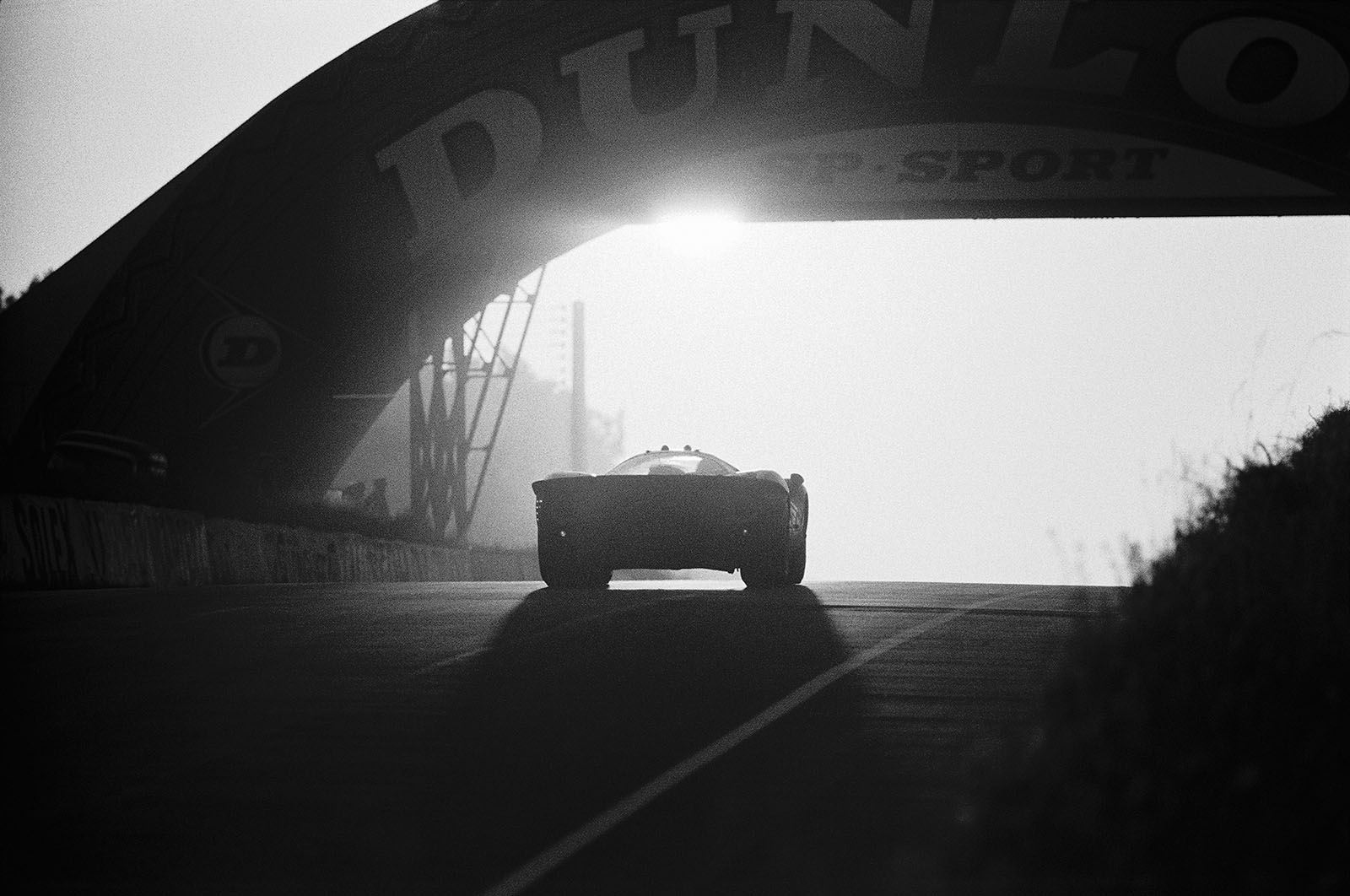
Le Mans was never the same after the Fords, Chaparrals, Ferraris, and Porsches ran there in 1967. I’ll always remember the noise that those thundering cars made, and the shifting of the gears; nothing was ever like that. It was like the fifth symphony to me. When that was gone, the magic was gone. – Bruce Jennings, Chaparral driver
Photo Credits: Rainer W. Schegelmilch