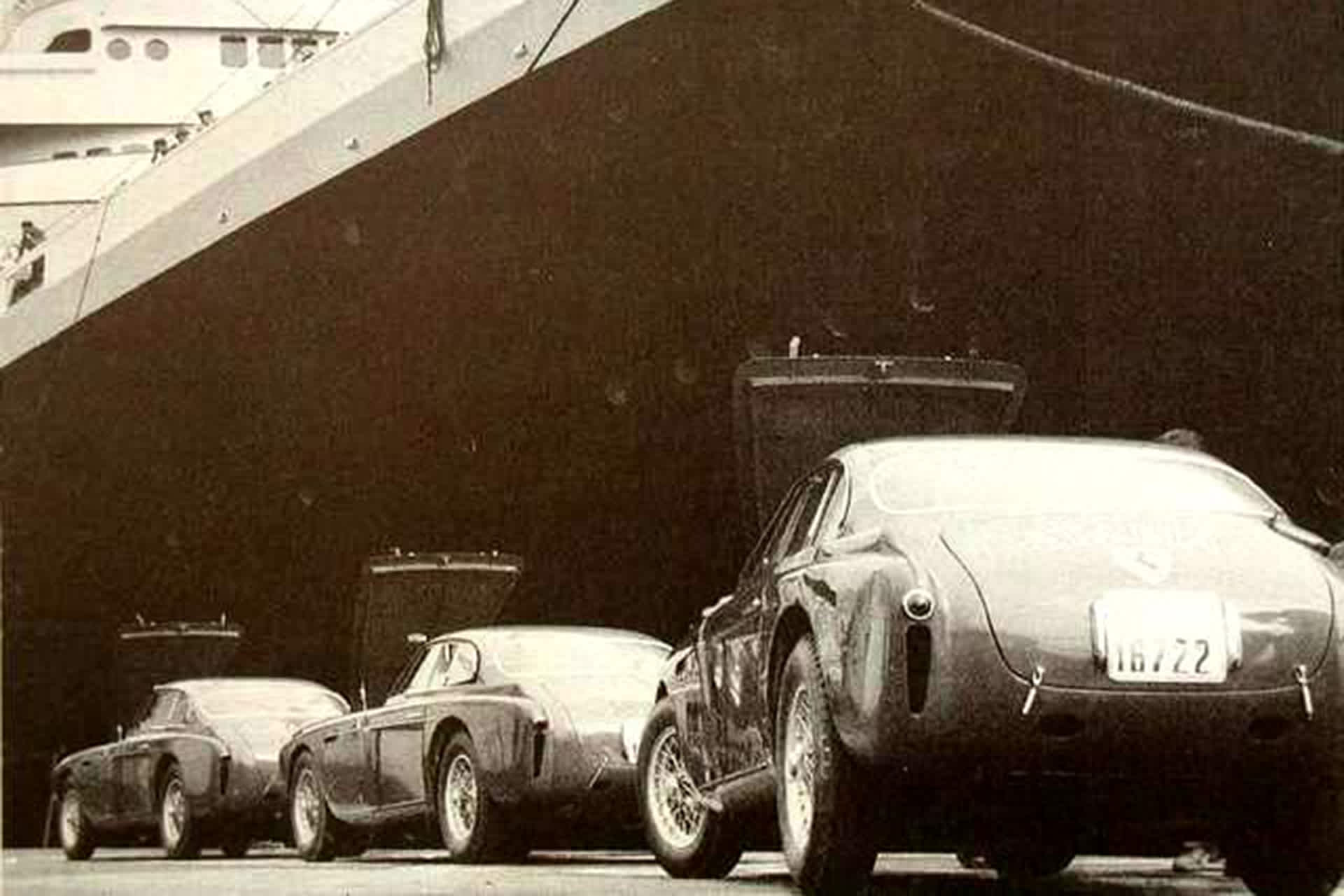
The original Carrera Panamericana had a well-deserved reputation as the world’s most dangerous motor race. Created by the Mexican government to promote the new Pan-American highway system, the race was twice as long as Italy’s Mille Miglia. Racing began with long-distance competitions, held on public roads, from one location to another. The Carrera was one of the last races of this kind, along with the Mille Miglia and Targa Florio. The race started at the southern border of Mexico in Tuxtla Gutierrez and finished in Ciudad Juárez at the US border.
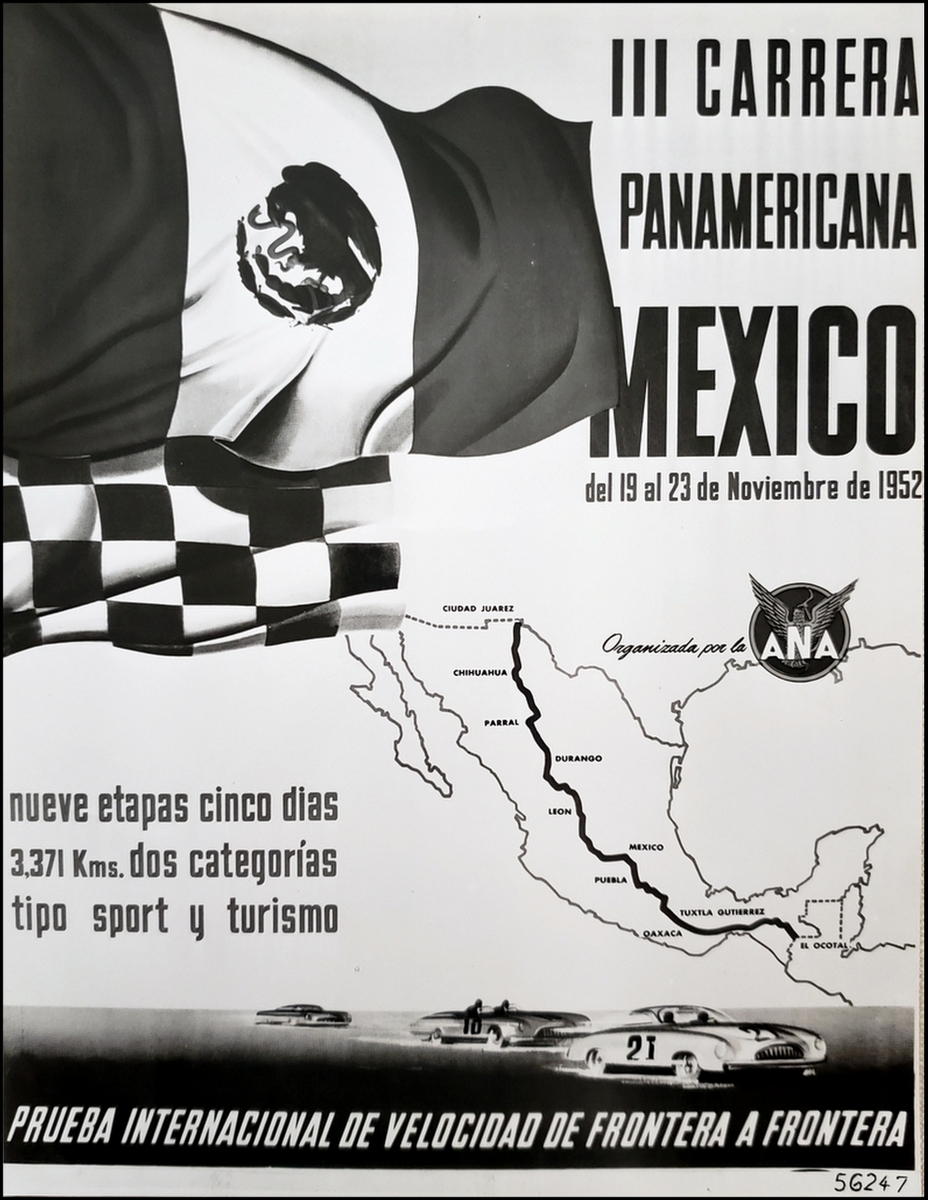
Like the Mille Miglia, the car that completed the route in the shortest time won. The first Carrera, in 1950, was won by Hershel McGriff in an Oldsmobile 88, at an appropriate speed of 88 miles an hour. Some teams featured two drivers, some teams had a mechanic, and some teams had both. Most cars competing in the first year of the Carrera were American coupes and sedans, with American or Mexican drivers. In 1951, Ferrari sent two 212 Inters to compete, with factory mechanics for support.
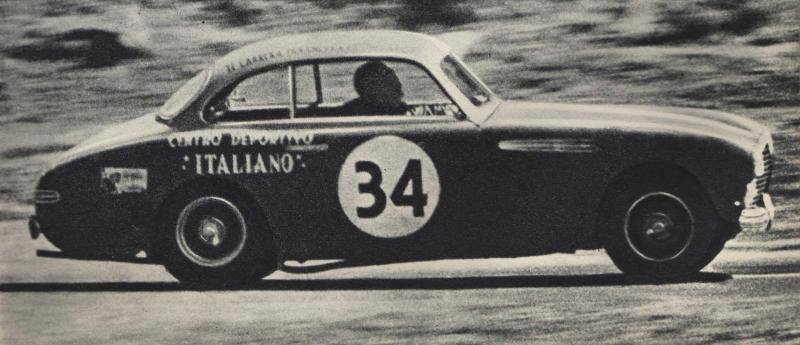
The 212 Inter looked simple by the standards of later Ferrari designs.
Piero Taruffi and Luigi Chinetti won the race in one of the 212s, and another 212 finished second. Ferrari had just started selling road cars, and this was one of their first appearances in North America. Ferrari decided to build a bespoke car just for the 1952 Carrera, to compete with Mercedes and its new 300SL racecar (the 300SL road car came from this car, not the more famous 300SLR). Ferrari chose the 340 America as the basis for the new car. The 340 America was, as the name suggested, designed for American tastes. It was the first production Ferrari powered by Aurelio Lampredi’s “Big Banger” V12, which powered the 410 Superamerica and 375MM, along with many others. The compression ratio of the Lampredi V12 was increased for the new car, which resulted in a large horsepower gain from 220 to 280. The four-speed transmission was replaced by a five-speed unit. The chassis tubes were thinner than those of the 340 America, so the chassis designation changed from AM to AT (T for tubular). The new car was named the 340 Mexico, and it was different enough from the 340 America to warrant a new name. It could do 174 mph flat out. And the drivers actually used that speed on the long, flat stages of the Carrera.
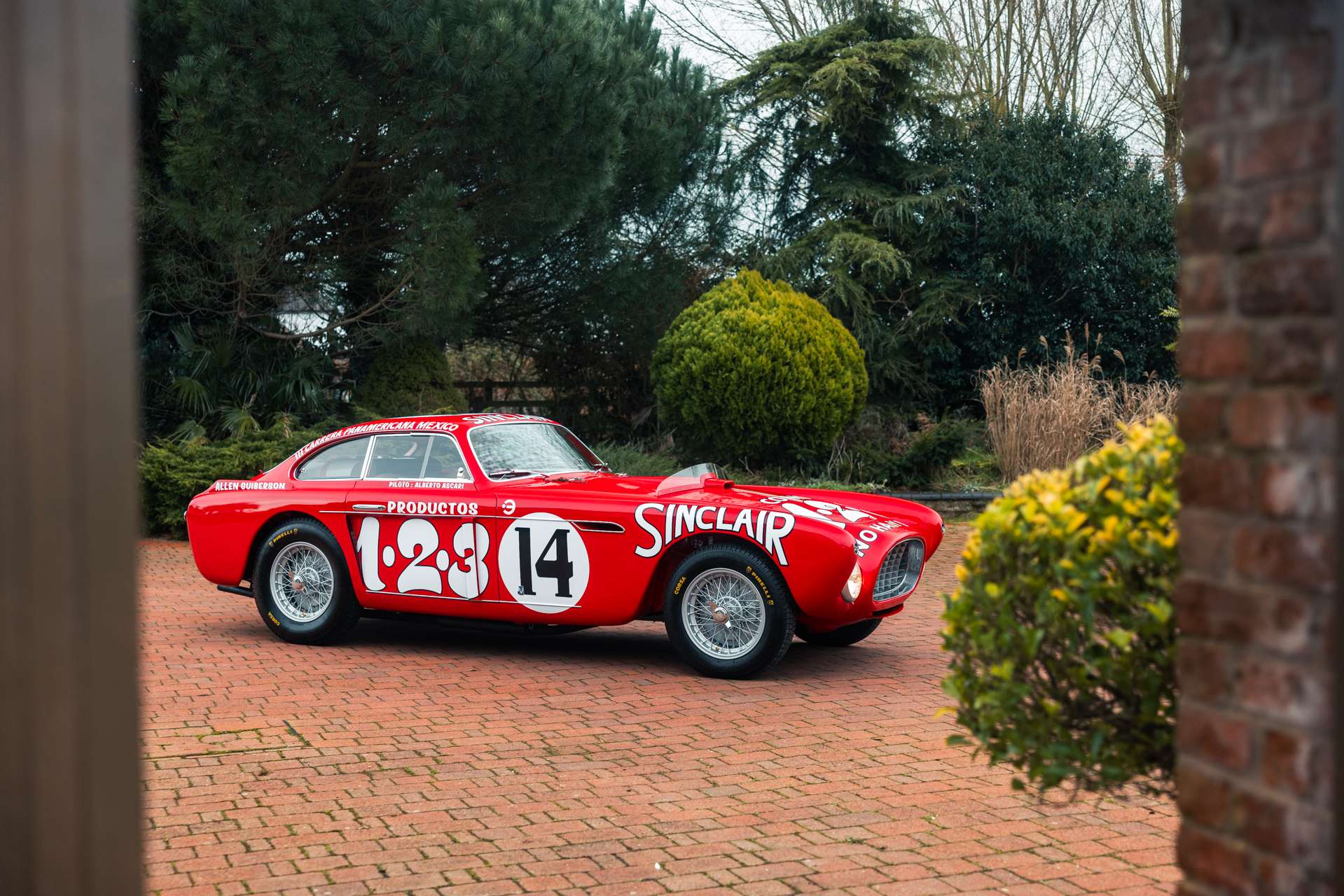
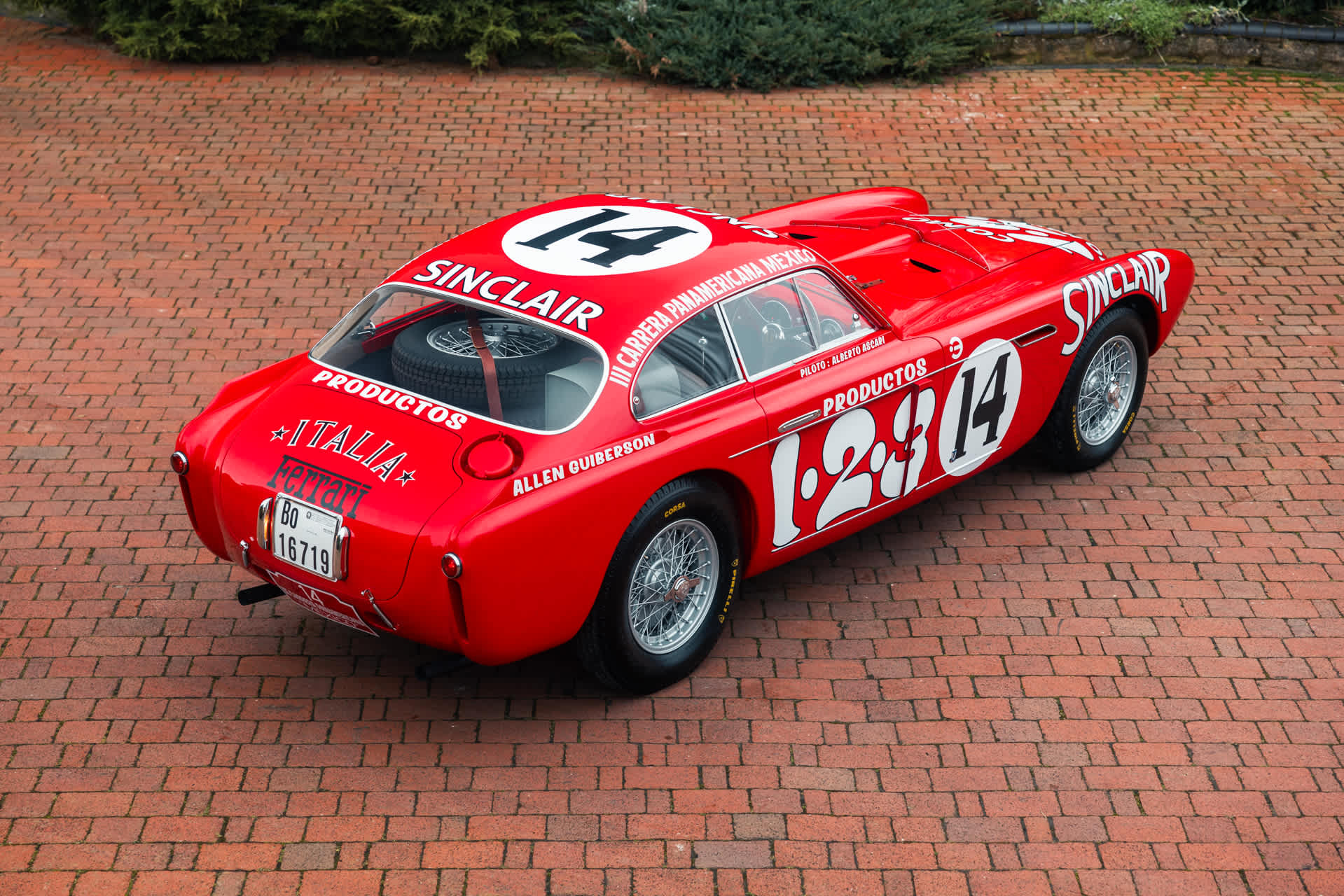
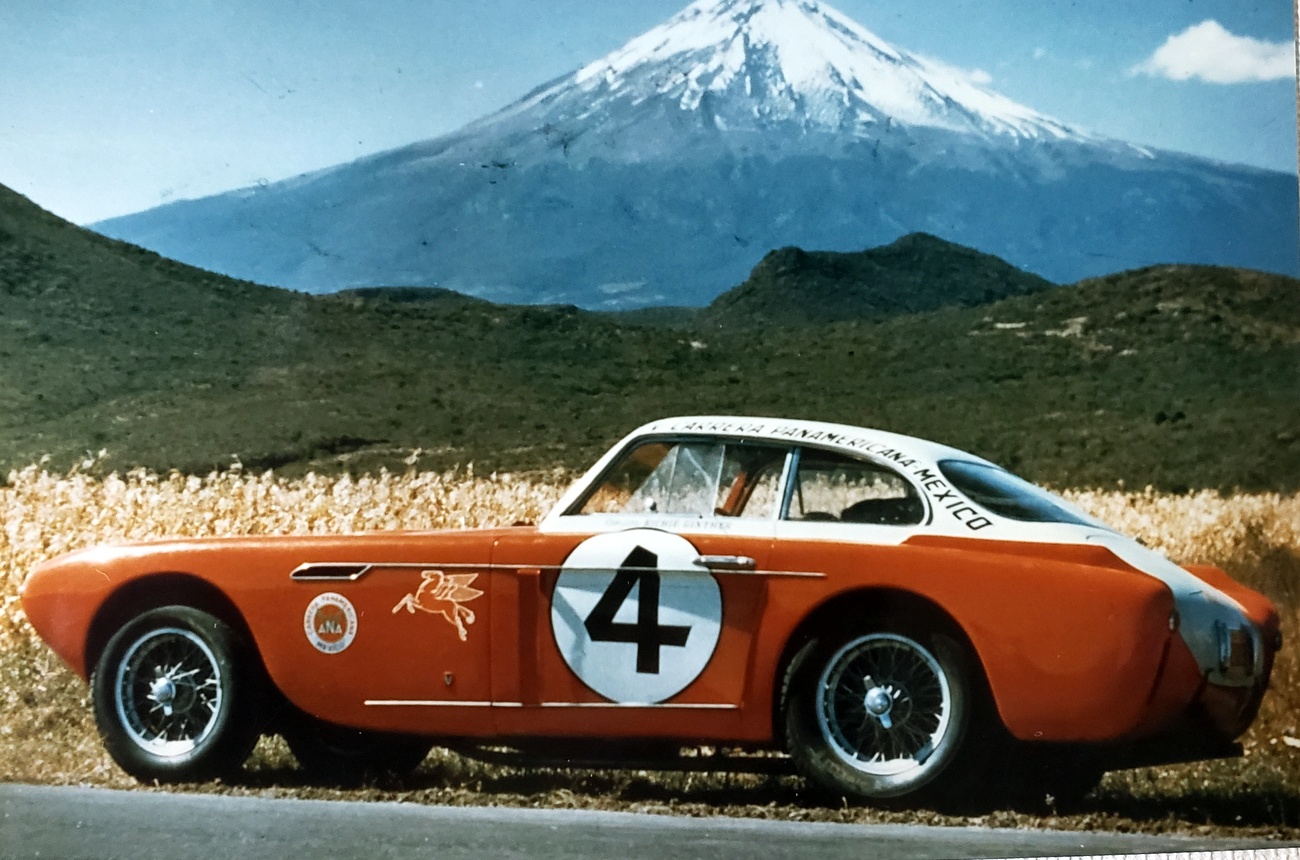
The new car was designed by Vignale, who bodied many of Ferrari’s first road cars. Giovanni Michelotti was behind this wild design. Michelotti was an underrated designer who also designed the Triumph Spitfire, the Cunningham C3, and many others. Vignale’s Ferrari designs were always unconventional, and the 340 Mexico was the oddest. The hood was very long —77 inches long. Apparently, the protruding front fenders were designed to minimize damage to the car if it hit an animal. And the bug deflector was widened to protect the entire windshield. There were openings in the rear fenders to channel air to the brakes, but this didn’t actually work in practice. There was no wind tunnel involved in the design of the 340 Mexico, as with many other cars of the day, so some aerodynamic ideas were just ideas. Vignale’s Ferrari designs may be an acquired taste, but I love them. And the 340 Mexico is my favorite.
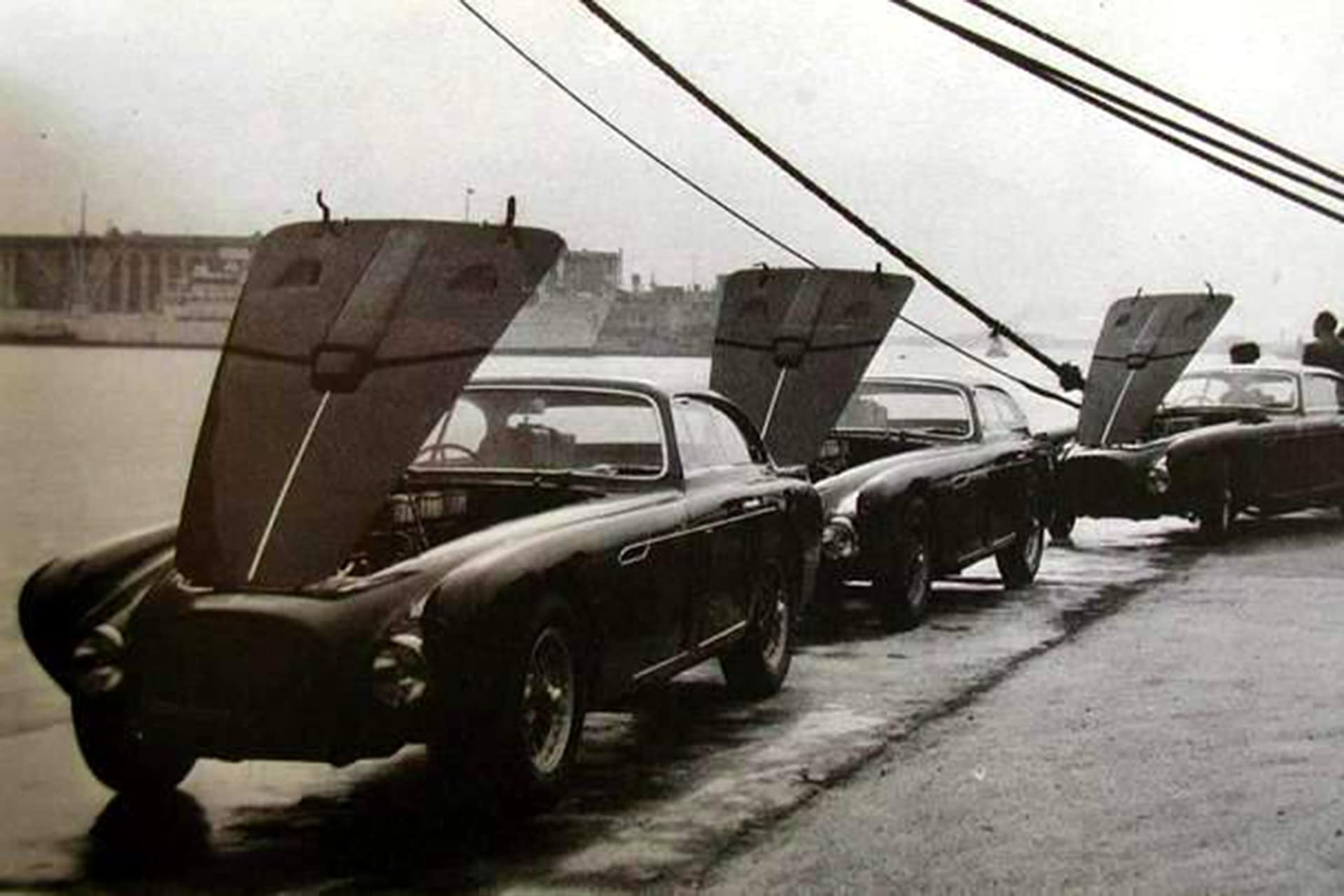
Four 340 Mexicos were built, three Berlinettas and one Spyder. The Spyder has many subtle design differences from the Berlinettas. Texan oil tycoon Allen Guiberson III bought two of the 340 Mexicos from Luigi Chinetti before the race. As part of the deal, Ferrari Grand Prix drivers Luigi Villoresi and reigning world champion Alberto Ascari would drive Guiberson’s cars. The Spyder was supposed to be driven by Bill Spear, who had raced several Ferraris at Le Mans before, but he never actually started the Carrera. Luigi Chinetti and Jean Lucas drove the third Berlinetta. The cars ran under the Scuderia Guastalla name, but they were basically works entries with factory mechanics. Besides Mercedes, Gordini was Ferrari’s other challenger with two T15S.
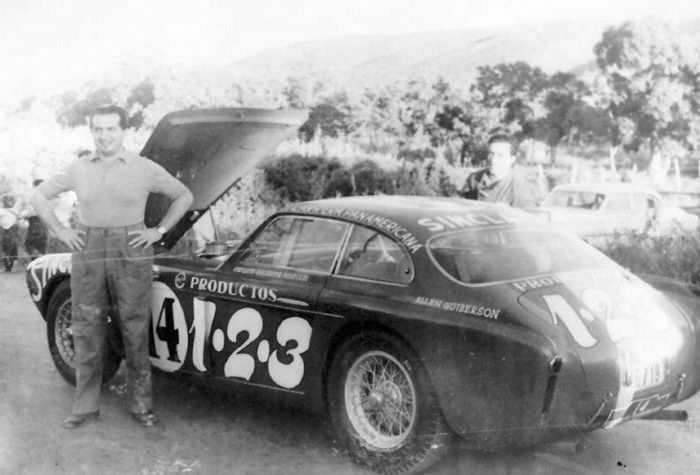
Alberto Ascari stands next to the 340 Mexico that he raced in the 1952 Carrera.
The Ferraris did not have the race they had hoped for, with Ascari’s car crashing into a rock ledge after passing nine cars in the first hour. Jean Behra won the first stage in his Gordini. The 300SL of Karl Kling and Hans Klenk hit a vulture at 135 miles an hour, which knocked Klenk unconscious. He told Kling to continue despite his injuries. Bars were later added to the windshields of the 300SLs to prevent that from happening again. On the second day, Behra crashed his Gordini into a ditch. The second 340 Mexico of Villoresi had transmission issues from the start. Villoresi won the third stage of the race, but the transmission eventually broke beyond repair on the third day (the cars could not receive outside assistance). Mercedes dominated the rest of the race, and Chinetti held on to finish third behind two 300SLs. A 300SL roadster crossed the line first, but it was disqualified for receiving outside assistance. So the win went to the 300SL Gullwing of Karl Kling and Hans Klenk.
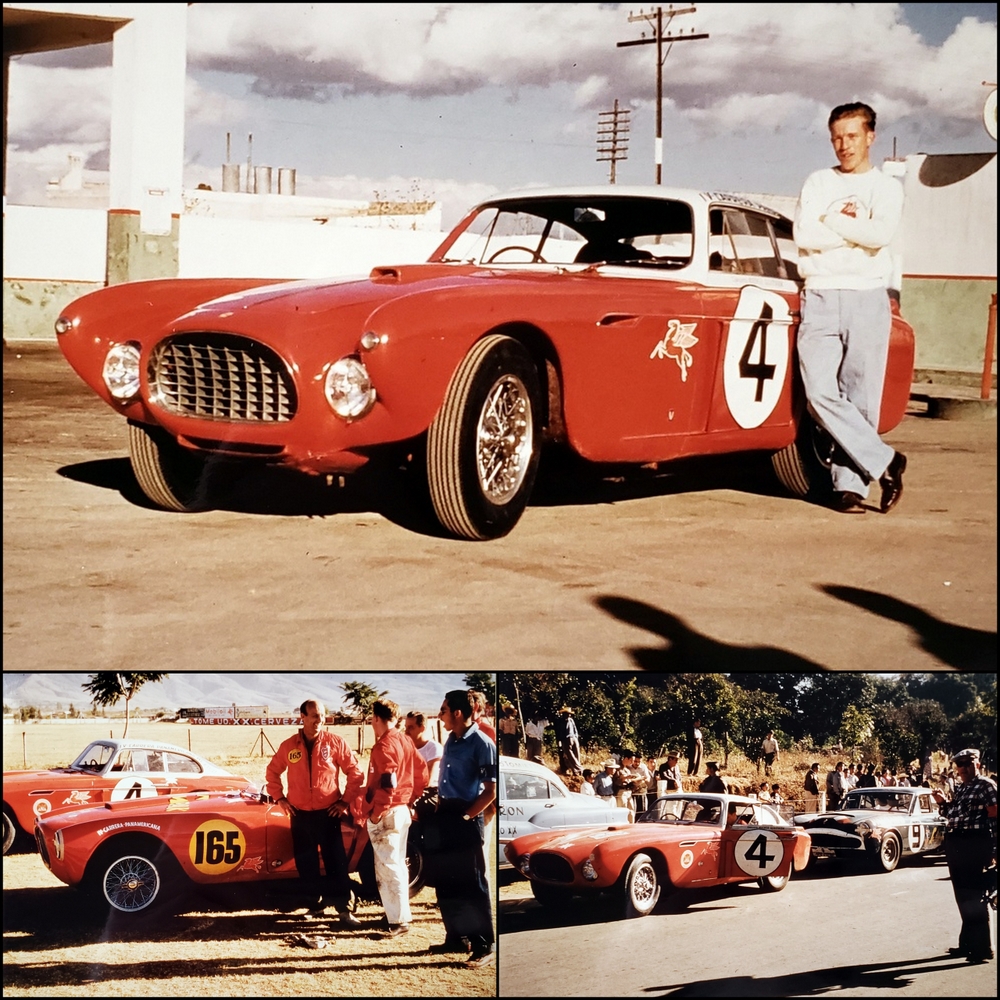
Richie Ginther stands next to the 340 Mexico that he and Phil Hill raced in the Carrera Panamericana.
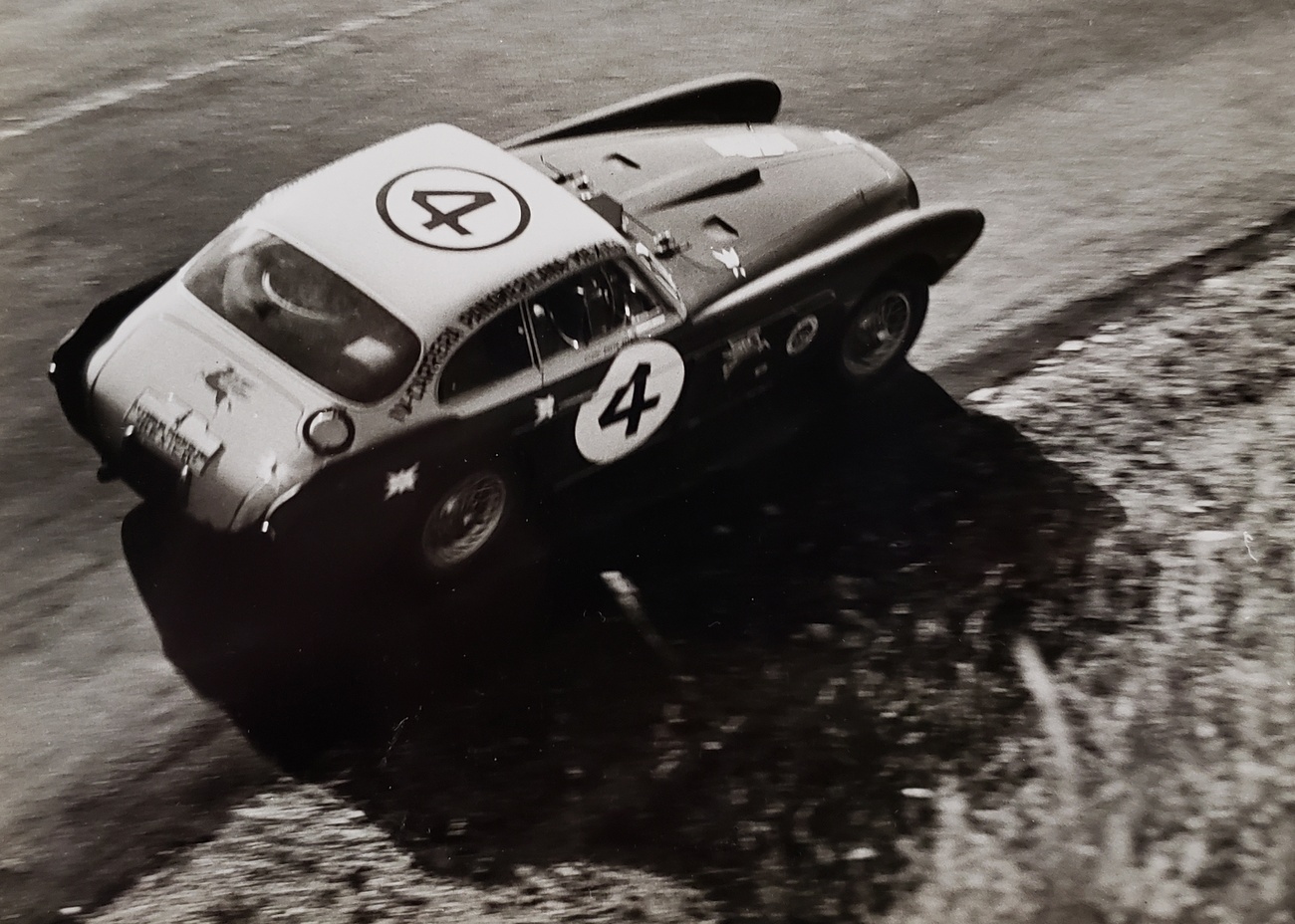
In 1953, several Ferraris were entered in the Carrera, but the works team was not present. Allen Guiberson entered one of his 340 Mexicos, driven by two Californians who would eventually be teammates on the Ferrari F1 team — Phil Hill and Richie Ginther. This was years before their F1 careers, when they were rising stars in the American sports car scene. Hill handled the driving and chose Ginther as his riding mechanic, but both were skilled at repairs and driving. Their race went well, until a combination of a bent clutch pedal shaft and a local who decided he wanted some action caught them out.
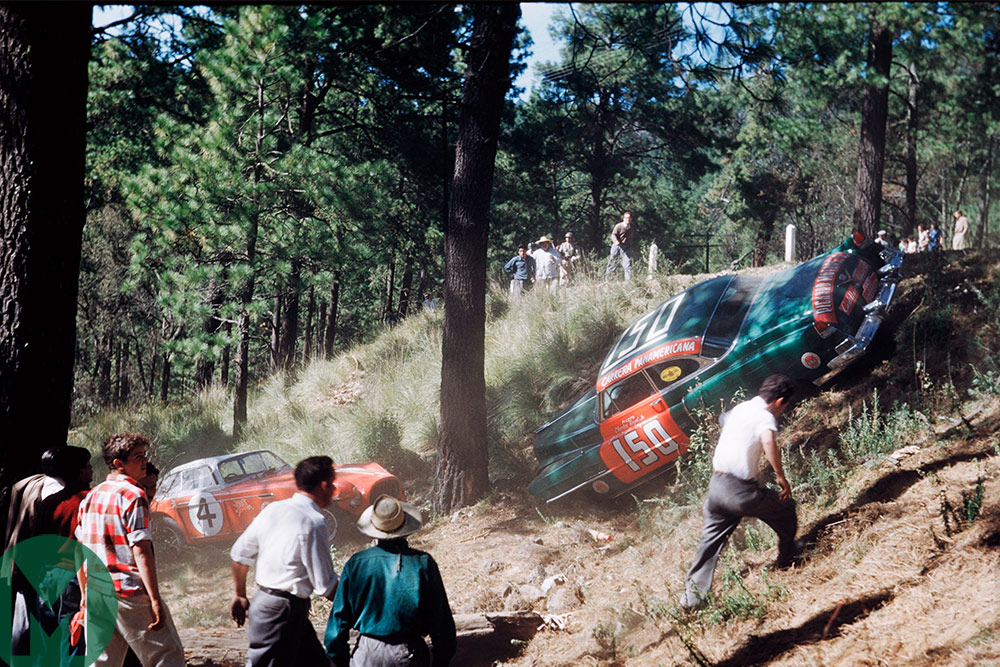
We were sliding towards the edge, and I remember thinking how far we’d fall, because for sure we were going to fall. And over we went, backwards, landed on the roof, bounced onto the wheels and here we stopped. We pulled out our bags, removed our crash helmets, and began to wonder how and when we might get picked up. We scrambled back up the bank, and found the road covered in skid marks. A soldier told us Fangio had nearly gone off there before we’d arrived. There had been a warning sign, but some thrill-seeker had removed it, then settled down with the large crowd to watch the fun — which we’d provided. – Phil Hill
After the crash in the Carrera, Guiberson entered the 340 Mexico in the 1954 Buenos Aires 1000KM, with Phil Hill driving again. Dave Sykes joined him, but they retired after only 13 laps with clutch problems. Chinetti kept the 340 Mexico that he drove in the Carrera, and entered it in several European endurance races in 1953: the 12 Hours of Reims, the Mille Miglia, and the Pescara 12 Hours. It didn’t finish any of them.
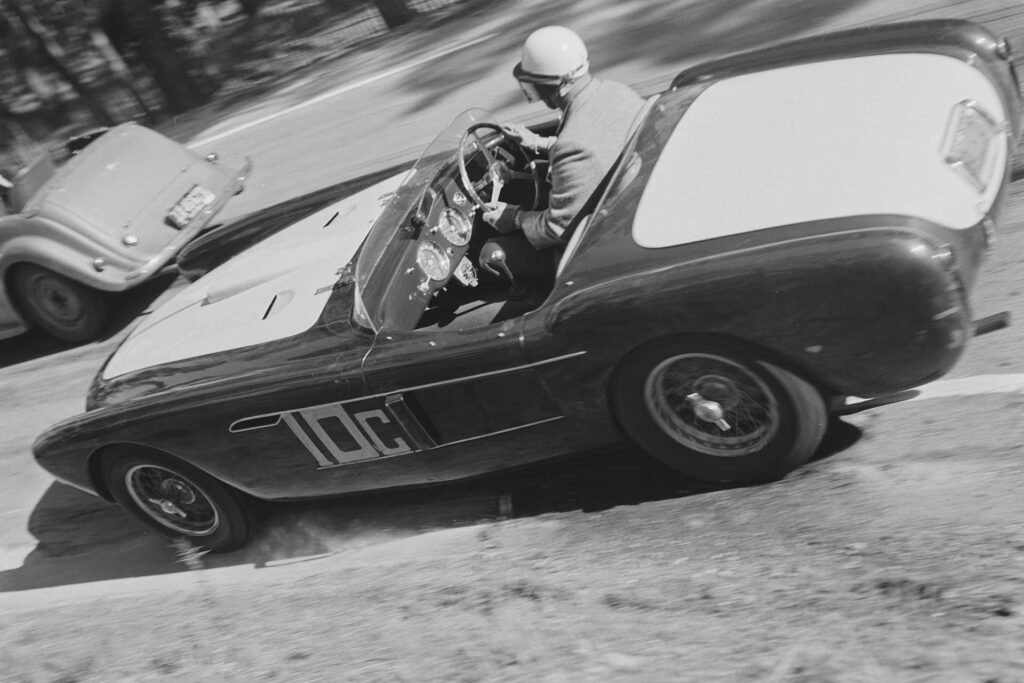
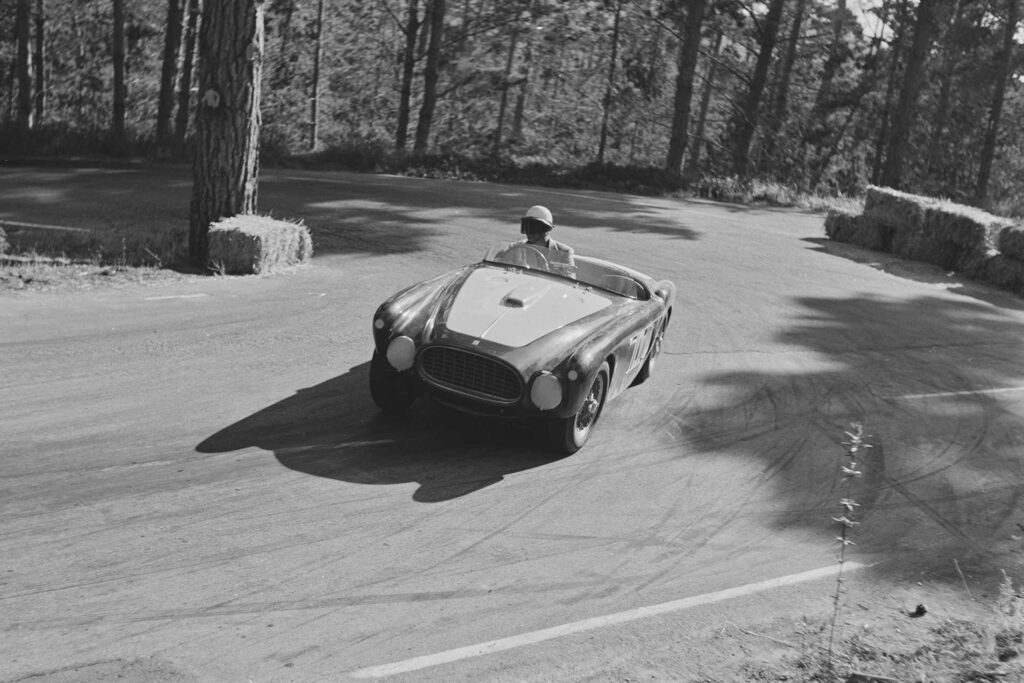
Bill Spear drives the 340 Mexico Spyder at the 1953 Pebble Beach Road Races, where he finished second overall.
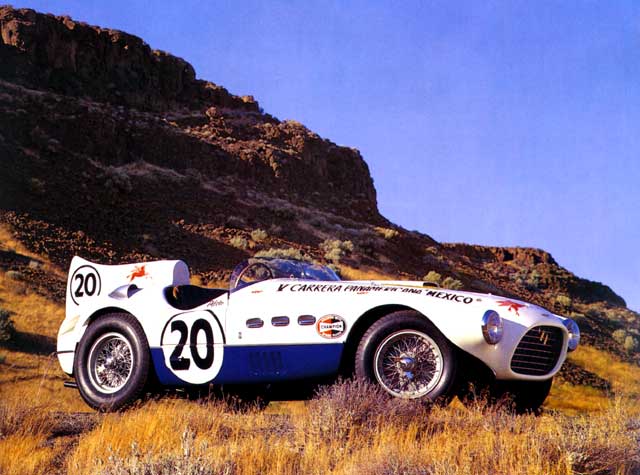
The 340 Mexico Spyder never competed in the Carrera, but Bill Spear put it to good use in 1953. He decided to paint it blue and white—the American racing colors—and then entered it in the SCCA championship. He hired Phil Hill to drive with him at the season opener at MacDill Air Force Base. They almost won the six-hour race, but were delayed by several missing wheel spokes. Spear ended up winning the 1953 championship, with two wins. He bought a new 375MM Spyder for 1954 and sold the 340 Mexico Spyder to Briggs Cunningham’s Alfredo Momo Corporation. It was then sold to Preston Gray, who repainted it yellow and raced it in the SCCA for several more years.
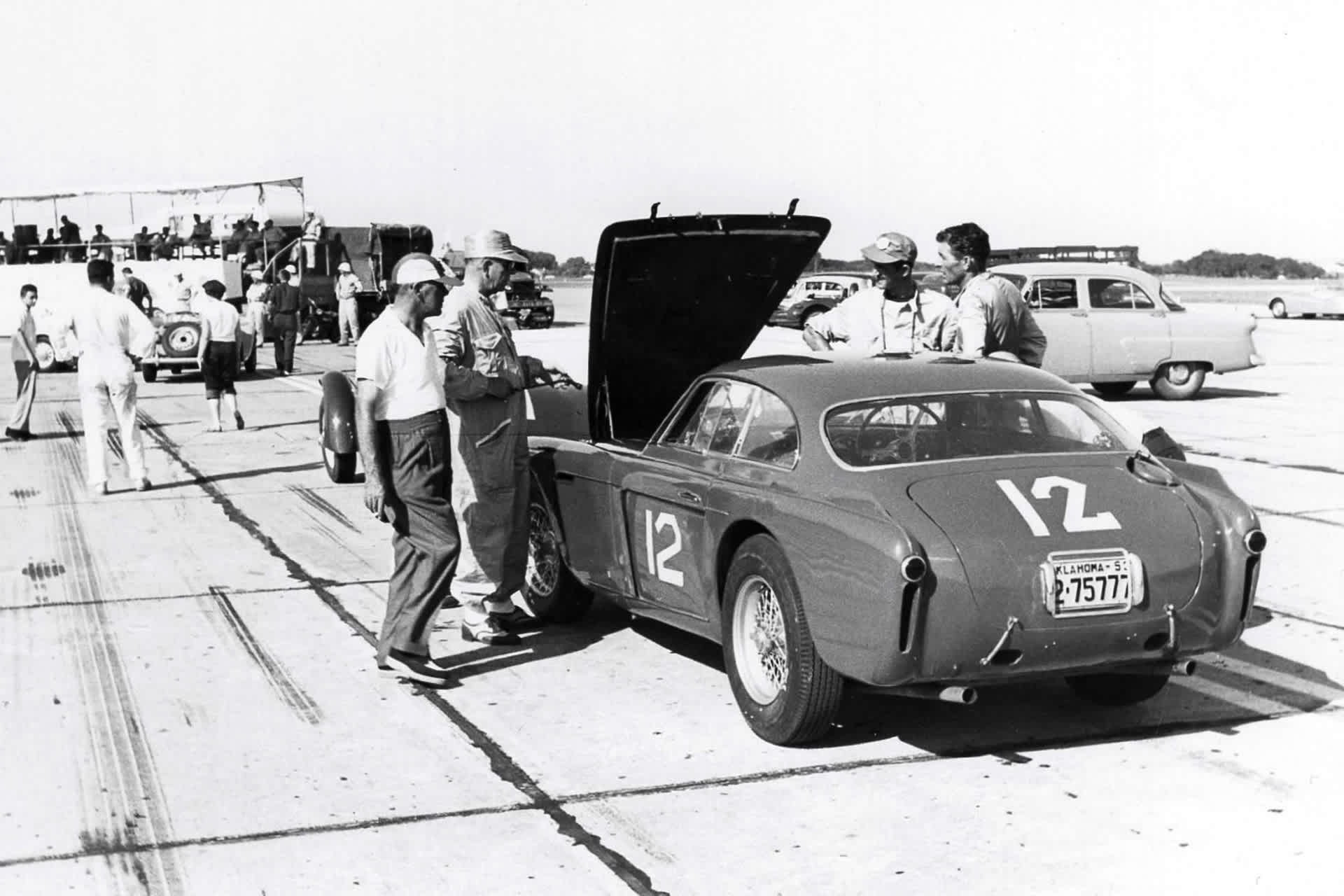
The 340 Mexico that Ascari crashed was sent back to the factory after the Carrera, and then sent to Texas. Guiberson sold it to A.V. Dayton in 1953, who entered it into an SCCA race at Offutt Air Force Base with Carroll Shelby at the wheel. It was Shelby’s first race in a Ferrari, and he finished second. Dayton entered the 340 Mexico in three more races. After 1957, the 340 Mexicos racing careers were over. Dean Batchelor, who owned Chinetti’s 340 Mexico, said: “It is cramped inside, rides like a brick wagon, has dodgy brakes until those large drums are thoroughly warmed up, is hot in the summer and cold in the winter, but at the same time gives more personal pleasure per mile than just about any conveyance one could name… hit the starter button and zowie! Instant bedlam. There is absolutely no insulation of any kind anywhere, and every sound from the engine compartment is immediately part of the passenger compartment. “
Several Ferraris were entered in the Carrera in 1954, the final year of the original race. Phil Hill and Richie Ginther teamed up again, driving a white Vignale-bodied 375 MM Spyder. The 375 MM was very similar to the 340 Mexico in concept, but with an even larger engine. They were in contention for the win until they ran out of fuel on the penultimate stage. They gave it all they had anyway, averaging 137 mph for the 572-mile blast from Chihuahua to Ciudad Juárez. The race was won by Umberto Magloli in another 375MM Spider, who averaged 107 mph for the entire race! This was the last time the original Carrera would be run. So, the 340 Mexico was the only car ever designed for the Carrera Panamericana.
Photos: Girardo & Co, Scott Grundfor & Company, Phil Hill Photo Collection